Putting history back onto film with ‘The Woman King’

Images courtesy Sony Pictures Releasing.

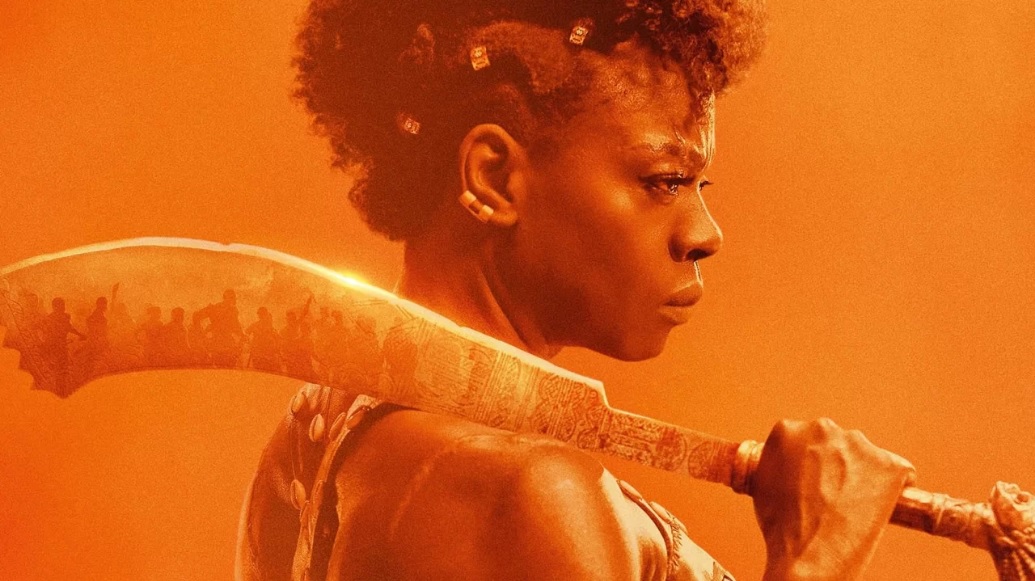
8/10 The Woman King is equal parts a sweeping war epic that actively uses the power of mass media to center black, female and queer stories, a brutal muscle movie and a wet, messy soap opera that lives for drama. It’s an incredibly important work of cinema and culture that is also imminently watchable with all sorts of appeal.

Porto-Novo in present-day Benin, 1823- The Kingdom of Dahomey and the Oyo Empire, from which the Dahomey are rebelling, have begun selling each other’s war captives into slavery in exchange for Portuguese firearms, a suicide pact that will poison both nations to death long before their escalating war. General Nanisca (Viola Davis, who also produces) of the Agojie, the Dahomey’s ferocious female battalion, has just lead a coup to install King Ghezo (John Boyega) as the Dahomey’s new leader in hopes that he will cut off the slave trade, but caught between the Oyo and the Portuguese’ Faustian open offer, he hesitates. Against this backdrop, Nanisca trains a new generation of Agojie for the war effort.

Continue reading →

Posted in Entropy | Tagged , , | Leave a comment

‘Way of Water’ imperfect, enormous step up

Images courtesy 20th Century Studios.

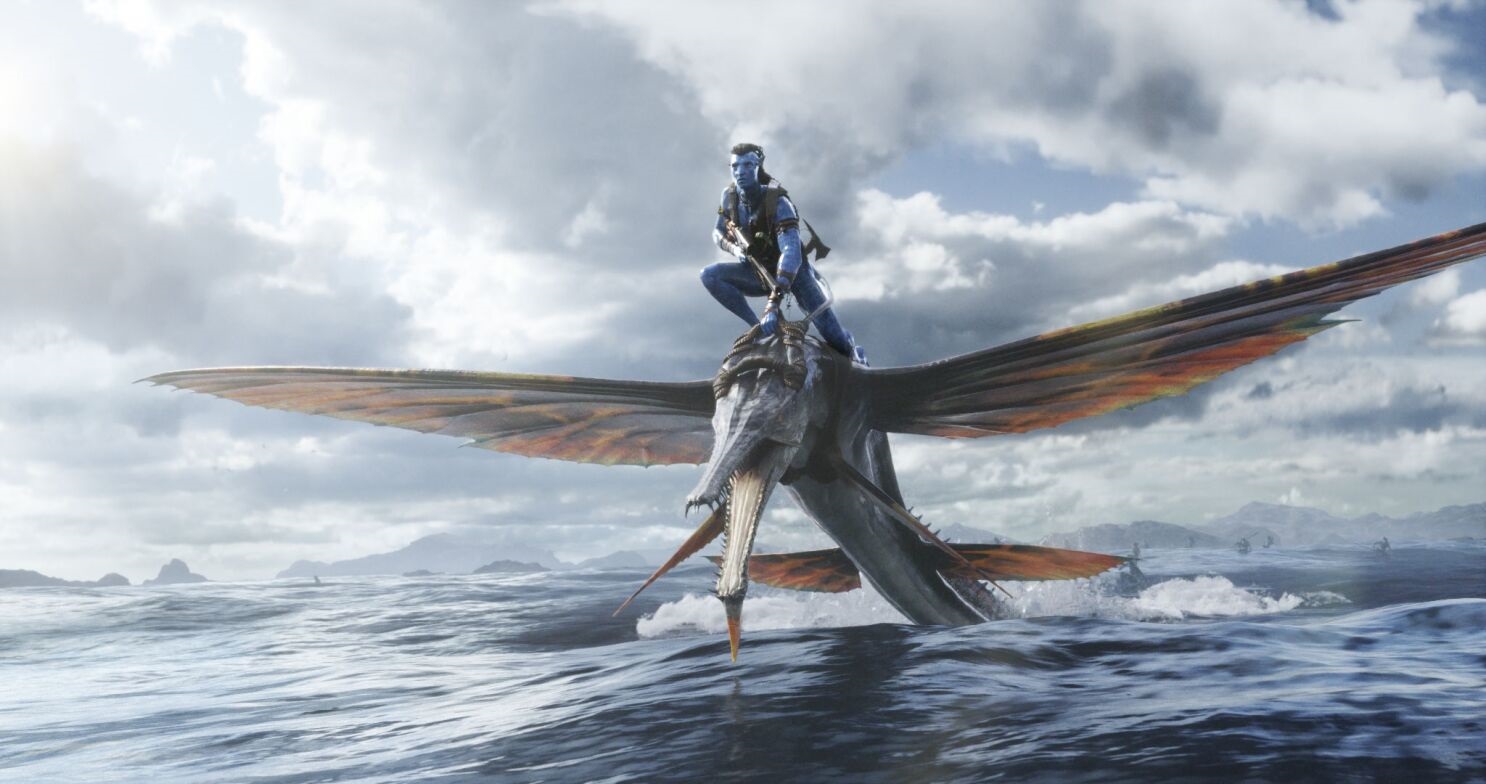
7/10 If you liked Avatar, you’ll love Avatar: The Way of Water, and if you didn’t like Avatar, The Way of Water puts what the original movie is missing onscreen.

More than a decade after the first film, the sky people have returned to Pandora, not for rare metals, but to fully colonize and terraform it into a new home. Former Marine Jake Sully (Sam Worthington), who has lived on as a recombinant human/Na’vi hybrid “avatar” and chief of the forest Omaticaya, leads a fierce guerilla resistance, but when it becomes clear the humans are targeting him personally along with his wife and four children, they flee and seek asylum with the Metkayana, a clan of frog Na’vi with webbed limbs and tails who live on the reef. As the Sully family treads lightly while learning the ways of their uneasy new hosts, Col. Miles Quaritch (Stephen Lang), who was killed in the first film but has returned as an avatar, hunts them through the archipelago, burning as he goes.

Continue reading →
Posted in Entropy | Tagged , , , , , , , , , | 2 Comments

Knopp finally writes about ‘Avatar’

Disney has removed “Fox” from the 2022 re-release. The opening logos now state Avatar is the property of 20th Century Studios. Images courtesy 20th Century Fox.

I started writing about movies formally in January 2010 with The Book of Eli, which released the second weekend of that year more than $20 million behind Avatar, which was in its fifth weekend. I’ve heard so much about Avatar – well, I’ve heard the same two things about Avatar, that it’s a completely unforgettable visual experience and that it’s basically a dumber, bluer version of Dances with Wolves, so often – that my interest in it has already completely vanished. I was much more cynical back then and wasn’t interested in the historical significance of what was happening, so I never made time for it. 

Over the coming years, as the Disney monopoly takes an increasing stranglehold on the box office, something strange happens – Avatar, this global phenomenon that pulled in $2.7 billion worldwide, a film which drove every theater and most major blockbusters to retrofit overnight to accommodate it, completely vanishes from the culture. The biggest bits of Avatar news over the years are announcements of four sequels and, much later, an amusement park, both of which are met with quiet jeers. 

Continue reading →
Posted in White Noise | Tagged , , , , , , , | 1 Comment

Wakanda long ago, ‘Wakanda Forever’

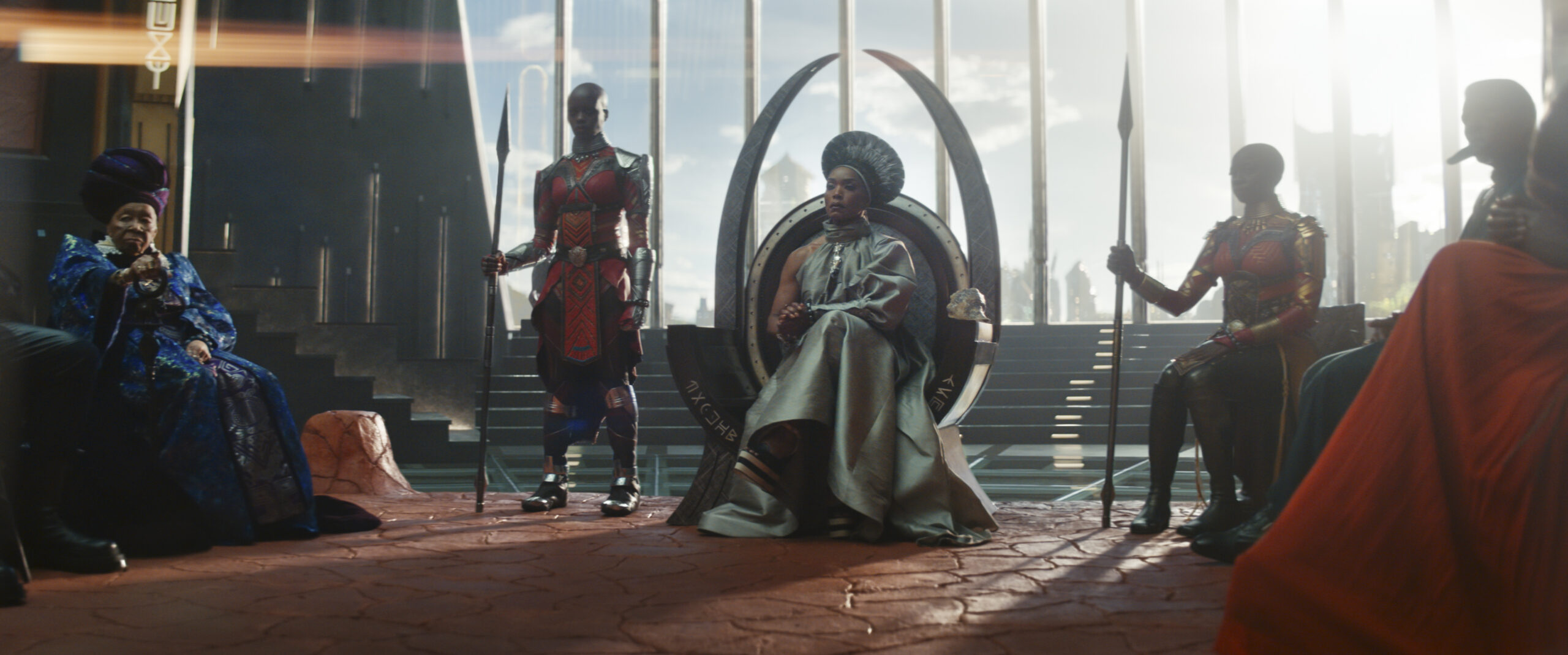
Wakanda Forever is filled to the brim with striking wide shots like this. Images courtesy Walt Disney Studios Motion Pictures.

7/10 Everyone in the world has been through a lot since Black Panther showed us a magical dream of uncolonized Africa in February 2018. Four years later in Black Panther: Wakanda Forever, that dream is tainted by real-life tragedy among the cast, but seemingly untouched by the pandemic or even by the events of Avengers: Infinity War and Endgame. The film is grieving, but still escapist on a level I’d never have dreamed of if I hadn’t seen it.

One year after the sudden disease and death of King T’Challa, Wakanda faces threats from all sides. Queen Mother Ramonda (Angela Bassett) holds power, but after the events of the first film, she does not have the heart-shaped herbs required to bless a new Black Panther, and the international trade T’Challa dreamed for never got off the runway because Ramonda refuses to trade vibranium, the nation’s near-magical space metal, for any price.

As world powers search for other sources of vibranium, they stumble onto the underwater kingdom of Talokan, and facing an uncertain future, Wakanda is suddenly confronted by a deep-sea version of its past – another nation powered by vibranium hiding from European colonialism, which also holds its king as super-powered champion and a manifestation of god. K’uk’ulkan, who also introduces himself as Namor (Tenoch Huerta Mejía), is deeply paranoid of his kingdom being discovered, and demands the shaky Wakandan leadership either commit to an alliance or commit to a war.

Continue reading →
Posted in Entropy | Tagged , , , , , , , , , , , , , , , , , , | 1 Comment

The bust-out of Warner Bros.

Industrial-scale film distribution dates back to before World War I. In the bad old days with no way to transmit information digitally, movies had to be physically carried from Southern California outward, a supply chain that wound its way across the developed world, staying at every town as long as tickets were selling, always taking around two years to reach the end of the line in New Zealand, where they were to be burned. As Tarantino fans will know, film stock in those days was flammable enough that it was dangerous to store, and there was a meaningful amount of silver in the reels, so the economic thing to do was just burn it somewhere safe and pocket the silver.

In their infancy, movies weren’t a centralizing cultural force or a revolutionary means of artistic expression, they were just picture shows. At best, they were cheap, mechanized stageplays. Burning them out for as much cash as they were worth wasn’t just something you did at the end of the line, it was the entire point. Marshall McLuhan wouldn’t coin the phrase “The medium is the message” until 1964, but back in the ‘20s, the medium was still very much the message, and that medium was always meant to be burned off for scrap metal.

Continue reading →
Posted in Applying Chaos Theory, White Noise | Tagged , , , , , , , , , , , , , , , , , , , , , , | 5 Comments