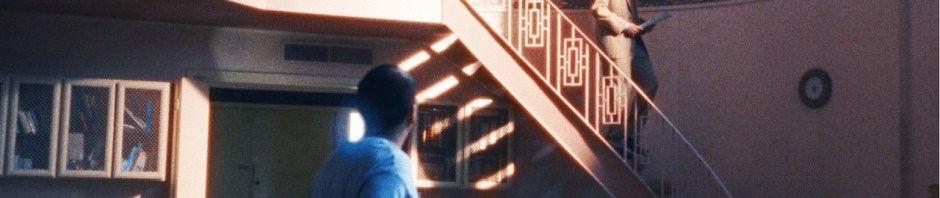

Primetime is a dim light cast on a past that is not the past, an engine-bay window into the feedback loop between crime and spectacle that has turned American democracy into a mulch of atrocities that are at once increasingly shocking and as old as humanity itself. It’s one of the most visually striking films of the year from its first shots, and one that demands most urgently to be seen in a theater as it plays out almost entirely in close-ups, the shots that benefit most from theatrical projection.
Primetime presents a kaleidoscope of events surrounding “To Catch a Predator” and host Chris Hansen (Robert Pattinson, who also produces). The film presents itself within a strict timeline from the show being moved to the 9 p.m. timeslot leading up to the suicide of Bill Conradt (Alex Winter) on Nov. 5, 2006, but also incorporates attempted poaching from knockoff hidden camera show “What Would You Do?” and coverage of Hansen’s extra-marital affair, which wasn’t exposed until several years later.
The boring way to tell this story would be to imagine some childhood experience for Hansen, something not too embarrassing or libelous, but that would still make catching predators into a lifelong pursuit, lionizing him through the show’s early run, with maybe a few scenes of the contemporary controversy thrown in for balance, culminating in a hard lesson about voyeurism, entrapment and the tricky community-wide fallout of discovering high-profile predators. Primetime blows right past that, introducing us to Hansen through the eyes of his first catch (Tony Revolori), but also as “Dateline NBC” viewers. The show is immediately presented as predatory, ratings-driven and plainly disinterested with either the harm it causes or that it aspires to prevent.
The film’s perspective feeds directly from its main creatives – Pattinson, 40, and director Lance Oppenheim, 30, are both old enough to remember their interactions with “Dateline NBC” at its height. The film’s contempt toward both the deceits of showbusiness and “Dateline’s” internal justifications reflect the bitterness of remembering 2006 with 20 year’s hindsight, the concrete knowledge that the world they are depicting is an illusion that was already crumbling.
Every frame is a haunted memory, with blown out highlights, big wide bokeh effects and huge grains of digital interference swimming all over the image. Consistent compositional choices like backlighting, narrow focal lengths and bold use of background details, along with the film’s barrage of obscured close-ups, keep viewers on edge and working hard to digest its images. Primetime was shot digitally, then printed onto 16mm film, the traditional budget film stock that’s just barely big enough to be projected, and then re-scanned with the noise that adds to achieve its unique look. Several shots take this a step further by going through windows or camera lenses or, most strikingly, through the glass of era-appropriate cathode ray tube TV screens.
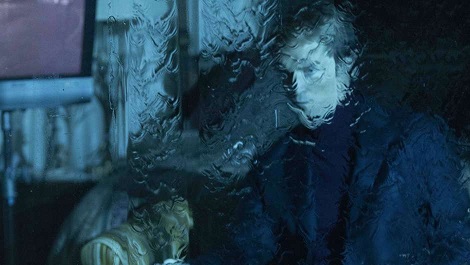
Through the layers of this window, we view Hansen, depicted as a barely conscious fame monster stuck in the specific moments when he’s confronting suspected predators. In his second scene, he’s repeating his lines at a vending machine that’s wronged him, and ends up as a quiet, distant presence in the film as a whole, with decoy actor Dan Plum (Skyler Gisondo), who took the gig thinking it was a normal acting role and potentially his big break, slowly taking more and more screentime.
The time-displaced plot choices do exactly what they’re supposed to – a voice on the phone from National Enquirer threatening Hansen over his affair with a younger woman putting him on the back foot of his own tactics, and the subplots with producer Andie Bender (Merritt Wever) and Plum’s search for fame highlighting the general lack of care anyone displays toward the show’s subject matter.
The film makes no mention of either the Catholic sex abuse scandal that preceded it or the elongated Trump/Epstein scandal that has followed. Instead, it exists pointedly in this space between them, when systemic sexual abuse of children was something Americans were broadly aware of, but trying our best not to be, which is the only space in which “To Catch a Predator” could have existed. All the cultural building blocks of this plague – secrecy, resignation to solitude, shame toward bodily functions – were revealed investigating the Catholics, but in 2006, that was too understandable, too close to home. This is a world where child predators need urgently to be discussed, but must always be otherized and possessed by an innate sickness, something a normal man could never become. This view manifests explicitly late in the film, when Hansen explains that he is combating an ancient evil lurking in the heart of mankind. This is personified as an Indian child killer he had hunted years before in a cartoonish papier-mache mask, a horrifying face Hansen can never quite get his close-up of.
By contrast, Primetime is held up by its spot-on sympathetic depictions of the kinds of real men Hansen and Perverted-Justice caught, men so alienated and desperate that they have come to view their sexuality less as tools within a loving relationship and merely as glands that need to be expressed. This objectification of the self allows them to objectify others, ending in the kinds of abuses we see in the film and detailed in the news over decades since it is set. The more grotesque they are, the more palpable their suffering is, with the exception of Hansen’s fantasy.
Pressured by NBC to justify the primetime slot, the “To Catch a Predator” team spends the film fishing for a “whale,” a public official who will bring real attention to the show. Hansen conflates this with the monster that has eluded him for years, the one pedophile so perfectly evil that he can answer all of Hansen’s questions directly and put to bed forever the great mystery behind sexual abuse of children. He can never find it, because he, like NBC and his audience, doesn’t really want to look at the everyday creeps in front of him.
Leopold Knopp is a UNT graduate. If you liked this post, you can donate to Reel Entropy here. Like Reel Entropy on Facebook and reach out to me at reelentropy@gmail.com.

