
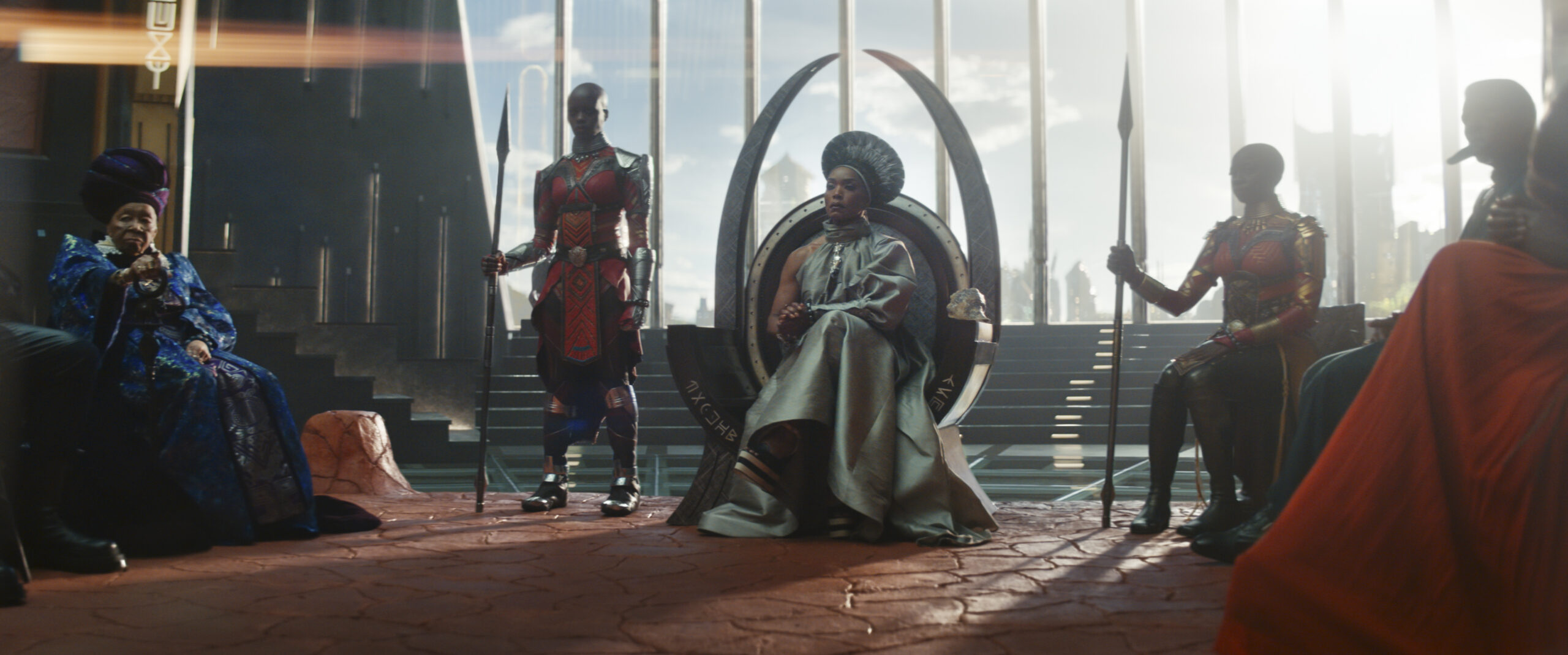
7/10 Everyone in the world has been through a lot since Black Panther showed us a magical dream of uncolonized Africa in February 2018. Four years later in Black Panther: Wakanda Forever, that dream is tainted by real-life tragedy among the cast, but seemingly untouched by the pandemic or even by the events of Avengers: Infinity War and Endgame. The film is grieving, but still escapist on a level I’d never have dreamed of if I hadn’t seen it.
One year after the sudden disease and death of King T’Challa, Wakanda faces threats from all sides. Queen Mother Ramonda (Angela Bassett) holds power, but after the events of the first film, she does not have the heart-shaped herbs required to bless a new Black Panther, and the international trade T’Challa dreamed for never got off the runway because Ramonda refuses to trade vibranium, the nation’s near-magical space metal, for any price.
As world powers search for other sources of vibranium, they stumble onto the underwater kingdom of Talokan, and facing an uncertain future, Wakanda is suddenly confronted by a deep-sea version of its past – another nation powered by vibranium hiding from European colonialism, which also holds its king as super-powered champion and a manifestation of god. K’uk’ulkan, who also introduces himself as Namor (Tenoch Huerta Mejía), is deeply paranoid of his kingdom being discovered, and demands the shaky Wakandan leadership either commit to an alliance or commit to a war.
Continue reading


 Reel Entropy