Knopp’s first Miyazaki, likely Miyazaki’s last film

There is no “quit” in this kid at all. Images courtesy GKIDS.

Rating: 5 out of 5.

I thought it would be disingenuous of me to see and write about The Boy and the Heron because just about anyone who knew about the film would know more about it than me. Writer/director Hayao Miyazaki is a titan of animation, of course, but I’d never seen any of his films, and this one was noted even in Japan for its lack of promotional material. The Boy and the Heron is an encore after a decade of retirement, and only the people who were already at the show would have known about it. This post is by reader request.

March, 1945- School-aged Mahito Maki (Soma Santoki) loses his mother in the Tokyo bombings. His father promptly marries his late wife’s sister and whisks Maki to her rural estate, far from the war. Isolated, dejected and angry, Maki encounters a grey heron (Masaki Suda) in the backyard, who taunts him with the possibility of seeing his mother again. Their conflict takes them into the hidden world in the abandoned watchtower behind the estate.

Continue reading →
Posted in Entropy, White Noise | Tagged , , , , | Leave a comment

John Woo quietly returns to American theaters with ‘Silent Night’

Images courtesy Lionsgate.

Rating: 2 out of 5.

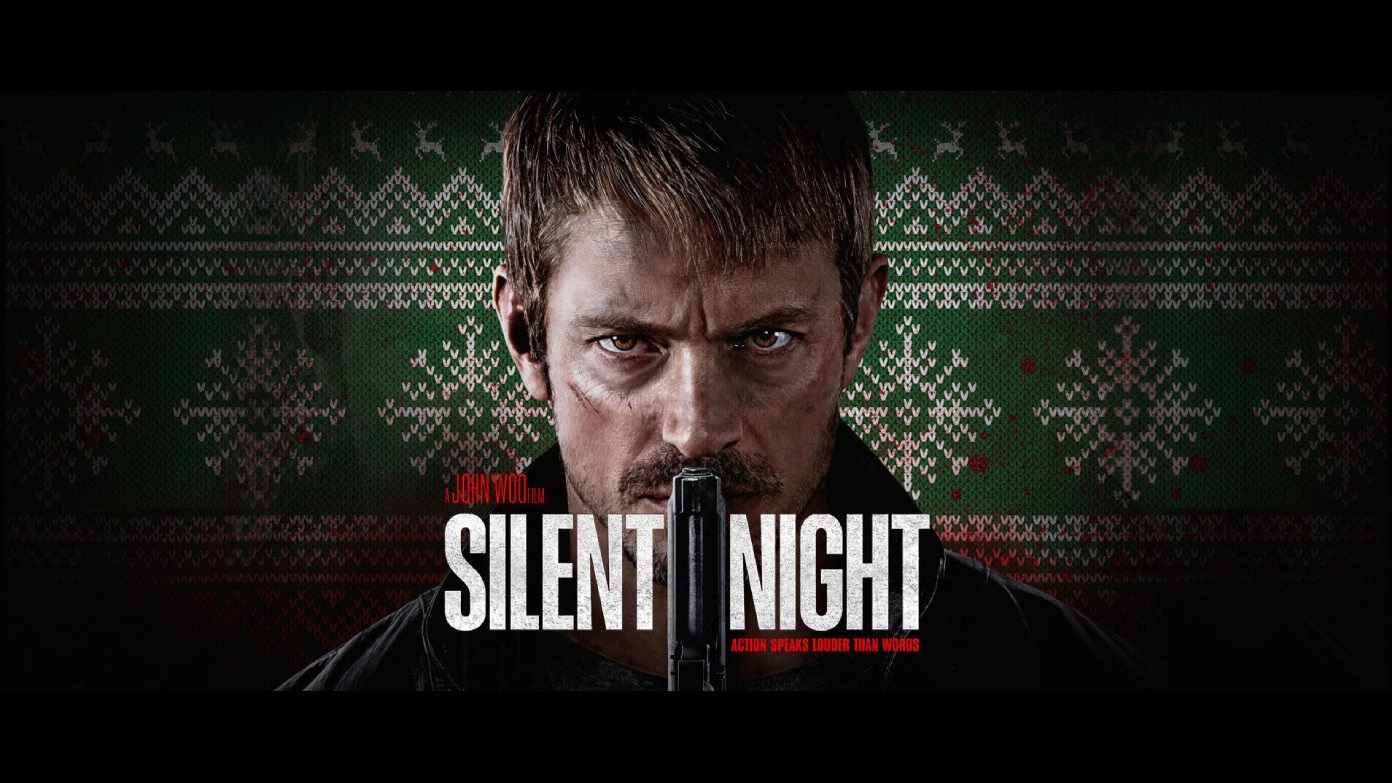
Silent Night suffered from one of Lionsgate’s weak advertising pushes, contributing to a pitiful domestic gross of just over $8 million, but it’s one of the more exciting films from the end of 2023. It’s legendary director/producer John Woo’s first English-language – well, sort of – film in 20 years, and it’s the first widely distributed silent film I’m seeing since The Artist won Best Picture and then completely disappeared from the culture in 2011. There’s been some flirtation with this, as Mad Max: Fury Road, the king of modern action movies, announced both black and white and silent cuts for home media, but has only delivered on the Black and Chrome edition.

It’s possible I’m still the only one waiting for that silent version of Fury Road, but Silent Night is a decent consolation.

Continue reading →
Posted in Entropy | Tagged , , , , , , , , , | Leave a comment

‘Godzilla Minus One,’ plus international acclaim

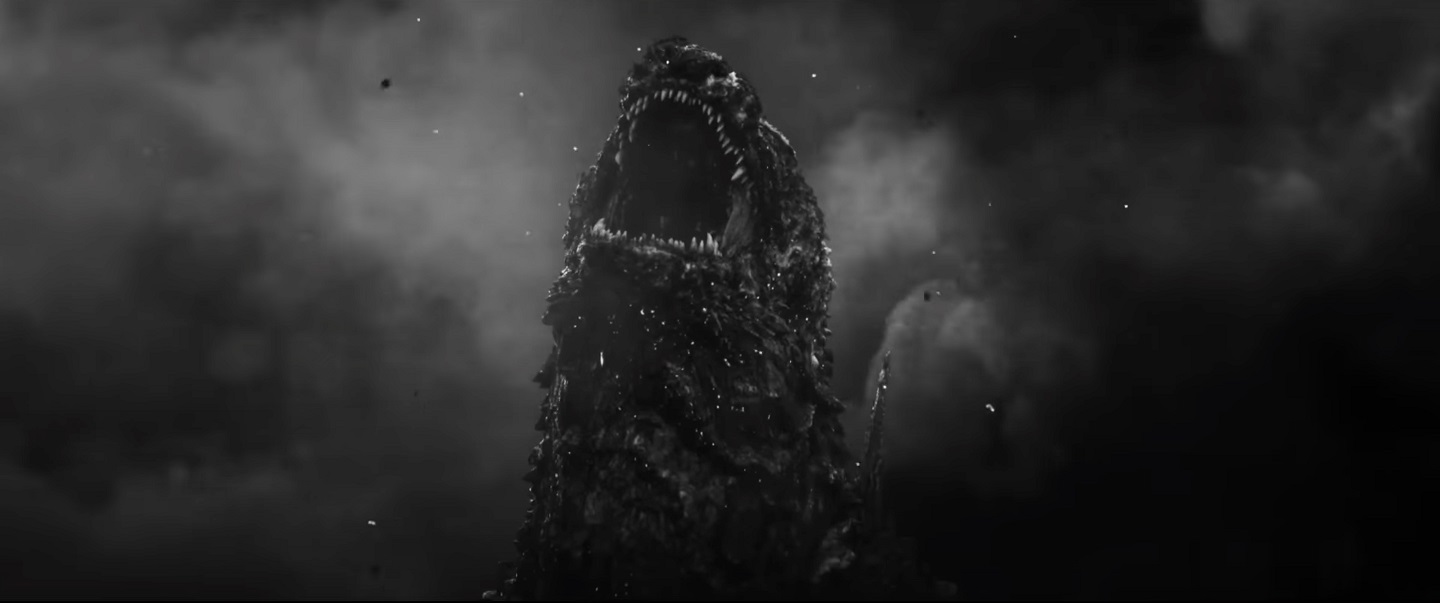
Minus One had already become the most successful Japanese-language film in American history before the black and white re-release. Images courtesy Toho International.

Rating: 4.5 out of 5.

In 1954, less than 10 years after the atomic bombings of Hiroshima and Nagasaki, Toho and writer/director Ishirō Honda reconceptualized the attacks as a monster that emerged from the sea, its skin cracked and charred as if by nuclear blast, its breath befouling the air around it with fallout, and its name was the wrath of God. Godzilla immediately became a pop-cultural sensation and symbol of the Japanese mood as it changed over the decades, frequently fighting off bigger threats as an anti-hero or even a goofball. The title Godzilla Minus One comes from the idea that Japan was at “zero” after the bombings, and Godzilla’s emergence put them at “minus one.”

It’s remarkably similar to the original film, but with 80 years’ hindsight instead of 10, Godzilla Minus One is less about exploring the trauma of the nuclear attacks and more about interrogating the Japanese culture that led the country to this and the traumas of demilitarization and emasculation of individual Japanese. Perhaps the most notable difference is that, while Godzilla was contemporary to its 1954 release, Godzilla Minus One begins months before the nuclear attacks.  

Continue reading →
Posted in Beta Decay, Entropy | Tagged , , , , , , | Leave a comment

TV tropes continue to invade movies in ‘Leave the World Behind’

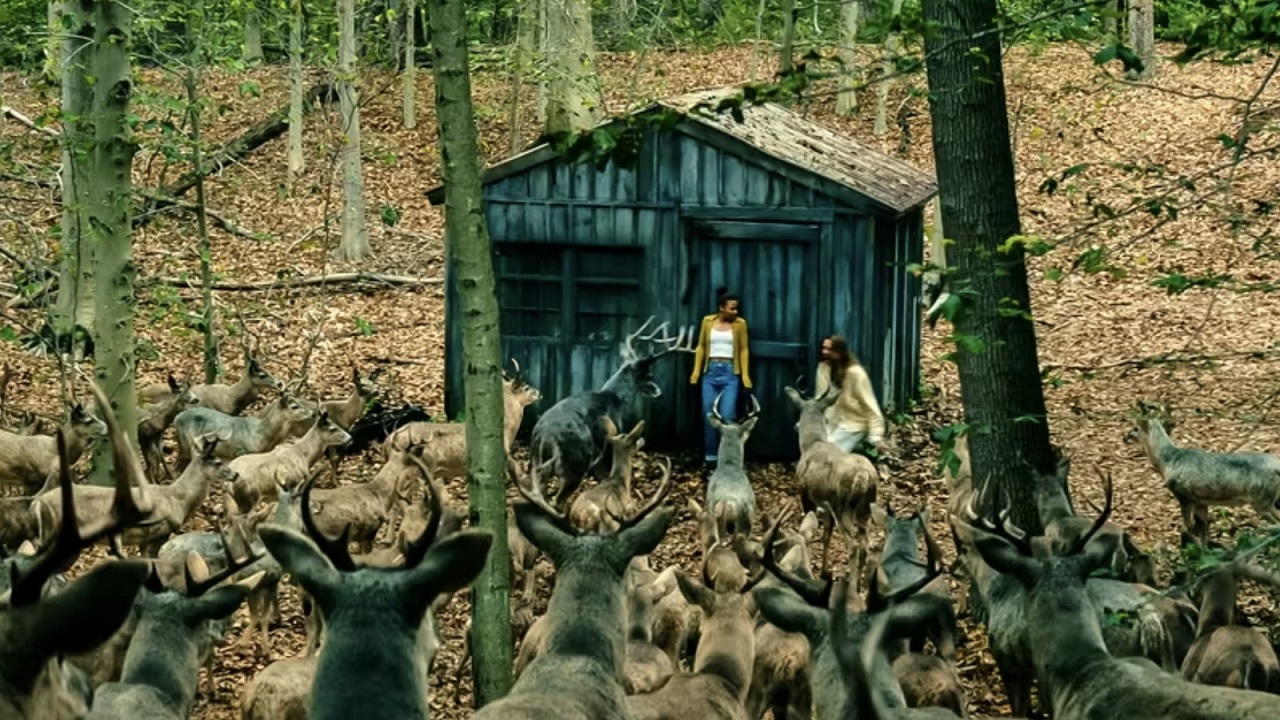
Oooh, maybe the deer will do something other than stand menacingly next week! Better tune in to find out! Images courtesy Netflix.

Rating: 2 out of 5.

Leave the World Behind opens with several shots from space, tracking the sun as it crawls across the sky over the Upper Bay, and many of its chapters start by zooming back out to space as well. At first, the motif hammers in the idea that this is all happening on a random Tuesday morning, that the events of the film are society snapping under the tension of the everyday, and it becomes something more sinister as it zooms further out.

This reading is complemented by the first moments. The first thing that happens in the film, arguably its real inciting incident, is Amanda Sanford (Julia Roberts, who also produces) packing up for herself and her entire family and leaving. She’s had enough, she is snapping, and everything else in the world is snapping after her.

Brooklyn- Sales executive Amanda Sanford whisks her family, husband Clay and children Rose and Archie (Ethan Hawke, Farrah Mackenzie and Charlie Evans), away on a surprise vacation to the Hamptons. Suddenly, a black man claiming to be G.H. Scott (Mahershala Ali), the owner of their short-term rental house, appears, along with his daughter, Ruth (Myha’la), telling the Sanfords of a blackout in the city and asking to stay the night, and they realize all smart devices in their houses and cars aren’t working. Tensions mount between the two families in the isolated modern mansion as society appears to collapse completely in the background.

Continue reading →
Posted in Entropy | Tagged , , , , , , | Leave a comment

‘Dream Scenario’ an explosive joy to watch

Images courtesy A24.

Rating: 4.5 out of 5.

Dream Scenario opens with a quick flash of images, as if the entire film is meant to be remembered as a dream. The film shifts focus too heavily onto its metaphors and real-world analogues to quite live up to its potential, but right off the bat, you know you’re in for a special, unique experience that understands the language of film and uses it beautifully.

In Dream Scenario, evolutionary biology professor Paul Matthews (Nicolas Cage, who also produces) discovers he is inexplicably appearing in the dreams of millions of people around the world, quickly becoming a viral celebrity. Matthews’ roles in the dreams seem to follow his own internal state. At first, when he is unaware of what is going on, he is a bystander, merely passing and waving through other people’s recurring nightmares. As the phenomenon grows, he becomes an agent of wish-fulfillment, sex and adventure, but when he discovers he can’t use his newfound celebrity to advance his life goals, his dream presence becomes violent, and millions of people dream about him raping or murdering them.

Continue reading →
Posted in Entropy | Tagged , , | Leave a comment