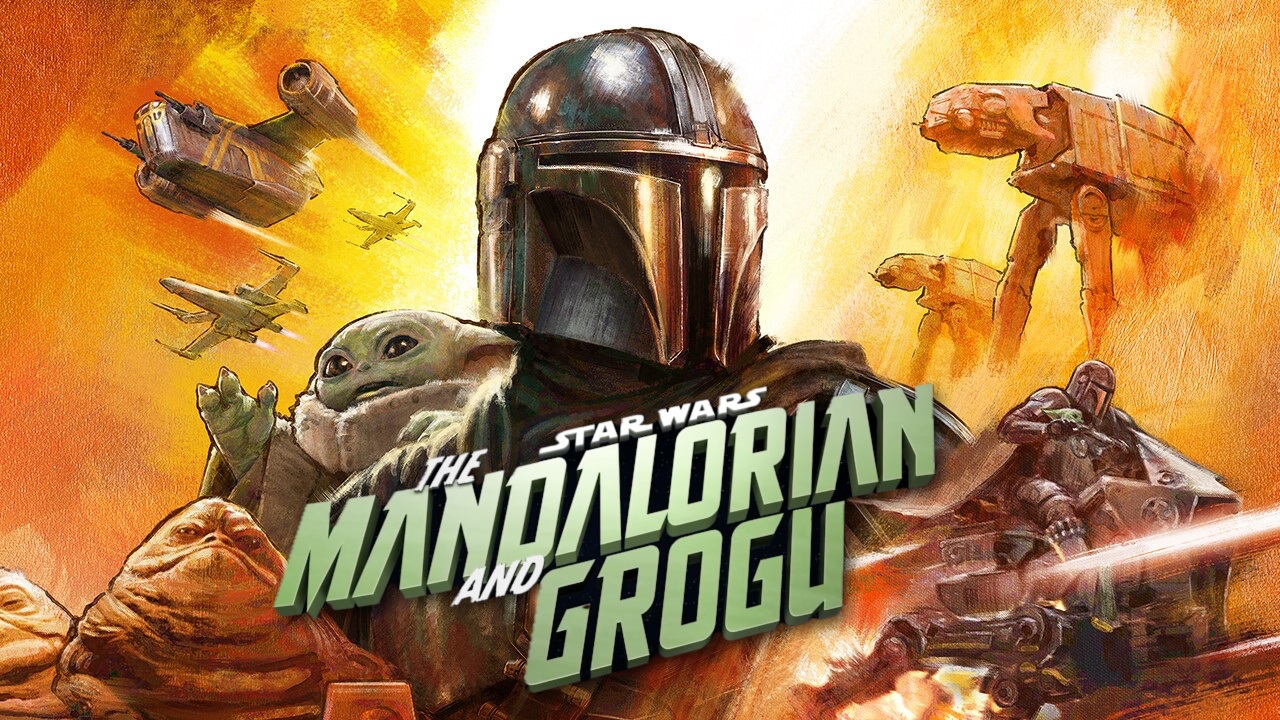
“The Mandalorian” arrived on computer screens in 2019 a smash hit, by far the most anticipated launch series for Disney+ and a beacon of hope for antsy Star Wars fans six years into Disney’s ownership of the property. Disney’s shift to a streaming-first business, as well as its potential to realize the promise of turning a galaxy far, far away into a setting for consistent and varied media, was riding on this, and it was everything anyone could have hoped for – a bare-bones episodic space Western with Jon Favreau, a lifelong Star Wars fan-turned filmmaker, showing everyone what he loves about the property.
One pandemic and double-strike later, The Mandalorian and Grogu arrives on IMAX screens in 2026 the first Star Wars film in seven years – the promise when Disney bought the property was a new Star Wars movie every year until you die, but The Rise of Skywalker would kill all enthusiasm for that a month after “The Mandalorian’s” streaming debut – and it arrives with a bored shrug.
A long time ago in a galaxy far, far away- Years after the Galactic Civil War, Moffs and their remaining detachments rule as warlords over Outer Rim sectors that have yet to be liberated. A Mandalorian bounty hunter (Pedro Pascal, Brendan Wayne and Lateef Crowder) working for the New Republic hunts them down to bring them to justice, working in tandem with his ward, Baby Yoda.Their adventures are scattered and jagged, with multiple ups and downs and several characters coming and going. Almost episodic, in a way makes it painfully obvious that this was written to be a season of television and not a feature film.
What do you want from Star Wars backed by Disney’s production empire? “The Mandalorian” had good, clear answers. The Mandalorian and Grogu, on the other hand, clearly sees itself less as a Star Wars movie and more as a truncated season of television.
The show made a name for itself with constant action, Western elements so thick you can almost smell the spaghetti offscreen and a constant barrage of classic Star Wars designs in new visual contexts. This is especially prevalent among the imperial remnant characters, faceless representatives of an empire that used to be nondescript who are now shown in mess halls and various states of undress and duress. That’s the core of how Disney-era Star Wars media can set itself apart while remaining familiar. Take the image of a hijacked AT-ST looming out of the woods at a defenseless town – the mere scenario summons the chaos of a power vacuum and how advancing weapons technology hurts everyone by creating obsolete weapons that get left all over the place. The Star Wars galaxy becomes a breathing place, and the fantastic battles of the mainline films are made better by being given personal stakes and aftermath.
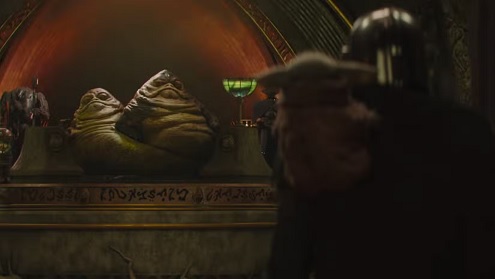
The Mandalorian and Grogu has a significant portion of this edge to it, with three new Hutt characters and an updated Hutt lair guarded by a second-hand droid army from the Clone Wars decades before, smashed-up, covered in cloaks and in obvious disrepair.
It’s also action-packed, and this is its redeeming quality as a film – it’s hard to have a bad night out with so much rock ‘em, sock ‘em time. That’s definitely a quantity over quality argument, however, since the action is decent at best.
Favreau has remained heavily involved in the series and is credited as writer, director and producer on this cinematic upscale, and everything about “The Mandalorian” that you’d point to as a product of Favreau’s personal relationship with Star Wars is still here. That’s all still well and good, but the promise that initially carried with it is gone. When the series debuted, Favreau was to be one of many directors to get his turn with it, but Disney has handled the property so poorly, publicly awarding and canceling projects with so many filmmakers, that Favreau now seems almost tokenized. His spin on the material isn’t nearly as refreshing now that it’s no longer leading the grand, decades-spanning anthology that never materialized.
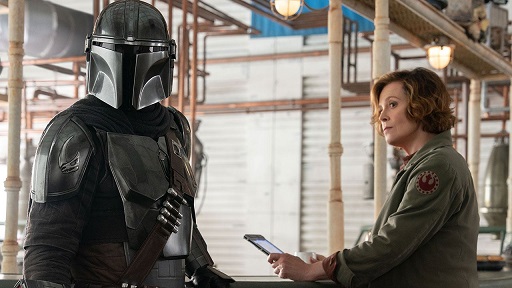
The Mandalorian and Grogu doesn’t just feel like an episode of television, it looks like one. Most of the designs were clearly meant for a smaller screen, especially that of the Mandalorian himself. His armor leaves vast swaths of negative space around his belly, and the gleaming beskar looks less like it is unblemished and more like it is unfinished. The only detail, a signet on his right pauldron for slaying a mudhorn in the first series, stands out like a sore thumb, or more like the only digit that isn’t sore. If he’s such a legend, why does he only have one signet? Why does he look like he’s never been in a fight?
Baby Yoda’s design scales up considerably better. He’s the heart of the show’s branding and child-friendliness and, insistently remaining a fully physical puppet design, represents a lot of the retro appeal that makes this series pop. Puppetry is central to Star Wars, and the move away from it played a central role in the series’ decline – George Lucas’ infatuation with the ease of CGI, which is based in no physical reality, led to the cartoon sheen of the prequel trilogy. The physical techniques involved in the original Star Wars trilogy are pushed to the absolute limits of insane imagination, but since they all have a foot in a physical creation in front of the camera, they’re all much higher quality than the elevated cartoons we’ve become used to in the ‘20s.
The era of direct sequels on either side of the digital revolution made with completely different production philosophies has given way to full-scale retro productions like The Substance or Netflix’ “Dark Crystal” show, media that directly assert technology as genre. “The Mandalorian” ends up asserting the same thing about Star Wars.
Baby Yoda remains a puppet and we have plenty of heavy makeup characters, but CGI abounds in the battle droids, Hutts and some individual designs like Hugo Durant (Martin Scorsese). On the other side is a massive stop-motion sequence from Tippett Studio. Predictably, these mixed methods produce mixed results.
The 132-minute runtime would seem extremely short for something that was clearly written to be an eight-episode arc, but that’s with the padding stripped out – Disney stuffs its shows with such long opening and closing credits sequences, series logos and “previously” add-ons and wrap-up scenes that make no sense for streaming-original programming that most episodes only have 15 minutes or so of meat on them anyway. The Mandalorian and Grogu appears to be an object exercise in conversion between these two media.
So what do we learn from this exercise? One takeaway could be that it’s really this easy to convert from television to film, but that’s only when you’re converting a television show with a ton of filler built-in because it’s designed to be half-watched, checked in and out of for “the good parts,” into a movie that feels unfocused as it constantly rolls through three-act cycles. Shows and movies are only interchangeable when you don’t actually care whether or not they’re any good.
Maybe more importantly, what does Disney want from this? The company converted to a streaming-first business in part to eliminate the risks and accountability of individual theatrical releases, and as far as I can tell, no reason has ever been put forward for shifting back in this particular case.
Audiences, at least, are on the same page as the film, treating it more like a truncated season of television than the first Star Wars movie in seven years – $98 million domestic is a poor showing for a Memorial Day weekend headliner, less than Aladdin and Top Gun: Maverick on either side of the COVID-19 crisis, less than Solo: A Star Wars Story in 2018. The film is going through the motions of a TV show that was successful enough to break into movie theaters, whatever that’s supposed to mean for a streaming original, and its audience seems to be limited to people who are still going through the motions themselves.
The Mandalorian and Grogu remains enjoyable enough, but it isn’t even trying to rise to the occasion it actually represents.
Leopold Knopp is a UNT graduate. If you liked this post, you can donate to Reel Entropy here. Like Reel Entropy on Facebook and reach out to me at reelentropy@gmail.com.

