New Hercules movie interesting but mostly unoriginal

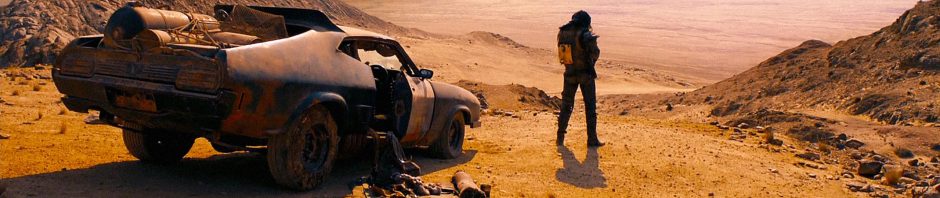
As Hercules, Dwayne “The Rock” Johnson– wait, that isn’t… oh shit, this is from the other 2014 swords-and-sandals Hercules movie. Photo courtesy Summit Entertainment

Brett Ratner has a unique and annoying knack for making movies that deliver everything they promise viewers, but are still somehow unsatisfying. Outside of the sublime Rush Hour trilogy, pretty much everything he’s ever made falls into this category.

His new movie, Hercules, strikes exactly these chords. Dwayne Johnson plays the titular demigod and does a good job of making the movie watchable. In this film, Hercules straddles the line between being a god and a mercenary with a divine reputation as he and his team train the Thracian army to ward off attacks from bloodthirsty Rheseus (Tobias Santelmann) and his army of centaurs. During training, Hercules wrestles with memories of the 12 Labors and visions of his lost wife and children who were killed by Cerberus, the three-headed dog that guards the underworld who’s death was Hercules’ last, uncompleted task for the gods.

The movie is actually very interesting. It’s unclear whether Hercules is the god of legend or a man who has fostered a larger-than-life reputation, and the film is constantly playing with the uncertainty. Glimpses of creatures from Greek myth are layered onto reality, only appearing in dreams or when the light hits them just right. The movie is open to wide interpretation.

Continue reading →

Posted in Entropy | Leave a comment

Where the hell did that myth start?

There’s not even very much action. Lucy mostly uses her psychic powers to just own everyone without really trying. Photo courtesy Universal Pictures.

Humans do not use only 10 percent of their brains. That’s fucking stupid, and if you believe it, you’re stupid.

Luc Besson’s new movie, Lucy, is based on this inexplicably wide-spread myth. Lucy (Scarlett Johansson) is kidnapped and forced to smuggle drugs in her abdomen. The bag of drugs ruptures, and the intense dose allows her to access more of her brain. She uses her newfound brain powers at first to shut down the drug ring that kidnapped her, then explain the lame premise in further detail to brain researcher Samuel Norman (Morgan Freeman).

What Besson has done here is build a bad movie sloppily on top of a good one. The first part of the story is cleverly intercut with rudimentary but effective natural equivalent sequences, such as a cheetah capturing a gazelle as the mobsters kidnap Lucy. It’s not the most original thing in the world, but it makes for an OK artsy experience.

Continue reading →

Posted in Entropy | Leave a comment

You can go see Boyhood… I don’t know, any time now

How did they know he’d grow up to look so much like Ethan Hawke? Witchcraft! Photos courtesy IFC Films.

As good as it is, Boyhood’s main characteristic is that it’s really, really long.

A unique and commendable production, the film as shot with the same actors of the course of 12 years. The script was written on the fly to reflect things happening in the lead actors’ lives. Over the course of the film, Mason Jr. (Ellar Coltrane) grows up as the child of three divorces. His mother’s marriages collapse around him as background music gets more and more recent. There isn’t really a beginning, middle or ending to this film — it just sort of goes on.

Whether or not a viewer enjoys himself, it is a monumental exercise of disciplined filmmaking.

Continue reading →

Posted in Entropy | Leave a comment

Rise, Dawn, Onset, Beginning, Day One…

‘MMMMMMMMMMURICA!!! Photos courtesy 20th Century Fox

Advancement, Daybreak, Construction, Erection…

In Rise of the Planet of the Apes, Caesar (Andy Serkis) led an ape revolution after being subjected to Will Rodman’s (James Franco) miracle Alzheimer’s drug. At the beginning of Dawn of the Planet of the Apes, multiple newsreels explain that most of humanity has been wiped out by an apocalypse-level flu epidemic — conveniently caused by that same drug.

The apes live in peace in Muir Woods. Humans live in a dense colony on the San Francisco Peninsula. The two come into contact when the humans, within two weeks of running out of power, try to restart a hydroelectric dam in the apes’ woods. In a bizarre combination of un-Sign Language and broken English, the apes demand the humans stay on their side of the bridge. But they can’t do that, because electricity.

There’s knowing how the story will go, then there’s Dawn of the Planet of the Apes. I’ve genuinely had less predictable experiences reciting the alphabet. Every dramatic moment is telegraphed.

Continue reading →

Posted in Entropy | Leave a comment

Using mathematics to predict the Planet of the Apes

In mathematics, an asymptote is a line that a graph can infinitely approach, but never quite reach. The most basic example is f(x)=1/x. It looks like this:

Asymptote

Graph courtesy rationalskepticism.org

As you can see, with x in the denominator, as x increases, f(x) infinitely approaches zero, but can never reach it. Zero isn’t 1/anything itself, and to divide by zero would be to destroy the universe. The number to complete the equation when either x or f(x) equals zero simply doesn’t exist on this number line. Both the x and y axis are asymptotes in this graph.

When x equals somewhere between .25 and 4, both x and f(x) are manageable. But anywhere outside that range, and the line is infinitesimally close to the axis, never crossing either of them. The pattern repeats on the negative side.

What does this have to do with Dawn of the Planet of the Apes? Well, everything!

Continue reading →

Posted in White Noise | Leave a comment