A less chaotic state: 2003’s Daredevil

Photo courtesy 20th Century Fox

Way back at the turn of the century when Marvel began its two decades and counting dominion over the box office with X-Men, no one could have imagined the sustained success the film industry would eventually bring them, but it’s looking more and more like someone did have a vague idea of how it would all play out. Marvel used established studios Sony Pictures and 20th Century Fox that could afford the risk to test the market with properties like Spider-Man, X-Men and the Fantastic Four to spawn a series of movies that I like to think as Marvel’s Phase 0.

After Marvel made its own film studio and established dominance with the first Avengers movies, many of the properties have been trickling back into their hands. Marvel had already reacquired the rights to Hulk after the Ang Lee disaster, and it recently won a long battle with Sony over Spider-Man. 20th Century Fox is doing just fine with X-Men and hopes to get Fantastic Four up and running this summer, though traditional X-Men characters Quicksilver and Scarlet Witch will figure prominently in The Avengers: Age of Ultron.

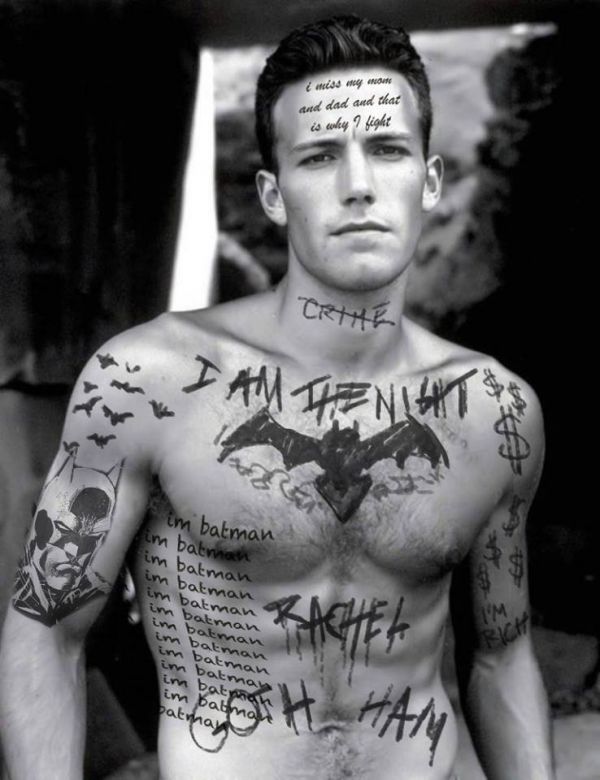
Of those first five properties, Daredevil is the only one nobody was fighting over. The film was coolly received at the time, and despite members of the cast expressing interest in sequels around the darker Born Again and Guardian Devil storylines, the only movie it spawned was 2005’s reviled Elektra. Criticism was so harsh for star Ben Affleck in particular that he said he’d never dress up in a costume again, a vow he has vehemently held to ever since.

Continue reading →

Posted in A less chaotic state | Tagged , , , , , , , , , , , , , , , , , , , , , , , , , , , , , , | Leave a comment

NO NARRATING

It’s far from the worst thing about the film, but The Age of Adaline isn’t helped by Blake Lively’s pulse-less non-performance. It could have been a lot worse — Katherine Heigl was the first choice, but it also could have been a lot better — Natalie Portman was the second. Photos courtesy Lionsgate.

It’s happening! It’s finally here! Everybody get ready for Age of… Adaline. Oh.

The Age of Adaline is about Adaline Bowman (Blake Lively) as she struggles to retain her humanity after a bolt of lightning freezes her at 29 years old in the 1930s. Bowman has been changing her identity and moving to a new place at regular intervals for 60 years and avoided making emotional attachments because people will grow old on her and die, though she’s clearly just fine having a dog. On the eve of one of these shifts, she meets Ellis Jones (Michiel Huisman), who dotes on her and forces her into a relationship she says she doesn’t want to get into. Eventually, they go to celebrate Jones’ parents’ 40-year wedding anniversary and discover that his father, William (Harrison Ford), is an old love of Bowman’s.

Despite its primitive nature as a storytelling method, there are several reasons to use narration in a movie. It can provide insight into a character’s state of mind and decision-making process, add background details that are otherwise unexplained or simply be a poetic, stylistic choice like in Sin City. It should not be used, however, to explain everything as it’s happening to the audience like we’re a bunch of fucking idiots.

Continue reading →

Posted in Entropy | Tagged , , , , , , , , | 1 Comment

Girl Problems from the Machine

Nathan’s man-cave is high-tech and well-lit, but also pretty kidnappy, with doors that lock automatically when the power goes out and this weird, fascist key-card system he insists on. Photos courtesy A24 Films.

Ex Machina is a beautifully shot, exhilarating film about paranoia and humanity, but it loses some points over its nasty but intriguing gender issues.

The film starts with Caleb (Domhnall Gleeson) winning a week with Nathan (the scintillating Oscar Isaac), a hermit software genius who became a billionaire after developing something akin to Google. Soon after they meet, Caleb learns what he’s really won: the chance to be the human part of a Turing test with the artificial intelligence that Nathan has developed, an android named Ava (Alicia Vikander), though it is clear early on that the real test is for Caleb.

The trailer spoils pretty much everything and most people would be able to figure out the plot even without it, but Ex Machina has a way of making viewers not expect what’s going to happen anyway. The film obviously has some complex messages about the way we use technology and how we interact with members of the opposite sex, but they’re all buried underneath an equally complex, visually rich story about two people having a battle of wits over the main character’s heart and mind.

Continue reading →

Posted in Entropy | Tagged , , , , , , , , | 1 Comment

Child 44 film by the West, for the West, about the East

“There can be no murder in paradise.” Photos courtesy LIonsgate.

The thing about period pieces is the viewer needs to already have some knowledge of the period in question. Child 44 would have been better as a Russian film for several reasons, but as an American/English production for American and English audiences, it falls flat.

The film is set in 1953 U.S.S.R following Leo Demidov (Tom Hardy), an MGB agent tasked with finding and killing spies, which seem nonexistent in the film. Early, he is asked to investigate his wife, Raisa Demidova (Noomi Rapace). In a second, unrelated plot, a serial killer who preys on children stalks the railroads connected to Moscow, but Demidov is not allowed to investigate because murder cannot exist in the perfect communist state.

The two plot lines compete with and take away from, rather than compliment, each other.

Continue reading →

Posted in Entropy | Leave a comment

True Story a taut thriller

As a journalist myself, the film immediately looses all validity by asking me to sympathize with a man who fabricated a story. It then gains it back by implying he is the same as a maniac like Longo. Photos courtesy Fox Searchlight Pictures.

True Story is one of the most emotionally tense movies of the year.

The movie tells the true story — teeheehee! — of journalist Michael Finkel (Jonah Hill) and killer Christian Longo (James Franco). Early in the film, Finkel is fired from the New York Times for fabricating a composite character in a story about contemporary African slavery. Later that year, he learns that Longo, taken by the FBI for murdering his wife and three children, was using Finkel’s name when he was taken. Finkel visits Longo in prison and resolves to write a book on him. The film consists of their conversations approaching trial as well as carefully cut montages that promise to reveal the truth behind Longo’s crime.

The film succeeds at the surface level due to intense dialogue, wonderfully unsettling set pieces and sterling performances from its leads and Felicity Jones. Franco is sinisterly melancholy as the accused murderer. Hill gives a subtler, but just as keen a turn, as does Jones as Finkel’s girlfriend, Jill.

Continue reading →

Posted in Entropy | Leave a comment