
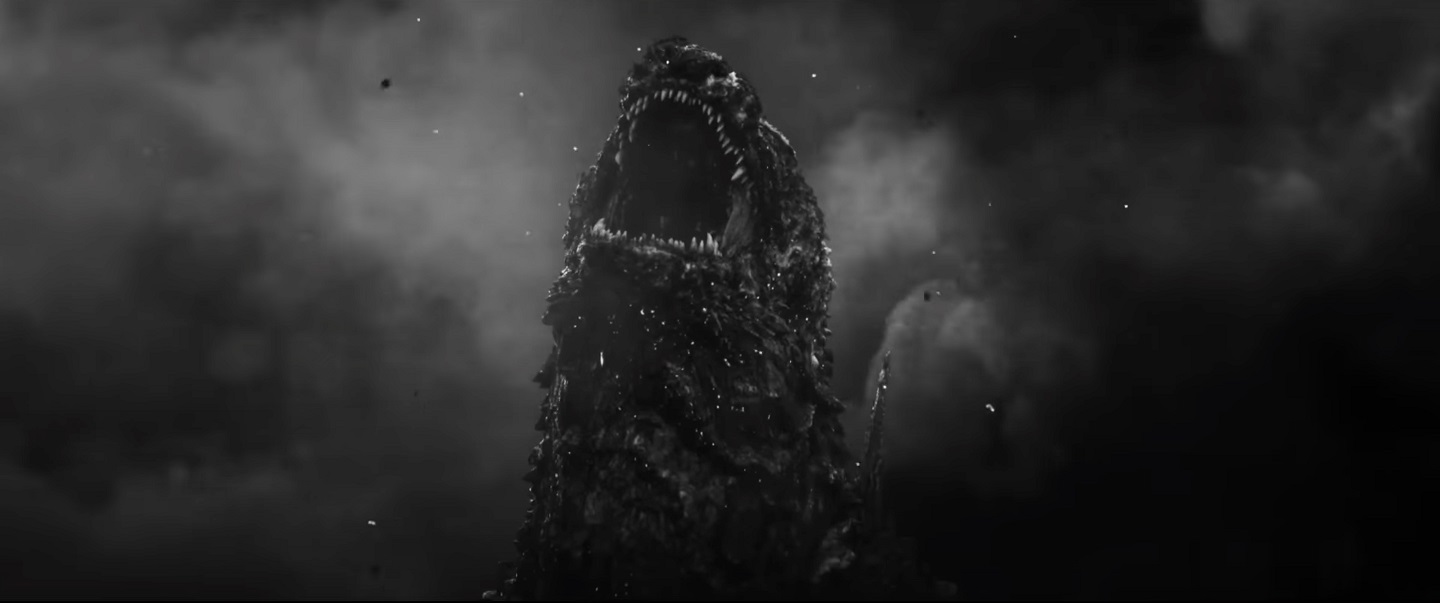
In 1954, less than 10 years after the atomic bombings of Hiroshima and Nagasaki, Toho and writer/director Ishirō Honda reconceptualized the attacks as a monster that emerged from the sea, its skin cracked and charred as if by nuclear blast, its breath befouling the air around it with fallout, and its name was the wrath of God. Godzilla immediately became a pop-cultural sensation and symbol of the Japanese mood as it changed over the decades, frequently fighting off bigger threats as an anti-hero or even a goofball. The title Godzilla Minus One comes from the idea that Japan was at “zero” after the bombings, and Godzilla’s emergence put them at “minus one.”
It’s remarkably similar to the original film, but with 80 years’ hindsight instead of 10, Godzilla Minus One is less about exploring the trauma of the nuclear attacks and more about interrogating the Japanese culture that led the country to this and the traumas of demilitarization and emasculation of individual Japanese. Perhaps the most notable difference is that, while Godzilla was contemporary to its 1954 release, Godzilla Minus One begins months before the nuclear attacks.
Continue reading


 Reel Entropy