‘Charlie’s Angels’ poorly made, poorly sold

Poorly composited promotional material like this is what doomed Charlie’s Angels. Everything’s there — dresses, guns, pretty ladies — but even a layman can tell that not everything is really there. And what’s the deal with that triangle thing? Images courtesy Sony Pictures Releasing.

3/10 Charlie’s Angels was immediately an interesting idea, taking old sexploitation from the ‘70s and repurposing it as a movie about, by and for women. This is readily apparent in the marketing, which doesn’t seem to be aimed at moviegoers at all – it looks like a commercial for a feature-length commercial, emphasizing fashion, feminine confidence and power, dancing and music from fluffy pop artists who are nowhere near as popular with men. Then writer/director/producer/star Elizabeth Banks put her foot in her mouth over it, and the experiment’s no fun anymore.

In Charlie’s Angels, engineer Elena Houghlin (Naomi Scott) is working on Calisto, a magical icosahedron that can provide renewable energy, but also sometimes turns itself into a bomb. When her company tries to go to market before the product is safe, she turns to the authorities – in this case, the Townsend Agency, an international collective of women spies. Houghlin is joined by angels Sabina Wilson (Kristen Stewart) and Jane Kano (Ella Balinska) and a Bosley (Banks) to stop Calisto from going public.

Continue reading →

Posted in Entropy | Tagged , , , , , , , , , , | Leave a comment

‘Ford v Ferrari’ less the true story, more the story you want to be true

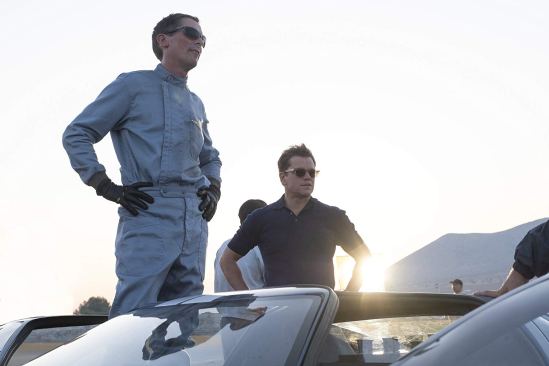
It’s a little thing, but it was great to hear that 20th Century Fox fanfare again, possibly for the last time. Images courtesy 20th Century Fox.

7/10 There’s a clear intent behind Ford v Ferrari that’s successfully born out. The intent to evoke the type of movie you’d find channel surfing on a Sunday afternoon, its 152-minute runtime expanded to fill a three or four hour window, left on in the background while you stare without seeing and quietly dread the next morning.

It’s that type of movie, and it’s made for the type of person who thinks that’s still a normal way to consume movies.

Ford v Ferrari, titled Le Mans ’66 for international release, goes through a mostly fictionalized version of the Ford Motor Company’s dramatic entry onto the international racing scene, first by attempting to buy Ferrari in 1963, then by beating them at the 24 Hours of Le Mans, the world’s oldest and most prestigious endurance race. To do this, Ford hires car designer Carroll Shelby (Matt Damon), one of only three Americans to win the race at the time, who was forced into early retirement because of a heart condition, and he brings in his chief partner, Ken Miles (Christian Bale). Known for his temper and hatred of top-down organization, Miles has a rocky relationship with the bureaucrats at Ford. Continue reading →

Posted in Entropy | Tagged , , , , , , , , | Leave a comment

‘Jojo Rabbit’ is good for the first half hour, then gets sad

There’s a running gag where characters will express their enthusiasm for Nazism by forming a swastika with their bodies, like Taika Waititi’s imaginary Hitler does here. Image courtesy Fox Searchlight Pictures.

4/10 At its outset, Jojo Rabbit is everything it’s promised to be, sort of like the most twisted Wes Anderson movie ever made. With cheerful colors, square compositions and sharply angled camera moves, the film opens on a Hitler Youth weekend camp, where young Aryans get to experience some of the things that the mighty Wehrmacht go through every day. The film skewers Nazism and white supremacy in general by making a genuine attempt to package and sell its ugliest and most violent realities as delightful and kid-friendly.

That’s the first half hour or so, and then the laughs kind of stop.

Continue reading →

Posted in Entropy | Tagged , , , , , , , , | 1 Comment

Norton’s ‘Motherless Brooklyn’ a crass excuse to play Tourette’s, also an evocative and rewarding film

Cornflower blue does not belong in a neo noir! Images courtesy Warne Bros. Pictures.

5/10 Motherless Brooklyn feels less like a movie and more like Edward Norton and his pals playing dress-up, and that’s not the worst concept for a movie I’ve ever heard of.

New York City, 1957- Lionel Essrog (Norton, who also writes, directs and produces), Frank Minna (Bruce Willis) and the rest of Minna’s firm grew up together at the local Catholic orphanage during the Great Depression, served together in World War II and now all work together at Minna’s private detective agency/car rental service. Minna is seen as a mentor and quasi-savior by all of them, and Essrog, who sees himself as otherwise unemployable due to his debilitating case of Tourette Syndrome but is used extensively by Minna for his incredible photographic memory, particularly reveres him.

That’s why Essrog is particularly devastated when Minna, who is notoriously tight-lipped about his cases even with employees, is murdered by a client early in the film, shot in the back with his own weapon. Essrog, with no help from his co-workers and now forced to do the front-facing work he’d been kept clear of for years, resolves to figure out who killed Minna, a quest that uncovers extensive corruption in the city’s development organizations lead by Moses Randolph (Alec Baldwin), an thinly veiled caricature of New York City’s real-life master planner Robert Moses.

Continue reading →

Posted in Entropy | Tagged , , , , , | Leave a comment

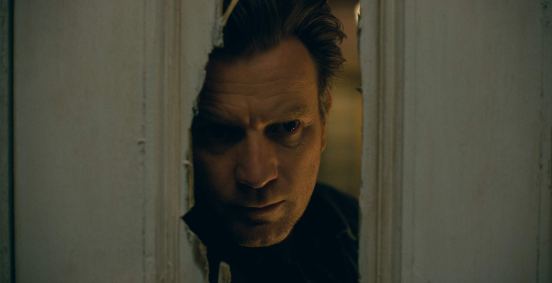
‘Doctor Sleep’ made with love, pulled down by editing

Images courtesy Warner Bros. Pictures.

6/10 As the ‘10s come to a close, the 30-year cycle of media nostalgia for the ‘80s is in full swing. The specific subset of romance for Stephen King media reaches its theoretical nadir with Doctor Sleep, both a sequel to Stanley Kubrick’s The Shining and an adaptation of “Doctor Sleep,” Stephen King’s sequel to “The Shining.” That may sound like the same thing, but because of King’s famous hatred for the Kubrick film, they’re essentially two separate projects at once.

While the resulting movie is better than it has any right to be, the fact that neither should ever have been made is clear within the runtime. 

Continue reading →

Posted in Entropy | Tagged , , , , , , | Leave a comment