Come on ‘Barbie,’ let’s go party with gender theory

Images courtesy Warner Bros. Pictures.

9/10 Barbie is an irrepressible explosion of high fashion, joyous and extraordinary set design and deliberately off-kilter dialogue and body language all delivered with a stone-cold straight face from writer/director/executive producer Greta Gerwig. It may be categorically a satire, but none of it is a joke.  

Barbie (Margot Robbie, who also produces), an anthropomorphization of the iconic doll, lives an idyllic life in Barbieland, which appears to be a pocket dimension in Venice Beach in Los Angeles, where she relaxes and parties and sings and dances every day and night with all the other Barbies. She imagines herself and the other Barbies as uncontroversial icons of female empowerment, beauty and opportunity.

Suddenly, Barbie appears to start aging, unable to recover from the previous night like she once did, and the plastic, imagination-powered plumbing and kitchen wares of her Dreamhouse begin to malfunction as she is plagued with thoughts of her own mortality. She makes a pilgrimage to Weird Barbie (Kate McKinnon), who tells her that she must go to the real world and solve the existential crisis of her owner, or she will continue to age. She is followed by her faithful but hopeless suitor, Ken (Ryan Gosling).

Continue reading →

Posted in Entropy | Tagged , , , , , , | 1 Comment

‘Mission: Impossible,’ the gold standard and the movie of the moment

“Dead Reckoning” is a navigation term for determining an object’s position based on momentum and prior location, and it’s the perfect title for this movie. Images courtesy Paramount Pictures.

9/10 Mission: Impossible – Dead Reckoning Part One has been the movie of the moment since December 2020, when audio leaked of producer/star Tom Cruise tearing into a couple of technicians for standing too close to each other. In the almost three-minute rant that has become like a Bible verse to me, Cruise screeches-

“We are the gold standard! They’re back there in Hollywood making movies right now because of us! Because they believe in us and what we’re doing … You can tell it to the people that are losing their fucking homes because our industry is shut down! It’s not going to put food on their table or pay for their college education! That’s what I sleep with every night, the future of this fucking industry! We are not shutting this fucking movie down!”

Cruise and the Mission: Impossible series are indelibly linked. The series began in 1995 as Cruise’s personal outlet to keep doing his own stunts when productions would no longer shell out to insure him risking his incredibly lucrative face, and as the series and his career resurrected in the early ‘10s, they’ve done so as icons of the type of hardcore filmmaking that is quickly fading into history. It’s beyond fitting that this is the guy who was fighting insurance companies to keep making movies during the COVID-19 crisis, the guy who passersby catch hanging out on the roof of a train between takes.

Continue reading →
Posted in Entropy | Tagged , , , , , , , | Leave a comment

Flaccid lack of humanity flatlines ‘Insidious 5’

Images courtesy Columbia Pictures.

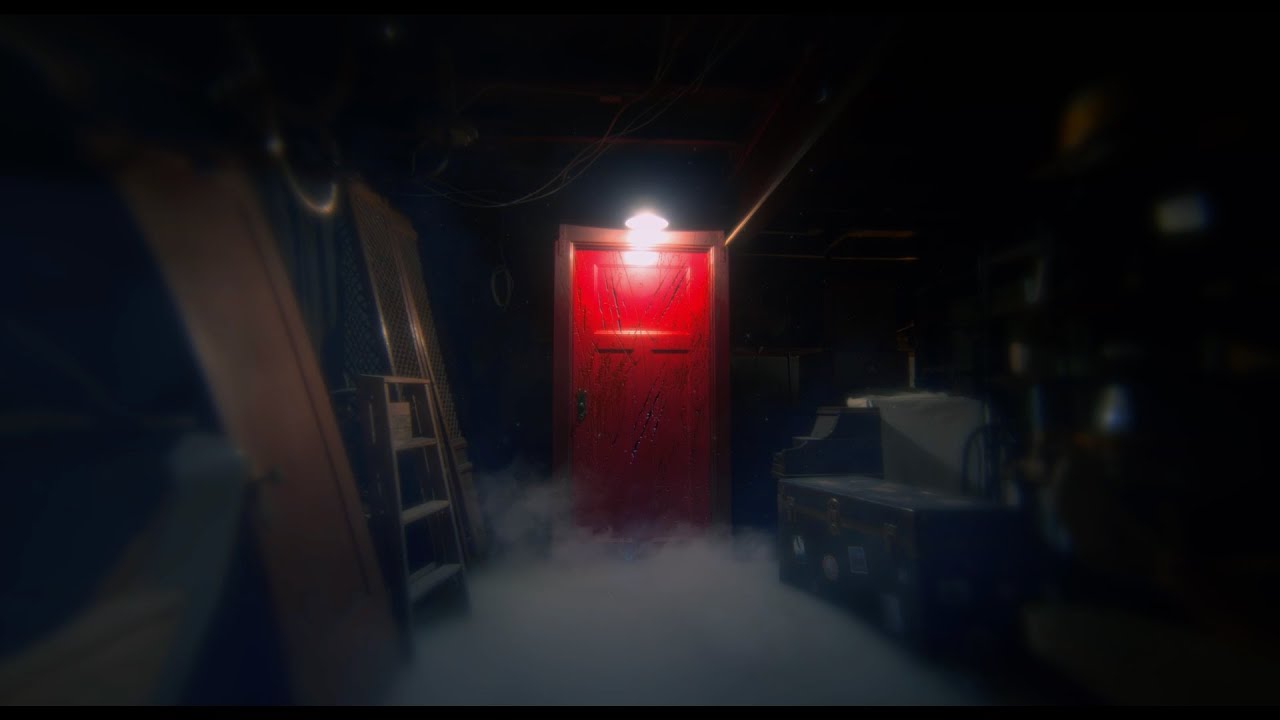
2/10 In Insidious: The Red Door, horror icon Patrick Wilson, the male lead of every mainline Insidious and Conjuring movie to date, finally brings his flaccid disinterest to the director’s chair.

The film begins with Josh Lambert (Wilson) reminiscing over video of himself taking care of Dalton Lambert (Ty Simpkins) as a baby. In the video, he offers to not change the protesting Dalton’s diaper, to just clean the shit out of it and put it back on. It’s a remarkable self-own for the fifth Insidious movie in 13 years, a franchise that feels imminently forgettable even as it reliably banks $100 million. The rest of the film packs in much more soiled diaper imagery than I was prepared for.

Insidious: The Red Door is set nine years after Josh and Dalton Lambert undergo hypnotherapy so that they, like me, have completely forgotten the prior Insidious movies. Predictably, this has led to divorce and ongoing disconnect while failing to address the problem, which is that they both astrally project into an underworld dimension called the Further when they sleep. As Dalton Lambert arrives at college, their shared repressed nightmare erupts to the surface.

Continue reading →
Posted in Entropy | Tagged , , , , , , , , | Leave a comment

15 years later, ‘Raping Indy’ again

Images courtesy Walt Disney Studios Motion Pictures.

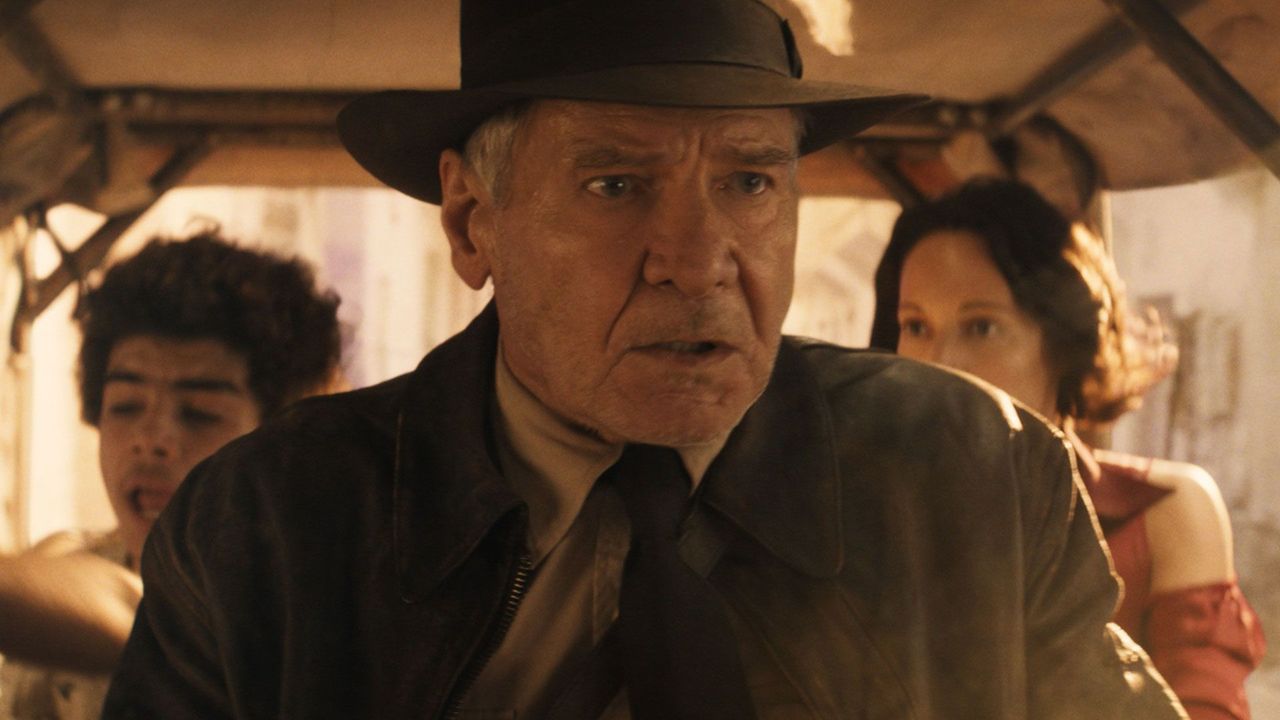
3/10 In 2008, Steven Spielberg and George Lucas finally dusted off Indiana Jones after 20 years for his fourth of five appearances greenlit all the way back in 1979 with Indiana Jones and the Kingdom of the Crystal Skull. It was not well-received. Probably the most prominent memory of the film is the way “South Park” codified audience reaction, reimagining the film as a traumatizing series of violent rape scenes with Spielberg and Lucas, both perceived to be on the downslope of their careers at this time, exploiting their old character sexually instead of just financially.

Now it’s 15 years later, Spielberg has moved on from nostalgia but kept his career in full swing and Lucas has pawned all his intellectual property off to Disney, and after immediately running Star Wars into the ground, the company has spawned more Lucasfilm filth with Indiana Jones and the Dial of Destiny, and it’s the same damn movie. It’s a new director, a new production company, a new decade and a new paradigm of blockbuster filmmaking, and it’s the same movie down to so many of the worst details.

Continue reading →
Posted in Entropy | Tagged , , , , , , , , , , , | 1 Comment

‘Past Lives’ warrants a lot of early best-of-the-year noise

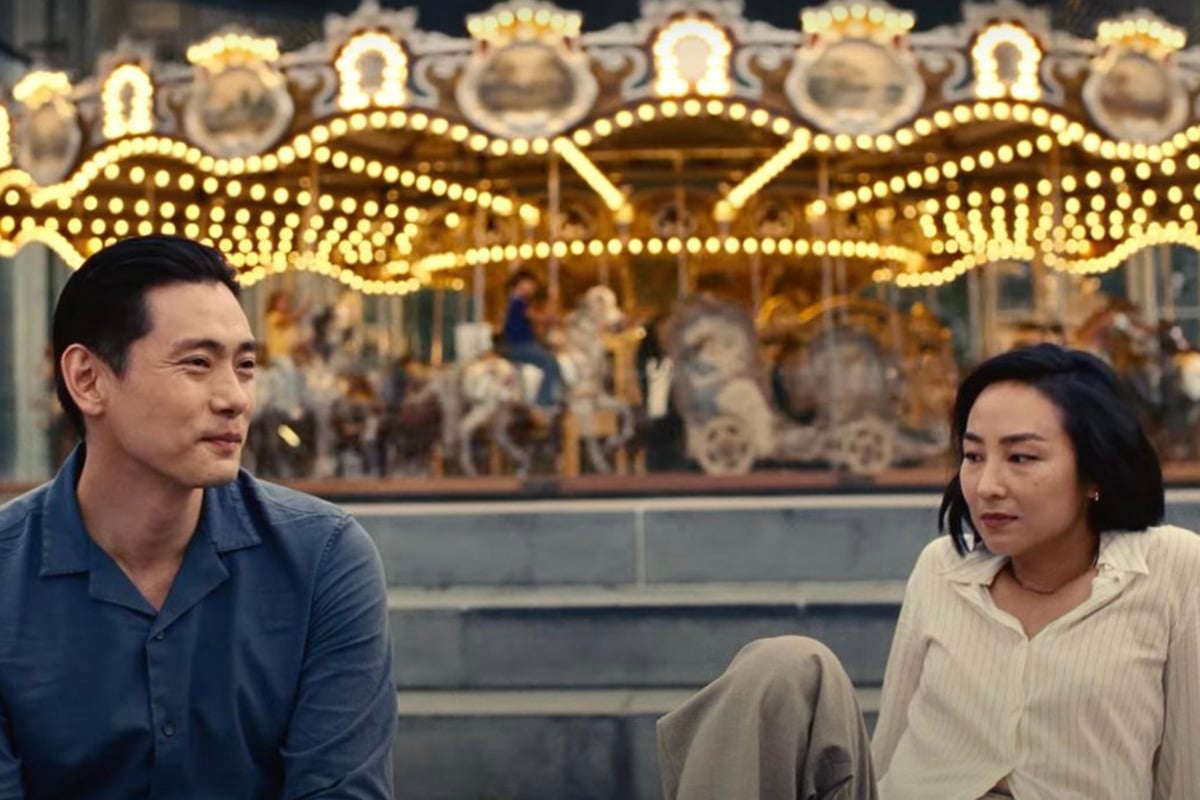
Past Lives has been called “broadly autobiographical” from Korean-Canadian playwright and first-time writer-director Celine Song, and I’m not sure what that means, but in the last stretch, it obviously becomes a personal love letter to New York from the Columbia University graduate. Images courtesy A24.

8/10 Past Lives opens with a J cut, transitioning from sound on a black screen to a shot of the love triangle in one of the final scenes at the bar, the only shot in the film from outside the romantic leads’ perspectives. A background character behind the camera, whose point of view we assume we’re seeing, wonders aloud what their story is. Perhaps the entire film is this outside observer’s fantasy? It would certainly fit the airy mood and theme of worrying about multiple possible selves, but it undercuts everything else we see that this framing device, the possibility that not only is the whole thing some fantasy – of course it’s some fantasy, it’s a movie – but someone else’s fantasy, isn’t just included in the movie, it’s the first thing we see.

In South Korea, presumably 12-year-old classmates Na Young (Greta Lee and Seung Ah Moon) and Hae Sung (Teo Yoo and Seung Min Yim) spend their final days together before Na’s family emigrates to Toronto. Twelve years later, Na has Anglicized her name to Nora and is a successful writer in New York City when Hae, still in Seoul, finds her on social media. They enter a de facto romantic relationship, but take a break when neither is willing to visit the other. Twelve years later, Nora is now married, and Hae finally visits New York.

Continue reading →
Posted in Entropy | Tagged , | Leave a comment