
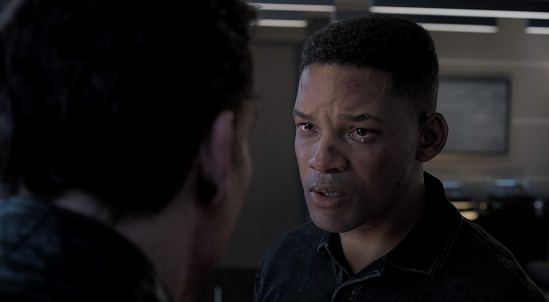
Most of the problems with Junior’s animation are in his nose and upper lip, but only when he’s speaking. It could be that shooting at a normal frame rate would make this digital recreation of a younger Will Smith look much better. Images courtesy Paramount Pictures.
3/10 Gemini Man, and its key concept of using one actor in two roles as both the lead character and his clone, has been in development in some form since 1997, when writer Darren Lemke sold the concept to Disney. In that timespan, between Disney not really developing the project and anyone who did want to push forward also wanting to wait for technology to catch up, it’s been rewritten by six different writers — final screenplay credits went to Lemke, Billy Ray and David Benioff — had four different directors attached and 11 different actors attached to lead at different points, including Harrison Ford, Mel Gibson, Nicolas Cage, Tom Cruise and Sean Connery. All this waiting and all this maneuvering was only for the technology to finally be employed in this uncurious, easily forgettable film.
In Gemini Man, accomplished assassin Henry Brogan (Will Smith) retires from his shadowy government organization to spend more time with his remaining humanity. For reasons that either are never made clear or were buried in boring dialogue scenes I wasn’t really paying attention to, his superior, Clay Varris (Clive Owen) immediately sends a much younger assassin to kill him — Brogan’s genetic clone, known only as Junior (also Smith, created with a combination of motion capture and de-aging digital effects).

 Reel Entropy