

There’s a new mystery box dealer in Hollywood. His boxes are also empty.
The mystery box is always empty.
Maybrook, Pennsylvania, 2:17 a.m. on a Wednesday- Seventeen children from the same class at Maybrook Elementary, as one, get out of bed and run out into the night. Police interview their teacher, Justine Gandy (Julia Garner), and their only remaining classmate, Alex Lilly (Cary Christopher), but get nowhere and apparently do nothing else. The story picks up a month later after the school has reopened and follows a handful characters who continue to unravel the mystery, primarily Gandy and one of the missing children’s fathers, Archer Graff (Josh Brolin, who also produces executively).
Basically, Weapons is just the 2013 film Prisoners with a little more shock value at the outset and none of the emotional depth, and that’s the movie you should watch instead.
Weapons is the fourth movie from “Whitest Kids U’ Know” founder Zach Cregger, but only the second that isn’t directly connected to the troupe. This new film is being advertised on the strength of his breakout, 2022’s Barbarian, which has a similar story structure and a lot of the same problems.
Weapons cuts away from its own action way, way too often, mostly to cover up for the fact that it barely has any. It’s hugely dissatisfying as a horror film – its only scares are cheap jumps in dream sequences – and it tries half-heartedly to transition to an action-comedy about halfway through.
It’s also hugely dissatisfying as a mystery, because we never solve the mystery. We eventually meet the villain, the film’s only well-written character filled out with a delightful performance from Amy Madigan, and we get a lot of detail about how she’s doing what she’s doing, but nothing about why. The film begs several questions about her origins and goals and leaves all of them unanswered.
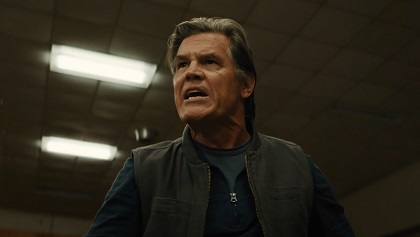
It feels like all the pre-release reactions to this movie are from pretty soft viewers. “Twisted” is a frequent compliment, but there’s nothing twisted about it – without more information about the villain, it’s hard to say that she’s evil, let alone twisted. I’m counting only five kills, all of which are grotesque but shot with relative discretion, so it’s unimpressive on that front as well.
Both films were heavily advertised mysteries that, while they bring plenty of twists and turns, can’t possibly satisfy after that degree of buildup. It’s an inherent contradiction between marketing and genre, and it’s one of the limits mystery box films always run into. A regular mystery movie markets its mid-mystery appeal, that you’ll have a funny or suspenseful time unraveling things, but a mystery box movie markets that you’ll learn what the big twist is, and big twists are never what make a movie interesting.
Weapons does have a lot of mid-mystery appeal in its overall quality. This is a beautiful, high-production value film. We’ve got a giant 2.39:1 aspect ratio for IMAX screenings – though it doesn’t seem to be taking many screens away from the three-week-old Fantastic Four movie – and terrific performances from a great cast, but ironically, those are in service of a limp story full of thinly written characters. I really want to see Cregger approach a more traditional genre film, possibly with a different writer, because these are high-quality productions, there just isn’t anything in them.
The biggest problem with both films is they’re filled with badly written, weak, stupid characters, Weapons much moreso. I hate them and I hate to watch them. We spend 128 minutes split between the first-person perspectives of six lead characters, all of whom are flawed and behaving badly in line with their flaws, but that’s the extent of it. The flaws aren’t springboards for emotional growth or any real internal conflict, or even to interrogate the mental traps these characters are stuck in. They’re only plot contrivances for why the characters fail in the ways that they do. We can only accept that everyone in the film is irredeemable.
Barbarian used suburban decay shot on-location in Detroit actively to extend its story into a larger metaphor for American life, the rot in plain sight in our cities overgrowing into the systemic sexual violence that also thrives inexplicably in plain sight. Weapons, by contrast, has almost nothing to say, and knowing more about the Main Street USA town it take place in makes it less believable. It might be a metaphor for school shootings in America, but if that was the idea, we should spend most of our time in the shock and grief of the immediate aftermath, and the one-month timeskip completely removes the movie’s soul as we skip straight to the resolution. You could stretch to argue that it’s about the selfish, disinterested adults who allow these things to happen and move on in a month’s time, but that makes even less sense – we spend all our time with the adults who still care, and the villain’s lack of clear goals becomes an even bigger missed opportunity if this is the intended reading.
In addition to character and motivation problems, the film also requires you to suspend a lot of disbelief. We’re hit with the one-month timeskip, then watch Graff triangulate the children’s position with ringcam footage, which is the very first thing that should have been tried, and it works like a charm. Breathtaking police incompetence is an explicit part of this story, with an entire character, Paul Morgan (Alden Ehrenreich), dedicated to exploring what policework looks like when an officer only cares about himself, but it’s really hard to be told “one month later” and then watch the mystery unravel easily in a few days based on already-available evidence. The observation that everyone in this movie is terrible at everything they do doesn’t cover it.
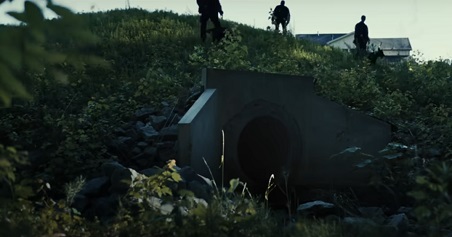
Director J.J. Abrams, who coined the term “mystery box” in his TED Talk, was allowed to basically destroy culture by applying this idea to Disney’s first Star Wars movies. It looks like Cregger is here to make as much cash as he can repeating the process, but if I had to guess, I’d guess that he’s in on the joke. After the wild success of Barbarian, his spec script for Weapons triggered a bidding war between several distributors, with New Line eventually winning with $38 million, $10 million of which went directly into Cregger’s pocket as writer, director and producer with final cut privileges – still an extreme rarity in Hollywood.
Cregger’s movies don’t abandon basic narrative components, like endings, so it feels unfair to compare his mystery boxes to Abrams’, but even with an ending attached, is it really any more satisfying? Is anyone going to remember Weapons in five years, when its ending details are common knowledge? If there were something in this movie worth watching over and over again, it would have been marketed on that strength.
This is why we say the mystery box is always empty. Good products get displayed.
The distributors’ behavior here, and those numbers, are hilarious, because Barbarian was not a wild success. It made $40.8 million domestic, which is terrific against its tiny $4 million budget, less than half of what Cregger is taking as a personal salary on Weapons, but that’s not a lot of actual meat in the seats. For a low-level blockbuster, that would be an alarming single-weekend figure, and even Conjuring type movies that trade on their lower budgets wouldn’t be happy with that number – those usually cost $20 million these days anyway, with the name recognition they’ve built.
If Weapons doesn’t do at least three or four times as much business as the movie it’s billing itself on the strength of, films “from the director of Barbarian” may also vanish suddenly into the night.
Leopold Knopp is a UNT graduate. If you liked this post, you can donate to Reel Entropy here. Like Reel Entropy on Facebook and reach out to me at reelentropy@gmail.com.


Pingback: Cregger’s spectacular ‘Resident Evil’ is the new template for video game movies | Reel Entropy