
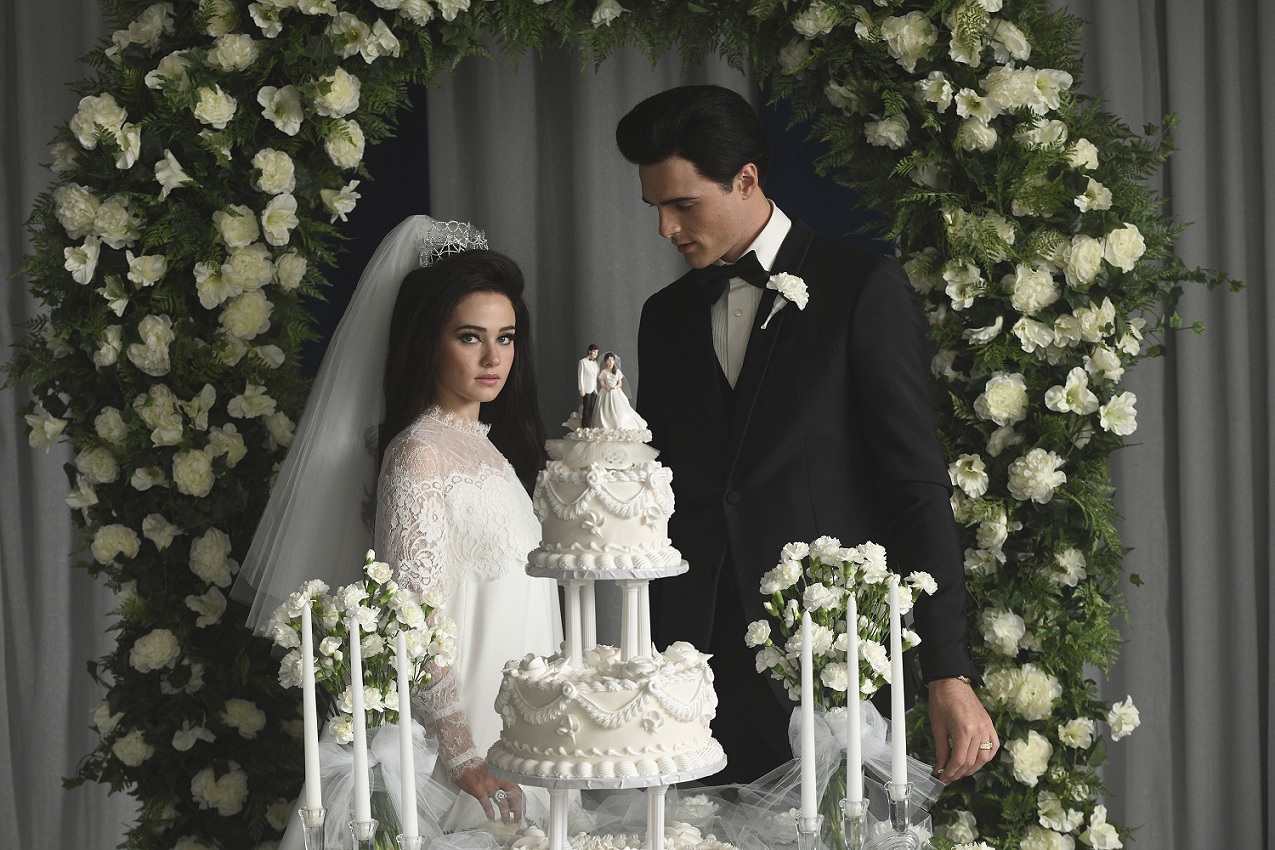
A long-noted omission from the great American tradition of masturbatory, near-identical musician biopics, Elvis has now been the subject of two movies in as many years – though in both films, Elvis himself is a distant figure. First, Elvis, Baz Luhrmann’s extremely Baz Luhrmann epic about his infamous manager, Col. Tom Parker, in which Elvis is star performer whose human needs clash with Parker’s shady deals, and now Priscilla, writer/director/producer Sofia Coppola’s extremely Sofia Coppola moodpiece in which he is an often-absent husband more interested in pills than his wife.
Shooting in the fall after Elvis released, Priscilla is much more a response than it is a sibling, but the more important relationship is between the people who stood to make money from these things. Elvis was finally greenlit by the couple’s daughter, Lisa Marie Presley, who controlled her father’s estate and sold his life rights because she was running out of money. Priscilla, on the other hand, is based on Priscilla Presley’s autobigraphy “Elvis and Me: The True Story of the Love Between Priscilla Presley and the King of Rock N’Roll,” and she’s listed as an executive producer on the film. Coppola approached her for the rights with the explicit intent of giving Priscilla a voice after a movie Coppola felt pushed her aside, and production was announced in September 2022. Priscilla is all about perspective, not from an artistic standpoint, but existentially. This is Priscilla’s narrative, based on her words from the 1980s and made with her blessing and oversight, and having seen the film, I’m not sure what the burning need was for it.
Bad Nauheim, West Germany, 1959- World-famous popstar Elvis Presley (Jacob Elordi), 24, drafted into the Army and stationed in Europe during the first peak of his fame, develops a crush on a nearby Air Force captain’s daughter, 14-year-old Priscilla (Cailee Spaeny). The film follows as he whisks her away to Memphis and marries her after she’s of legal age until their divorce in 1973, filmed almost entirely from their underused bedroom. The visual thrust of Priscilla is the image of a grown man in his mid-20s talking to a girl in her mid-teens, but the lingering image is of Priscilla later in their marriage, now an adult and still eagerly attracted to her sex-symbol husband, lying alone in their bed unfucked.
Priscilla is reportedly rigidly accurate to the autobiography, and it’s important to remember that isn’t a neutral telling. It’s actually quite difficult to take at face value. “Elvis and Me” was published in 1985, eight years after Elvis returned to his home planet and six years after Priscilla had taken over maintenance of his estate, which she stewarded for Lisa Marie Presley until 1989. This had to be a money-making enterprise because of the cost to upkeep Graceland, which Pricilla oversaw the opening of as a museum in 1982, and “Elvis and Me” needed to be popular and make money. Painting Elvis as either abusive or a perfect angel could be unacceptable commercial risks.
So, Priscilla shows this version of Elvis as bad but not too bad, technically abusive, but not violent, and his low sex drive is the bigger issue anyway. The details are just right for the book’s original commercial purpose, private, but not too embarrassing.

Subscribe to continue reading
Subscribe to get access to the rest of this post and other subscriber-only content.
 Reel Entropy