
9/10 In the first shot of Beau is Afraid, Beau Wassermann (Joaquin Phoenix and Armen Nahapetian) is born.
47 years later, Wassermann, who has grown into a man ruled by breathtaking anxiety and paranoia, is getting ready to visit his mother, Mona Wassermann (Patti LuPone and Zoe Lister-Jones), to commemorate the death of his father, who died before Beau Wassermann was born, but as he’s getting ready to leave his apartment, his keys and luggage vanish. The film sets off on an odyssey divided into four roughly equal legs – first, Wassermann manages his anxiety while he tries to find his apartment keys and make his flight. Then, after being run over, he is trapped in a surgeon’s home. Then he runs off into the woods for a stretch, and then he finally hitchhikes his way to his mother’s house, where the final leg takes place.
Beau is Afraid is an anxiety attack on film, and I mean that very literally. It’s not a stress-filled, anxiety attack-inducing film in the vein of Uncut Gems, it is a first-person Lynchian fantasy built out of the fantasies of its wildly anxious lead character. Everything in the movie, absolutely everything, is Wassermann’s fears made manifest. The street outside his apartment is packed with people acting out his worst memories with his mother, which give way to fears about urban weirdos. Everyone who approaches him is attacking, and everyone he approaches misunderstands him.
The film is completely stuffed with little details to bring you into Wassermann’s paranoid world. It was shot in Montreal and suburbs around the island, with writer/director/producer Ari Aster taking over entire blocks at a time during that first urban-set leg to create sight gags that have been described as “Simpsons” –esque in scope and detail. He says he was carrying around a document for years compiling all the little details he wanted in these scenes, and ended up creating what looks like an entire parallel economy’s worth of anxiety-inducing brands, products and advertisements. The major sequence in this leg, in particular, revolves around a new anxiety medication called Zypnotycril, which Wassermann believes can result in death if he takes it without water.
It’s fascinating to think about where this might be set. Wassermann lives in a city center, but in a state with conservative enough gun laws that we can see a background character buying an AR-15 in the middle of the street. The city is completely covered in graffiti and plagued by crime, the extremity of which is demonstrated by Birthday Boy Stab Man, a nudist serial killer who is reported to still be at large. He describes driving six hours to his mother’s house, which appears to be along a coast, so maybe it could be a major city in the deep south, but that certainly doesn’t match the demographics or mood of what we see.
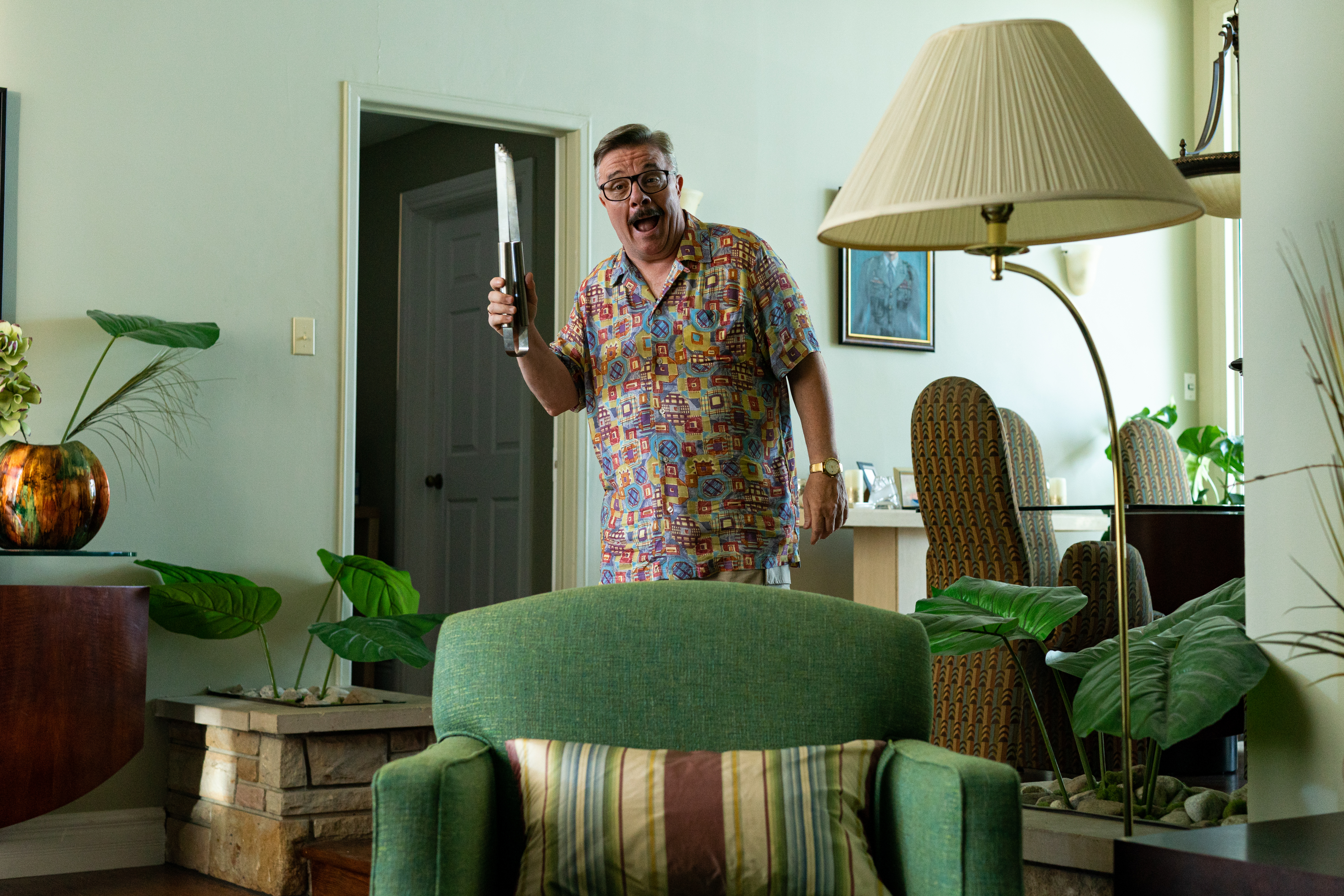
It’s probably just New York City filtered through Wassermann’s anxiety – Aster is a New Yorker himself, after all. The claustrophobic interiors certainly look more New York than many New York movies.
Beau is Afraid is realistically four different movies limited to one domestic setting each, and at one point it was set to be four hours long, presumably with about an hour for each of them. At 178 minutes, it’s still a marathon watch. Most of the transitions within and between these four legs are dream and memory sequences, which is a nice touch that progressively fills in Wassermann’s backstory as it becomes relevant. It’s also a reflection of how often Wassermann is knocked unconscious.
The biggest problem is the third leg, when Wassermann stumbles on a traveling theatre in a forest and both watches and stars in a somewhat happier version of his own life. It’s a unique, extended, surreal sequence as the camera moves into the stage and the story unfolds into a great odyssey while maintaining the background style of the existing setting, but it lifts right out of the movie.
This leg is a summary of the whole experience – it’s fantastic, and while it’s very slow and certainly wears out its welcome, I appreciate that each wild new scene gets its fair breathing room. It’s largely redundant with the rest of the film, but it’s a different vibe, and zooming out, Beau is Afraid is largely redundant with the rest of Aster’s filmography. It’s just a different vibe.
Aster, known for horror after his first two features Hereditary and Midsommar, went on a full-court press tour to tell everyone that Beau is Afraid is a comedy and is meant to be laughed at. The setup is almost a shot-for-shot remake of his short film “Beau,” and the movie as a whole could be read as a comedic remake of Hereditary if you squint and turn your head a bit – but not too much! In the end, it’s just as psychologically revealing and potent as the prior film.
Both films center on a powerful, controlling mother who uses guilt and shame to keep her child under her thumb from beyond the grave. While Hereditary features a multi-generational household and has two mothers, one dead and one quickly adopting her worst traits, in Beau is Afraid, Mona Wassermann is a distant figure who spends most of the film dead – both she and the lead of Hereditary are are gruesomely decapitated, actually. That’s probably not a coincidence.
Like Hereditary, the final leg of Beau is Afraid is set in a purpose-built house meticulously designed for the film – in some moments, you could almost mistake it for the same house. Each film’s lead character discovers a monster in their attic, scenes that aren’t just near-identical, but feature near-identical attic ladders. Some specific shots, especially of leaping through windows, are also repeated.
Mona Wassermann’s mansion isn’t the only set that’s obviously purpose-built. We start in Beau Wassermann’s apartment, a twisted nightmare of a room straight out of German Expressionism. He has a nextdoor neighbor in a location that seems physically impossible, in fact the entire place doesn’t seem to make sense layout-wise. The walls are all at the wrong angles, and his kitchen appliances are strewn across the room – his oven and stovetop, for instance, is freestanding and far away from the sink and cabinets.
Also like Hereditary, Beau is Afraid is filled with lines that make you stop and wonder if this is supposed to be a trans narrative. This is mostly in the second leg centered around Toni (Kylie Rogers), the teenage girl whom Wassermann displaces as he recovers from his accident. Like Hereditary’s Charlie, Toni has what sounds like a boy’s name. The leg ends when she has a meltdown and demands Wassermann help her repaint her dead brother’s room in gender-reveal blue and pink, and the scene includes a moment of her screaming “Stop calling me Toni” when Wassermann tries to calm her down. Maybe this is all all just Wassermann’s perception of the events, but that’s exactly the problem with his severe anxiety. We don’t get to know.
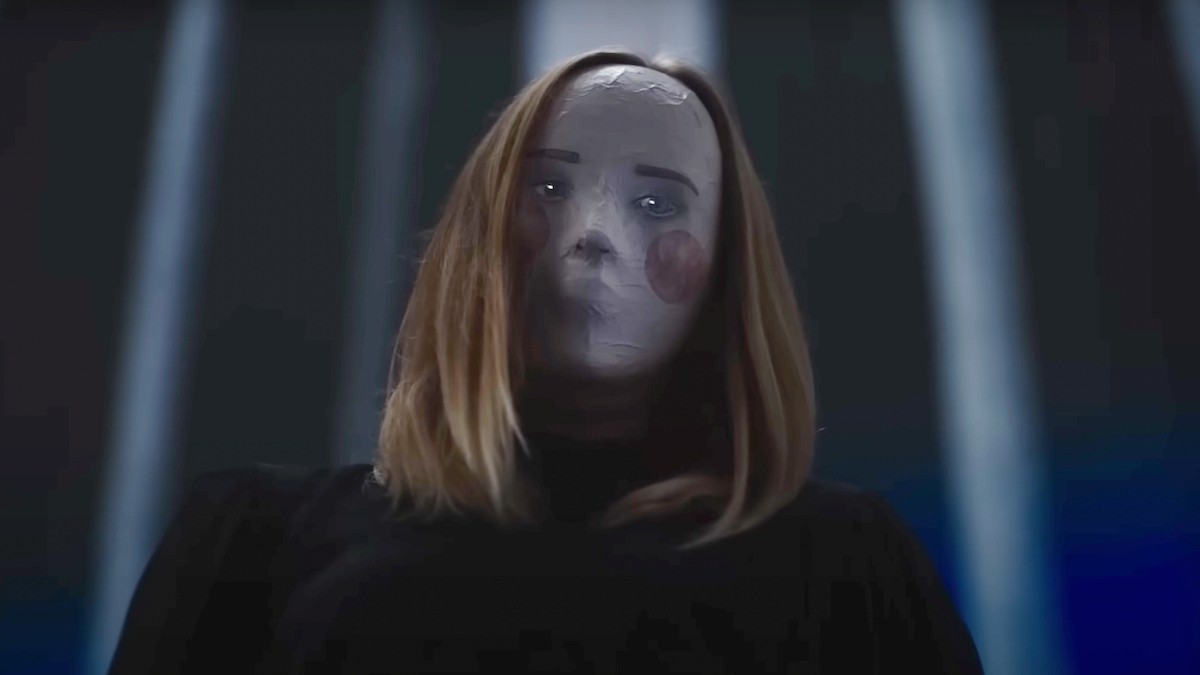
Not only is Beau afraid, Beau is guilty. He’s extremely invested in the idea of himself as a good person because he’s doing what he thinks is best, and to be fair, he doesn’t exactly hurt anyone, but the way he lets his anxiety rule him seems like a condemnation. Mental illness and trauma are barriers to be overcome, not excuses to drown oneself in, and Wassermann would very much rather drown, but it’s hard to be angry at him while watching him actively be held down in the film.
As the film relates his entire life, from his birth in the opening shot to his death in the closing one – in fact, given the amount of water imagery in flashbacks and dreams, it could be viewed entirely as his life flashing before his eyes as he drowns – we know to a fact he never had a chance. Like the family in Hereditary once more, Wassermann is explicitly doomed by outside forces from the very first frame. His tragic flaw is not what damns him – it has no impact on the narrative at all, and so focusing on it forces viewers to engage with the film as a metaphor and a feeling rather than a story.
The final shot ends on a distinct mirror image, with the projector light aiming just above the camera and audiences to Wassermann’s final humiliation leaving the stands, which are arena seats leaning away from the camera at roughly the same angle our theater seats lean away from the screen. It’s a gesture of condemnation toward the audience that feels half-hearted and less than half-thought out, especially when it finally comes in a movie Aster felt the need to make sure everyone knows is meant as a black comedy. I don’t generally laugh at the expense of characters in a movie I’m sympathizing with, though Hereditary and Midsommar are certainly ripe for that style of viewing, and Aster personally has been out directing viewers to watch Beau is Afraid that way as well.
That said, Beau is Afraid is certainly a comedy even if you aren’t laughing at Wassermann – the constant spurts of dick jokes see to that.
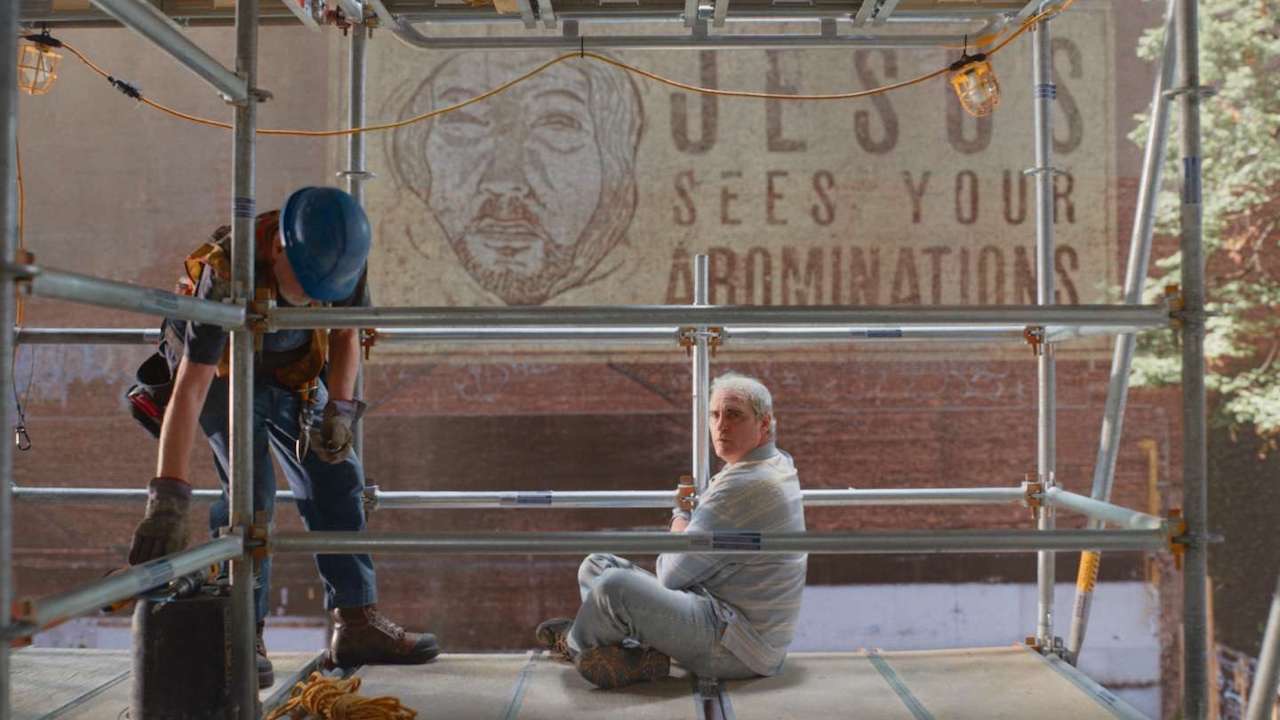
There noticeably is an audience for Beau is Afraid. My first screening at 11 a.m. in the main IMAX house on a Monday was about half-full, and my second screening the next Sunday, a 12:20 p.m. in a 100-person corner house that was the only screening of the day, was packed with a very young crowd. Aster, still just 36, is already recognized as a master of this era and a flagship auteur for A24, the independent distribution studio that has come to define arthouse cinema in the past decade.
Beau is Afraid represents the studio’s biggest investment ever at $35 million, $10 million more than last year’s Oscar-winning smash Everything Everywhere All at Once, but also its biggest bomb, as Beau grossed just $10.9 million worldwide against that budget, despite the fervor I personally observed. The artist having a dedicated following is one thing, but “three hour anxiety attack” isn’t exactly a great pitch to put meat in seats.
This is what success looks like for everyone involved. The independent arthouse studio now has Oscars and cash to spare, and one of their brightest lights gets to spend it on a much longer and more ambitious journey into his own psyche. For everyone who wants to see that.
Beau is Afraid is available on VOD now and should be streaming within a few weeks, which is good – it was made to be paused for snacks and freeze-frames, and maybe to be skipped around through after you’ve seen it once already. People who view this for the first time on their computers are going to have a much easier experience with it.
Leopold Knopp is a UNT graduate. If you liked this post, you can donate to Reel Entropy here. Like Reel Entropy on Facebook and reach out to me at reelentropy@gmail.com.
 Reel Entropy