
Megalopolis is the masterpiece at the end of time, the scrambled ramblings of an octogenarian who has watched the world rise out of and fall back into fascism, at once resigned, hopeful, crass, depraved, bitterly audacious and frequently laugh-out-loud funny with bizarre performances from an all-star cast, overindulgent and incoherent in the best possible ways. An epic for the ages. What a magical film.
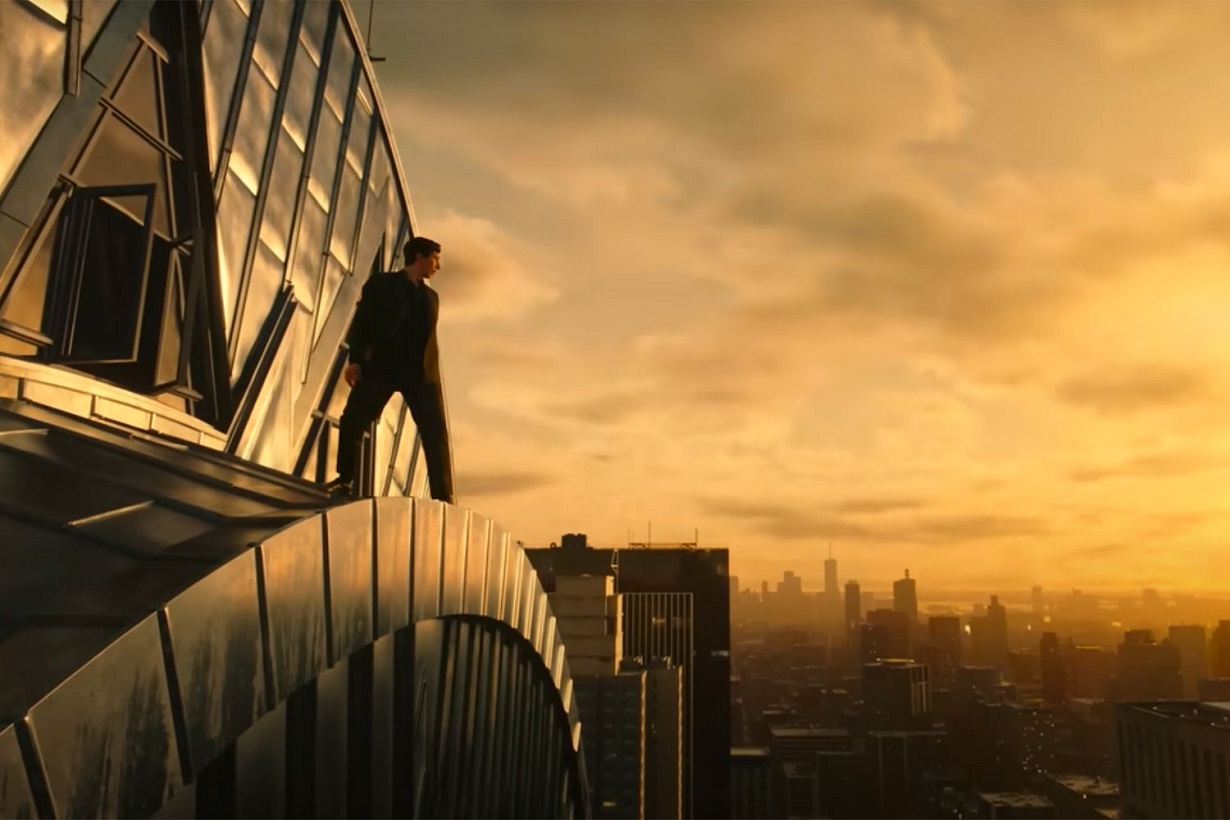
New Rome- The greatest city in the world and heir of 2,000 years of democratic tradition writhes and groans as it races toward collapse, as it has many times before. Power has centralized under totalitarian mayor Franklyn Cicero (Giancarlo Esposito) and Hamilton Crassus III (Jon Voight), octogenarian head of Crassus National Bank, who become bitter rivals once they realize they are the only rulers left. Depravity, open corruption and urban decay, remarked on in passing by a disinterested media, are around every corner, and the screaming masses have long since accepted their poverty and dream not of revolution, but of enjoying the last few rays of New Rome’s hazy golden light. In this hour of monsters, unbeknownst to the people, their last hope is utopian urban planner Cesar Catilina (Adam Driver), a man in an ivory tower who can stop time on command for his own observation. Understandably, this has driven him quite mad.
Catilino is Crassus’ nephew, and as chairman of the Design Authority, he has almost dictatorial power to reshape the city, but only with the approval of Mayor Cicero, his ideological and personal rival who, as district attorney, investigated Catilino for his wife’s disappearance years before. The film’s main focus is the romance between Cicero’s daughter, Julia (Nathalie Emmanuel), and Catilino that emerges within this grudge.
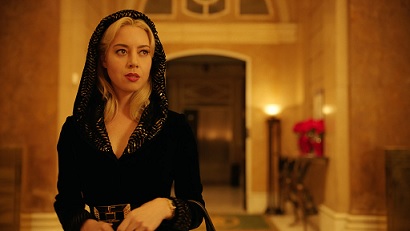
Megalopolis is a brutal-yet-affectionate satire of America’s worst tendencies, from the weird complexes about virginity held over from pre-industrial cultures all the way to a news media, represented here by Wow Platinum (Aubrey Plaza), something resembling a social media reporter/influencer who is literally in bed with everyone she covers.
The film is set in an alternate history where the Roman Empire changed forms instead of falling, but the city it’s set in is pointedly New York, even from the first shots of the sun rising over Grand Central Station and the Chrysler Building. It’s cheeky and fun with its conceit, tapping eagerly into the history of New York urban planning and the unfeeling chaos of the concrete jungle. We get fun background details like New Romans walking around with copies of Tempus Magazine and Rome and Mail.
It’s every inch a fable, filled with larger-than-life characters whose primary function is symbolic, to the point that it almost becomes unwatchable. It’s filled with references to art and pop-culture in the postwar decades – I count “Great Expectations,” Ben-Hurr, Oscar Wilde, The Man in the Moon and Intolerance, among others – and characters often speak in poetry. Catilina starts their first-onscreen confrontation, this is how we see them greet each other, by quoting “Hamlet” at Cicero for about a minute, and Cicero stands there and stares at him like that’s a normal thing.
Coppola appears to be one of those boyfriends with a lot of thoughts about the Fall of Rome. New Rome exists less outside of time and more as a frenetic, six-way intersection of Ancient Rome, the ‘40s New York Coppola grew up in and Trump-era fascism, which is portrayed as a brief, stupid blip on the film’s radar. Catilina’s cousin Clodio Pulcher (Shia LaBeouf), who schemes to seize their grandfather’s wealth, finishes his plot literally standing on a tree stump carved in the shape of a swastika and is strung up by his own red cap-clad constituents within a few minutes of becoming a political figure.
As heavy as the film’s politics are, with stand-ins for both Trump and notorious New York City developer Robert Moses, it has little to say about them, treating Catilina with the same deference as the statues he watches roam about the city. Whatever these titans will to be will be, the film insists, but we can all relax as history, and these melodramatic fools who write it, inevitably blows over.
Megalopolis’ release was famously troubled by the perception that it’s too abstract for general audiences – very much not the case. It’s certainly not “second screen-able,” but anyone willing to commit a couple of hours to actually engaging with it will get everything it has to offer. You don’t need to be any kind of film buff either. A good understanding of montage will help decode it, but montage operates on a completely subconscious level in the first place.
The heart of the film, just like The Godfather, is long, extremely well-directed dialogue scenes. Most of the performances are so natural they verge on seeming improvisational, especially from Driver. As bizarre and difficult to follow as the whole thing is, that’s why it works – the basics of filmmaking are never lost, or even obscured. This all-timer cast, in the service of a director who has lost all of his mind but none of his Midas touch, carries us through this tameless carnival of humanity at the end of its rope.
Be fully advised that this is the film of a madman, rambling, hallucinatory and held together by an internal logic that doesn’t exist outside of this two-hour window. It reminds me distinctly of a Spike Lee movie, and not just because of the New York setting and the presence of regular Lee actors Esposito and Laurence Fishburne – it’s got Lee’s signature disorganization, like jazz on film. They even appear to hold elections via impromptu public slam poetry contests.
It also reminds me distinctly of Repo! The Genetic Opera, with its pre-escalator caricatures of the Trump family, and I’d recommend Megalopolis to Repo! fans more than anyone else. It’s got a similar kind of camp, editing style and world-building philosophy to it, if significantly less rock and roll.

It’s also even more obsessed with sex. Megalopolis was made with the sexuality of an 84-year-old man, for whom sex is a dominant aspect of life as he looks back on it and his continued ability to get an erection is a point of pride. There’s three major sex scenes, all turning points between the characters with sex acts woven into the dialogue, lust mixed with surprise, manipulation, excitement and growing disinterest. It’s a more honest kind of sex scene than we normally get to see, not a fantasy, but intimate moments in which sex is part of the lovers’ communication. This is another way in which Megalopolis demands a lot from its viewers – you have to have both a mature view of sex as part of a larger relationship and a willingness to go in for the movie’s dick jokes.
The studios that didn’t want to distribute Megalopolis were especially skittish about putting it in IMAX theaters, the type of houses on permanent reservation for franchise films that have become extremely uniform over the years. Theaters were asked to forswear their lowest-risk, highest-reward houses for a full week, so Megalopolis was thought of as competing with low-risk high-reward films instead of as this grand, embarrassing arthouse nightmare.
It also has the budget of a smaller franchise film, which is the reason those films are usually so inoffensive. After being turned down by studios in 1977, ’83, ’89 and 2001, Coppola put up $120 million of his own money to get this personal message out into the world. It’s only a proud, cash-addled studio system and an equally cash-addled media that decries as a flop a film that, for almost 50 years in the making, was never for a moment about the money.

With less than $14.4 million in international receipts, good thing that it’s not about the money. Two years after Oppenheimer and Killers of the Flower Moon, two auteurist epics that were released in IMAX and did terrific business with none of the superhero antics that larger screens are typically reserved for, we’re seeing a ton of smaller-budget films get the IMAX treatment, as well as a much greater emphasis on large-format technology for blockbusters that want to sell craftmanship, but Megalopolis was released one year after these films, not part of the movement we’re seeing in 2025 and a bit of an orphan. It opened at no. 6 beneath an assortment of mostly older movies, and only had one week with the premium screens before being chased out by Joker: Foile à Deux.
Megalopolis is a love letter to humanity, so it was important to Coppola that viewers experience it together and on the biggest screen available, and it’s still important. You can’t find it on streaming platforms because he’s kept it in theaters, personally taking a director’s cut around the world to keep its initial run. I got the chance to attend this roadshow at the Texas Theatre, and Coppola dropped a helpful nugget – he said Apocalypse Now, his 1979 masterpiece about the Vietnam War with an infamously difficult and expensive production that he’s since re-edited twice, finally broke even in the ‘00s, and the documentary about its production and extended cuts were a big part of recouping that money. Less than a year after Megalopolis’ release, Coppola was saying this after a screening of an extended cut of the film in a theater that was also playing a documentary about its making, so here we go.
You want the theatrical cut of Megalopolis, if you get the choice. Apocalypse Now, because it was edited on the fly during an extremely difficult and inefficient production, released with only the scenes that made it to the theatrical cut completed. New edits were filled with entirely new scenes, but the scenes that were already there are almost untouched.
Megalopolis is a whole different story, with alternate versions of almost every scene, down to different takes of several lines of dialogue. It’s about an hour longer without anything new of note, maybe the biggest additions being throwaway bits of dialogue to make the plot easier to follow – Catalino’s personal assistant and driver, Fundi Romaine (Fishburne), narrates both versions, but that narration is better when he sticks to pointing out the repeating patterns of human behavior and emotionality instead of getting into the specifics of the narrative. Again, it’s not very “second screen-able,” and it shouldn’t need to be. The director’s cut is fine, if significantly worse, and if this is the way Coppola needs to makes his money back, godspeed, but hopefully the theatrical cut isn’t lost to history.

This is very much Coppola’s farewell movie, and we’ve been getting a lot of farewell movies from that brat pack of directors who led the charge for American auteurism in the ‘70s. Steven Spielberg’s The Fablemans is explicitly autobiographical, as is Martin Scorsese’s The Irishman if you squint hard enough at it. In Megalopolis, Coppola presents his wisdom on a world that will go on without him – that largely already has gone on without him, this is just his fourth film this century – and he’s completely aware of this. On his roadshow, at least my screening, he brings out a whiteboard and talks for an hour and a half about how he thinks humanity can come back from the malaise of recent decades. At 86, he has some trouble walking, but his mind still seems sharp, and he says he’s looking at other projects to rebuild his bank account.
Listening to Coppola ramble for 100 minutes about his hopes for the human race is a rare privilege, but we can all watch the filmed version of this ramble – Megalopolis.
Leopold Knopp is a UNT graduate. If you liked this post, you can donate to Reel Entropy here. Like Reel Entropy on Facebook and reach out to me at reelentropy@gmail.com.
 Reel Entropy