
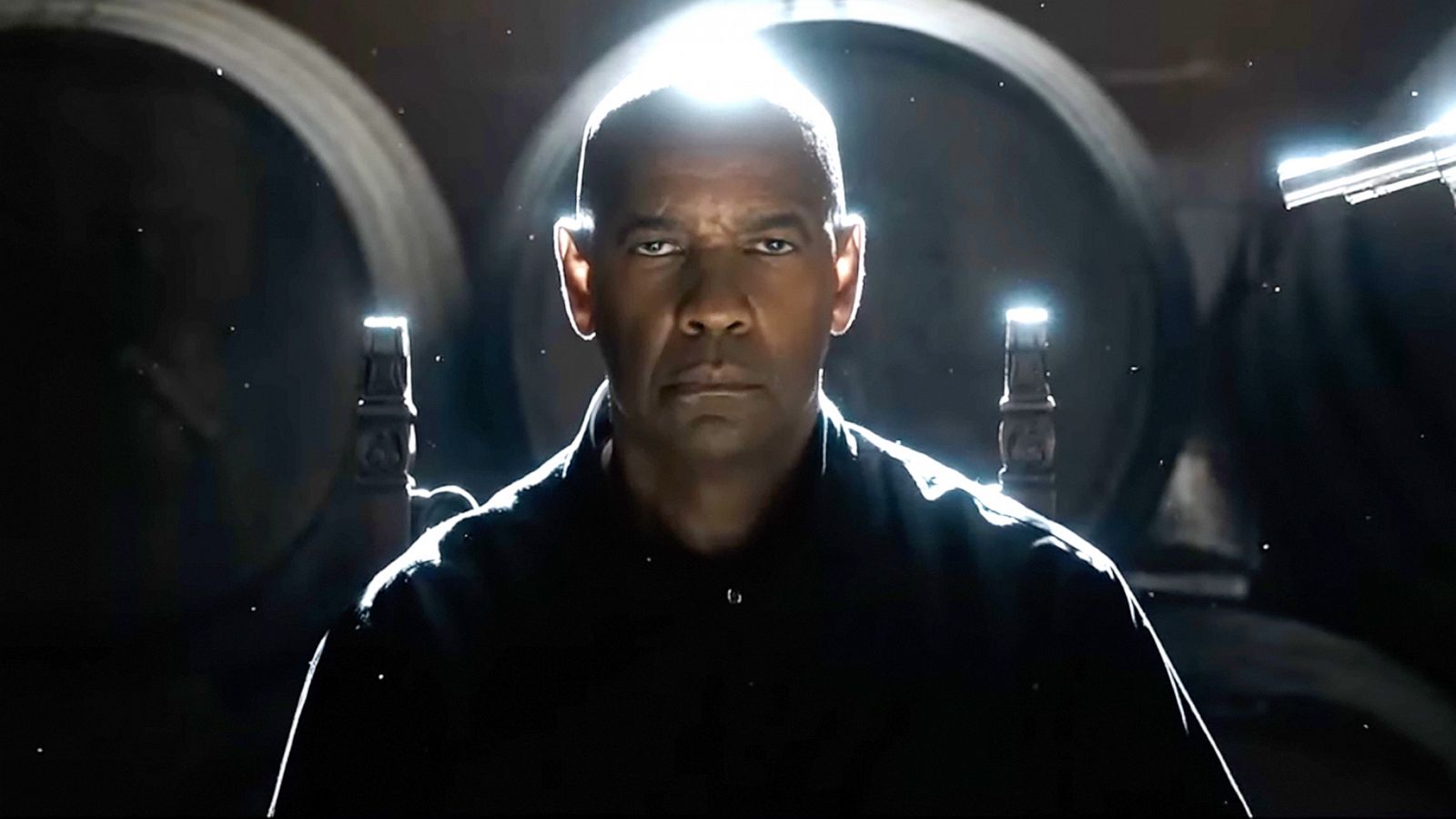
8/10 In The Equalizer 3, Sony pays for Denzel Washington and Antoine Fuqua’s three-month Italian vacation.
OK, that’s my joke – this movie is actually pretty good.
Sicily- Former CIA operative turned do-gooder Robert McCall (Denzel Washington, who also produces) tracks credit card scammers to a mafia-owned winery serving as a front for trafficking opium bought from Syrian terrorist groups. McCall slaughters the local mafiosos, but is shot in the back as he leaves. He wakes up in the home of a doctor in Altomonte – not the real Altomonte in Calabria on the mainland, it’s a fictional small coastal town outside of Palermo, the kind of town with one doctor who remembers every resident from birth. Not well enough to return to Boston, McCall finds peace in Sicily, a peace that is quickly shattered when the mafia comes to collect on its protection racket in Altomonte.
This series is special to me – the vast majority of traffic on this blog comes to my review for the original Equalizer in 2014, which is headlined “Denzel Washington diagnosed with Liam Neeson’s disease.” Best I can tell, whenever there’s a rumor Washington has gotten sick, that post gets a spike in traffic that dwarfs anything from actual readers. The comparison is between these middle-aged Oscar winners slumming it in action series that shell out for their name and slash everything else, the but don’t really deserve their talent, something that has become a phenomenon in recent years with the proliferation of streaming and services like Redbox. It’s to the point that it’s not really anything to joke about anymore.
It’s not fair to compare either of these actors to the large-scale “geezer teaser” phenomenon, and it’s not fair to compare Washington to Neeson – Washington isn’t making these things every year. Neeson’s long string of progressively trashier, cheaper action flicks is still making it into theaters, for a few weeks at least, but Washington is still getting fresh Oscar nominations. He’s got one action franchise with one director, Antoine Fuqua, with whom he won his second Oscar for Training Day 20 years ago, and they’ve made three of them in 10 years, which is a perfectly reasonable pace for a successful film franchise. These movies aren’t just cash-outs, they’re serious efforts at making art.
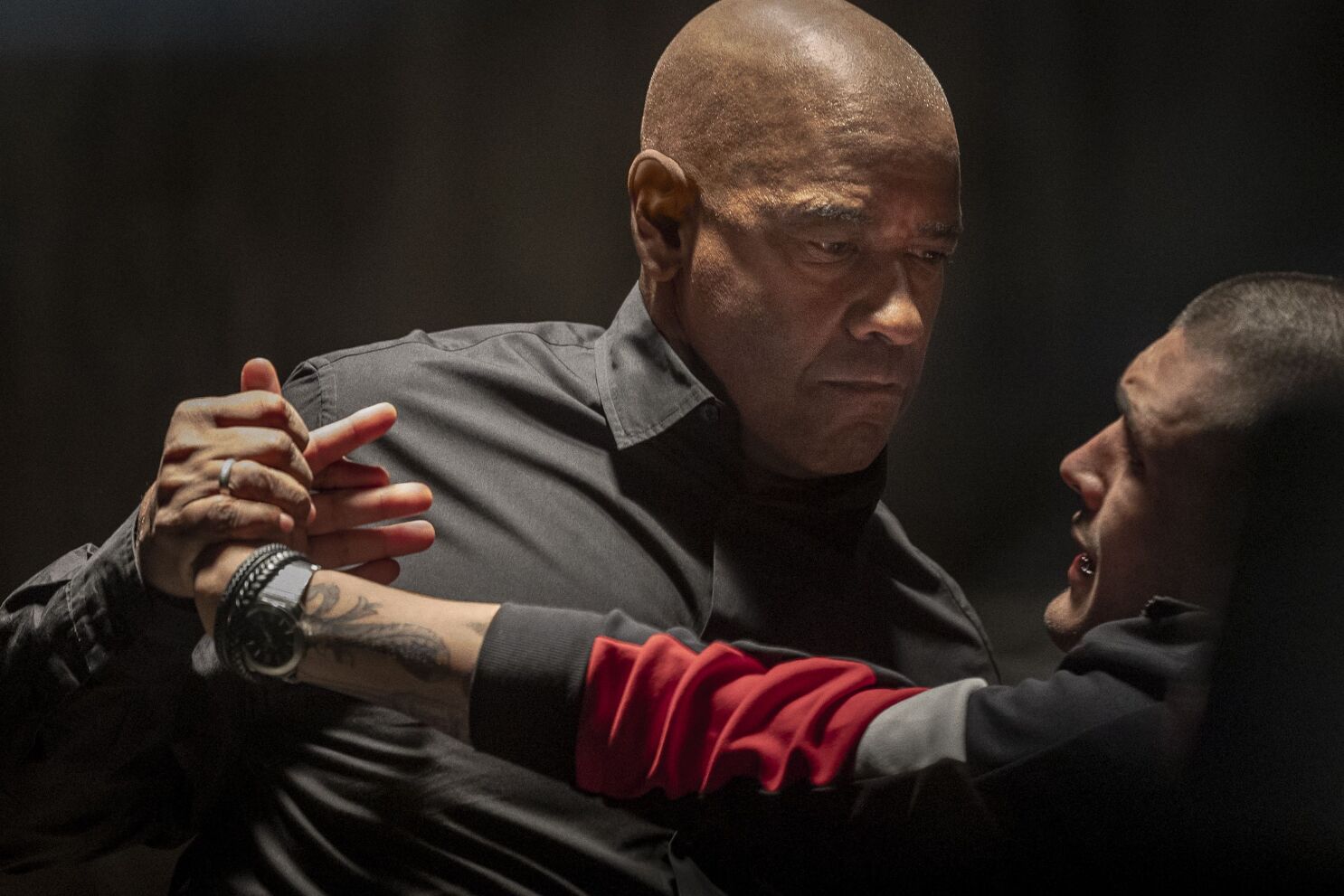
The Equalizer 3 is so good that I go back and rewatch the first two, wondering if they were really as weak as I remember. They were. It’s actually easy to clock the new creative personnel for this installment without looking it up – cinematographer Robert Richardson, the three-time Oscar winner who first worked with Fuqua on last year’s Emancipation, is new to the series, and he arrives with a bang. The Equalizer 3 is a feast for the eyes, filled with striking high-contrast compositions, many of them dipping into black and white and silhouette work.
Composer Marcelo Zarvos, who joined Fuqua’s The Guilty and Emancipation as well, is another Equalizer upgrade, and Fuqua lets his hostile score roam over a film that would still have been great without it. There’s a great deal of time spent watching the mafia drive around – at one point, they appear to make the entire 700 km trip from Palermo to Naples in one tightly knit group of motorcycles – and this is Zarvos’ time to hold the audience with screeching guitars and strings. The Altomonte gangsters appear to do everything in the same big group, as if they’re not a metaphor for the multi-headed organism of organized crime, but a literal, inseparable multi-headed organism.
I’m not seeing a specific choreographer, but I have to assume whoever’s in charge of the fight scenes is new as well. The Equalizer 3’s fights are regrettably sparse, but they bring lots of blood, lots of smoke and are always fast, dirty and satisfying. The explosions, fires and blood effects, though, are a mixed bag, ranging from terrible to very convincing. Like its predecessors, the film lingers amorously on the specific tactics of McCall’s killings, especially in the opening tracking shot through the winery that rubber-necks across McCall’s various improvised murder weapons. It’s also quite amorous about the mafia’s black vehicles.
A lot of the film’s depth is expressed completely visually through its thick use of religious art. It’s everywhere – they’re in Italy – but it’s the main expression of class in the film. Don Vincent Quaranta (Andrea Scarduzio) does his business in an opulent Naples cathedral, while McCall is watched over by an ancient Virgin Mary icon scratched into an Altomonte staircase. When he first begins to interact with this gang, he excuses his eavesdropping by staring at a lone cross on a mountaintop.
These themes erupt in the climax, when McCall, as death, bursts through a gorgeous stained glass mural of the Virgin Mother that decorates the don’s bedroom. Quaranta’s home is a maze of already-dead guards marbled in with his incredibly expensive nude sculptures, who seem to surround him like Caesar in his final moments.
In 2023, the lingering “War on Terror” mindset is visible in The Equalizer 3, outdated and chilling 20 years after the Iraq invasion. McCall calls American intelligence to come enforce laws in Italy, putting American-style imperialism on a collision-course with Sicilian-style corruption. There’s no interrogation at all of the assumption that American law enforcement operating in another country is a good and normal thing. The film falls into not-quite racist ideas of what criminals look like and what good guys look like, with Washington’s clean-shaven head and Dakota Fanning’s long blonde hair and pale skin contrasted against all these gangsters with beards and tattoos, and the frequent use of “terrorist” as a catchall term once the Syrian connection is spelled out definitely extends into racism.
The closing news report, which describes finding “Enough amphetamine to kill the population of Naples,” is the real key to the movie’s hyper-conservative worldview, where there is no difference between drugs and the violence associated with their trafficking. Killing is not what amphetamines are used for, but after a movie about mob violence that focuses mostly on a small-town protection racket in which drugs don’t even appear onscreen, their capacity to kill is all that is mentioned.
The Equalizer’s series returns are dropping, with this new one sitting about $10 million behind its predecessors at the domestic box office, but it’s still making plenty of money. This is the type of solid little movie low-budget genre projects can reliably turn into.
Leopold Knopp is a UNT graduate. If you liked this post, you can donate to Reel Entropy here. Like Reel Entropy on Facebook and reach out to me at reelentropy@gmail.com.
 Reel Entropy