

1/10 The Flash is bad. The first action sequence where Flash has to save a neonatal care ward falling from the 43rd floor of a hospital is funny-bad – no matter how much the movie is winking here, I’m still very much laughing at, not with it – but for the most part, it’s just bad.
The Flash is the culmination of a very long history of desperate, idiotic decisions by Warner Bros. about how to make money with its comic book adaptation properties, and that history is written into the film. It’s fascinating for me personally to see all these decisions play out in a movie format, but I can’t recommend the movie for anyone else.
If you want to read about the history, here goes-
A brief history of the DCEU
Flash has been the crosshairs on my personal Warner Bros. punching bag for the past few years, but for anyone who doesn’t know this whole gory story, here’s a bird’s-eye summary: starting in 2008, Marvel Studios, which was later purchased by Disney, has been using the B-tier comic book properties it hadn’t already sold the movie rights for to create a sprawling, wildly successful shared universe of movies, I’m sure you’ve heard of it. Warner Bros., which owns film rights to the rival DC Comics, has been frantically trying to create a similar shared universe of movies because it’s a money-printing machine and there should be a tremendous overlap with the target audience. On Oct. 15, 2014 at a Warner Bros. shareholder talk, the studio announced 10 DCEU films over the next five years, including The Flash for March 23, 2018.
These films were announced to match the tone of 2013’s Man of Steel, a difficult, moody, psychological assault of a film that director/producer Zack Snyder was using to push some heavy-yet-thin ideas about how libertarianism interacts with Christianity and ended on a solid hour of thick 9/11 imagery, in contrast to the cheerful, joke-filled, easy-to-approach if sometimes dumb Marvel movies.
This was a selling point.
Things were never going to go according to this plan, but instead of petering out, the series ran into a wall, and that wall was The Flash. This was the next movie in line to release before things fell apart.
As the studio started to acknowledge that audiences wouldn’t come out in droves for sad, ugly movies that seem deliberately designed to trigger 9/11 PTSD, creatives started to posit The Flash as a solution – using the Flash’s powers to travel to alternate realities, the movie could be written to transfer viewers into a sunnier version of the DCEU without admitting defeat at the corporate level by rebooting everything or alienating the small but extremely whiny existing fanbase.

As The Flash was passed around like a barometer of Warner’s mood about its own series, executives hired one writer/director duo, then a second writer/director, then a third director to execute the second one’s screenplay, then changed their minds and hired a third writer, Joby Harold, then casting and pre-production began. Then that director left the project over creative differences and and, while it was on hold for star Ezra Miller to shoot the second Fantastic Beasts movie, four name big-name directors turned Warner Bros. down. Then they changed the title to Flashpoint, hired a fourth directing duo who immediately changed the title back to The Flash, then things had to shut down again for Miller to shoot the third Fantastic Beasts movie. In their spare time while shooting that, Miller and comic writer Grant Morrison approached Warner with a reworked screenplay, but that was rejected and Miller almost left the project over it. Finally in late 2019, Warner hired writer no. 5, Christina Hodson, and director no. 5, Andy Muschietti, and pre-production started again. Then the COVID-19 crisis hit.
Principal photography for the movie that was announced on Oct. 15, 2014 with a March 23, 2018 release date finally began on April 19, 2021. Muschietti, Hodson and Harold are the only director and writers credited on the final product. The filmmakers who have left the project at various points have had 10 combined films release after leaving The Flash. The four directors who are known to have turned the project down, who include Jordan Peele, have directed four films since then.
Ezra Miller
Alongside the DCEU’s announcement of 10 films in five years, it also announced the stars of those 10 films – they were all going to crowd the screen together for Justice League before many of their own solo movies, so they put themselves in a position where casting needed to be this early. It was a roster of mostly unknown actors who could be had on long-term contracts for relatively little, also completely reasonable and exactly what the MCU was doing, but any long-term contract carries risk.

While the MCU was entering this type of marriage with future rockstars like Chris Hemsworth and Tom Holland, some of the DCEU’s leading personnel have had problems. Henry Cavill and Jason Momoa are stars who were able to shine for better bosses, but Gal Gadot can’t act, and Ray Fisher can’t even land roles – The Piano Lesson, which will be his first ever feature film that his buddy Zack Snyder didn’t direct, is currently in production.
Then there’s Flash star Ezra Miller.
Miller has been in the headlines for just about everything for the past couple of years, but for everyone who doesn’t know this whole gory story, the bird’s eye summary is they’ve become psychotic trailer trash. Their crimes are disorderly, exhaustingly frequent and mostly uninteresting, and their claims to be a messiah for American Indians seem mostly like a poorly thought-out smokescreen to deflect headlines.
However, giant interview panels meant to showcase giant casts have become an increasingly important part of acting as comic book culture has become mainstream and social media has made celebrities seem more accessible, so this presents a big problem for Warner Bros. I personally may be bored with reports of Miller’s random assaults, but if you put them on a panel, it’s going to stop being a panel about your new movie and turn into a game of “try to get Ezra Miller to say something crazy.” Easy solutions include recasting Miller or not doing these panels, the second of which is what eventually happened. As the company lost confidence in the property, the marketing push switched from Flash over to the movie’s inclusion of multiple Batmen.
‘The Flash’
As touched on earlier, The Flash is bad.
In the film, Barry Allen (Miller) accidentally discovers he can run so fast that he can travel back through time. He is so sad and moody about his parents being gone that he starts running and accidentally discovers the plot.
It’s a bad movie.
The way this is visualized is Allen forms a bubble of energy around himself and eventually comes to a halt in this little sandbox surrounded by CGI representations of the various pasts that he can run toward, and this dark, cramped, brown soundstage is where the $200 million superhero adventure movie chooses to spend most of its time.
It’s a very bad movie.
There are 100 things to complain about, but after the almost decade of highly public production hell, a $200 million investment, all the headlines about Miller assaulting strangers that led with “Flash star Ezra Miller,” the technical quality of the final product is what stands out the most. It looks incomplete. It looks like the animation, particularly in these time travel bubble sequences, hasn’t been finished. Even if it were finished, I’d be looking at a climactic sequence shot on what looks like a studio apartment filled with sand.
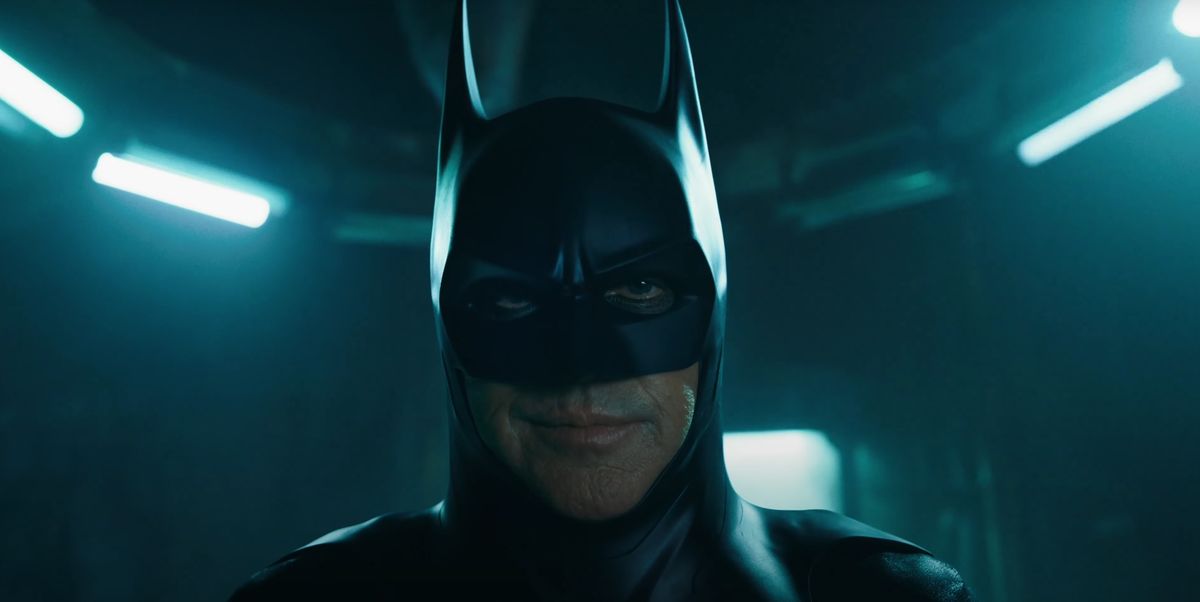
All the arguments that took place over this movie were clearly all about the plot and tone and how it would relate to the rest of the DCEU and who would appear for cameos, because the product, what actually appears onscreen and how good or bad it looks, is an afterthought.
By a similar token, Miller trips the other risk you run signing an actor long-term – they just aren’t a very good actor, and because of their behavior, I spend the entire movie thinking, “really? This is the guy they couldn’t recast? This is the performance they tolerated all that bad press for?”
They recast everyone else!
‘(The) Flash(point): Into the Batman-verse’
Superman and Batman have been making money for Warner Bros. hand-over-fist for decades, and Wonder Woman was considered a sure thing, but as they were announcing this massive slate of films, a central question was whether or not they could convert on B-tier heroes like Flash the way the MCU has, and the studio was losing more and more confidence about that as this process was going on.
Then, toward the end of The Flash’s stint in development hell, Sony and Marvel released Spider-Man: Into the Spider-Verse and Spider-Man: No Way Home, two movies that blitz the audience with several versions of an A-tier hero, and somewhere in this mess of screenwriters, The Flash turned into a vehicle to do that. Four different versions of Batman, two different versions of Superman, his long-lost cousin, Supergirl (Sasha Calle), and his villain from way back in Man of Steel, General Zod (Michael Shannon), all appear.

This is seeded in with an argument between two versions of Allen, both played by Miller, over who played lead in what ‘80s movie – this is how the version of Allen we’ve been following discovers he’s crossed over to a whole parallel reality, and viewers are prepared for Ben Affleck’s Batman to suddenly become Michael Keaton.
What’s really noticeable is who isn’t here. Christian Bale, who played Batman in the most popular films about the character, is nowhere to be found, and I pity whoever made the phone call to ask him. Current Batman Robert Pattinson, who I imagine declined much more politely, is also missing.
Where’s Val Kilmer? He’s in poor health, and legacy roles like this are his only lifeline, so I can’t imagine he’d say no. Did they not want to show a version of Batman who can’t really walk anymore? That would have added a lot.
The film was willing to use CGI to bring Christopher Reeve back from the dead for one of their Supermen, so participation from these actors was not required, but I suspect they were only willing to do this to an actor who’s been dead for 20 years and can’t sue.
“Worlds Collide”
Just before my screening, I was shocked to read that the studio had actually cut cameos out of The Flash, despite it being advertised as a cameo apocalypse, and the problem was all the cameos are loaded in to the same moment in the climax.
As one version of Allen continually races back in time, insisting on do-over after do-over against an invincible enemy, he begins to cause various parallel realities to crash into each other. The way this is visualized – I can’t believe this movie cost $200 million – the way this is visualized is the two versions of Allen look up from their little sandbox and see big colored globes crash into each other, and the camera zooms into cracks in these globes and we get a little scene. It’s so cheap!
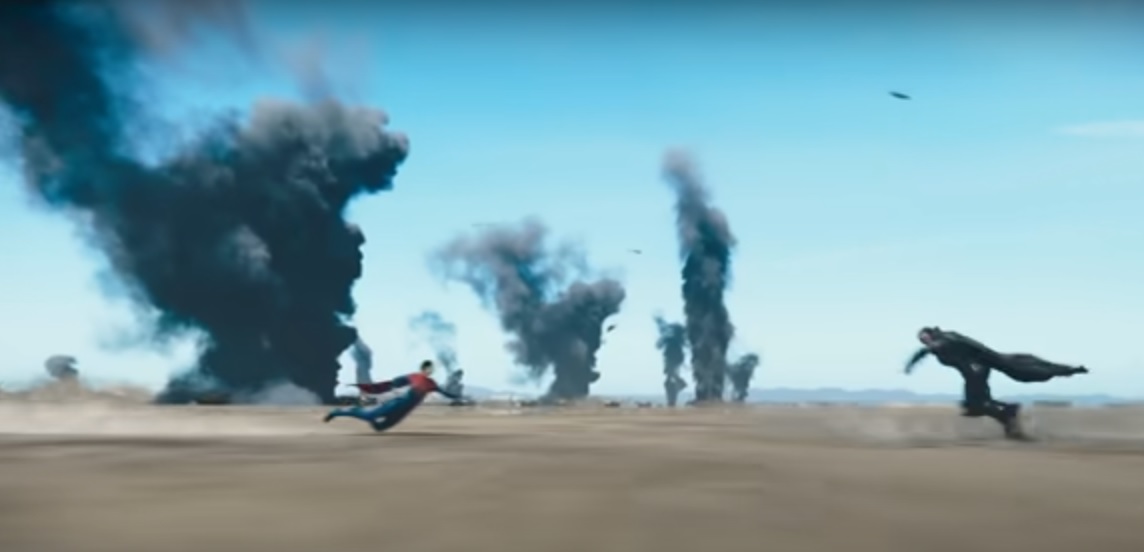
Even trying to forget about all the behind-the-camera context, simply looking at The Flash, it’s impossible to take the movie seriously. Sitting in the theater, I get the sensation that I’m being shown a long-term homework assignment that Warner threw together the night before it was due.
But like everything else that sifts its way onto the screen here, the climax is very telling, because the bad version of Allen is doing the exact same thing Warner Bros. is doing, reaching back again and again to this horrible moment in time that was Man of Steel and trying to fix it. Batman v Superman: Dawn of Justice was trying to fix Man of Steel. Justice League was trying to fix Batman v Superman, and then Zack Snyder’s Justice League was trying to fix Justice League.
For 10 years, this studio has been trying to make a forest of shoddy, problematic trees, and so each tree has been built around insisting that the trees around it are actually the best trees ever grown. It has been insisting on do-over after do-over chasing a competitor in a race that was run before Warner arrived at the starting line.
The Flash is everything. The actors for the unlikeable lead characters have moved on to greener pastures, leaving only the unlikeable actor whose movies haven’t been made yet, trying to conquer the villain from the first movie, playing around in the same studio-apartment sized sandbox.
Leopold Knopp is a UNT graduate. If you liked this post, you can donate to Reel Entropy here. Like Reel Entropy on Facebook and reach out to me at reelentropy@gmail.com.
 Reel Entropy