When groundbreaking Urdu-language trans drama Joyland finally strolled into American arthouses last May, it came highly decorated. The film premiered at Cannes in May 2022, where it won the Queer Palm and Jury Prize and earned invitations to several other film festivals, including special screenings at Toronto and Sundance, and became the first ever Pakistani film to be shortlisted for the Best International Feature Oscar, though it did not secure a nomination.
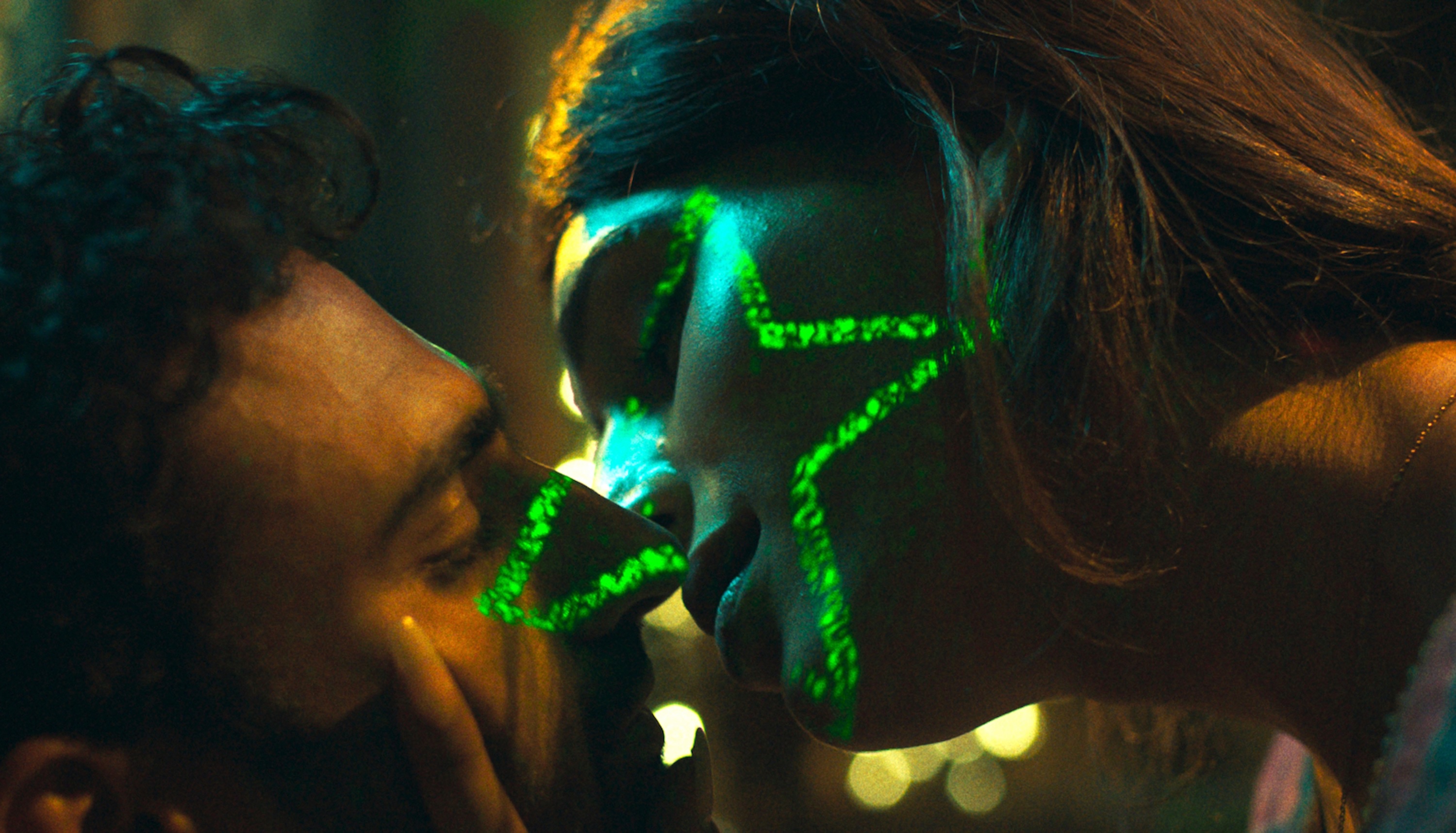
Lahore, Pakistan- Haider (Ali Junejo), the second son of a proud lower-middle class family who has been unemployed for years supported by his wife, Mumtaz (Rasti Farooq), and access to the family home, secures a job as a backup dancer to Biba (Alina Khan), a local out male-to-female trans performer, and the two eventually begin an affair. The tension in the film stems from everyone’s unhappiness and paranoia. Haider’s arch-conservative father, Rana Amanullah (Salmaan Peerzada) has four granddaughters through Haider’s older brother, but demands a grandson. Haider must hide the nature of his work from Amanullah, and at one point Amanullah lets a elderly neighbor woman crash on his couch for a night and it turns into a whole sit-down between the family and her son, if that gives an idea of how conservative this neighborhood is. Haider’s and Mumtaz’ marriage was already dissatisfactory, and Haider’s affair with Biba isn’t all sunshine and daisies either – it’s more of a fling that happens more than once, it never even looks like it might stabilize into a real relationship.
Joyland is fine. It’s slow, it’s quiet, the lighting is really only any fun in early scenes of tension between Haider and Biba. It’s the type of movie that requires you to already how its social structures work, both from Amanullah’s perspective and the struggles Biba has faced, so you have to put more of your own energy into it as a viewer than normal before you start getting things out of it.
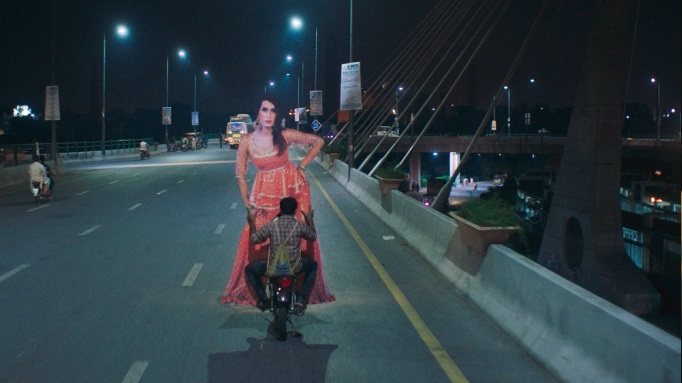
Amanullah, the oppressive patriarch who implicitly demands rigid self-enforcement of social norms, is true-to-form a distant figure, only appearing onscreen a few times but extending himself over the film. Biba, an established star, still has to deal with some harrowing incidents onscreen, and Haider appears to be using her to explore his own suppressed male attraction, which becomes its own form of transphobia – Biba is a woman, but Haider conceives of her as a man, which is critical to their affair as it sets her apart from his wife, and wants her to fuck him like a man would.
My real complaint here is I’ve seen this specific movie at least a half-dozen times now. I should specify – this is only the state of the openly queer arthouse film, films that are advertised primarily as queer love stories and rely on their importance as queer love stories to build word-of-mouth from festivals. There is, of course, a great deal of implicit queerness in mainstream cinema, especially superhero cinema, and more explicit queer stories are on the way – the breakout popularity of Everything Everywhere all at Once, which is partially about a mother accepting her daughter’s queerness, looms large. I’m writing about a very narrow international arthouse genre that has emerged in the last few years, but as always, it’s going to turn out that the gays have been here the entire time.
It’s very strange to be tired of queer love stories in a world that’s starving for them. I have to hold myself partially at fault, because I’m the guy who’s going to the Angelika every week and watching these things. I’m the guy who you’re supposed to hear about these movies from, but I’m not writing about them. That’s partially because people generally read about things that they watch and have already heard of, so I slant my time toward larger releases, but it’s mostly because they’re all so god damn boring!
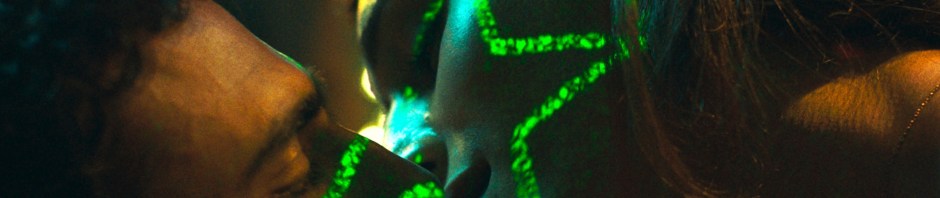
It’s always the same movie! Married boy meets boy or betrothed girl meets girl. Their bland life is suddenly alive with joy – this is almost always formally expressed the same way, with an almost silent and grayscale film suddenly becoming vibrantly colorful and some soaring romantic score crashing in, and the first encounter is almost always followed up with a limp comedy beat of the lead character going about some mundane task with noticeable joy. The love affair always takes place in necessary privacy, a safe space where the lovers can be their authentic selves and anything seems possible.
The film often touches on other social issues that expand queerness from same-sex attraction to other expressions of bodily autonomy. In Portrait of a Lady on Fire, the safe space is shared with a side character who seeks an abortion. Ammonite is a biopic of Mary Anning, a world-famous English paleontologist who was critical to establishing that species can go extinct – this was in the early 1800s when biblical literalism, which holds that Adam personally named all the animals and the Earth is only a few thousand years old, was still popular. The film focuses on her speculative affair with a female colleague, but her inability to join the Geological Society of London, which did not allow women at the time, and her refusal to join the Church of England come up as obstacles.

This safe space is always imperfect, sometimes because it isn’t completely private and they are subject to blackmail or a shocking scene of bullying from an encroaching stranger, or somewhere they can only access temporarily, and the relationship tragically grinds down earlier than it might under the pressure of this knowledge and a failure of the leads to communicate how much they mean to each other. One of them keeps a memento of some kind that’s so important symbolically it was almost certainly centered back in the first shot, so the audience can see their private anguish and joy, and the other usually dies, for some reason.
This is all so standardized because it’s all copied from the same paper. In “Visual Pleasure and Narrative Cinema,” the landmark essay where she coined the term “male gaze,” feminist film theorist Laura Mulvey asserted that because Hollywood was dominated for so long by straight, white men and because film is a visual language, the building blocks of film language dating back to the Golden Age are exclusively images come up with by straight, white men. She asserts that simply pointing the camera in the other direction isn’t enough to create a “female gaze” because it’s simply inverting what is still an inherently masculine language. It’d be akin to playing a record backward and claiming the resulting gibberish is “the opposite of English” while pretending there aren’t hundreds of other languages in the world. By the same token, these queer rom-drams are just inverting ‘80s and ‘90s rom-coms, which were built in a language that’s inherently straight.
The key takeaway is, for anyone hungry for more queer love stories – they’re out! I’m already sick of them over here! Any time you find yourself complaining “there isn’t enough X at the movies,” it’s usually something you can find very easily if you go out and look for it.
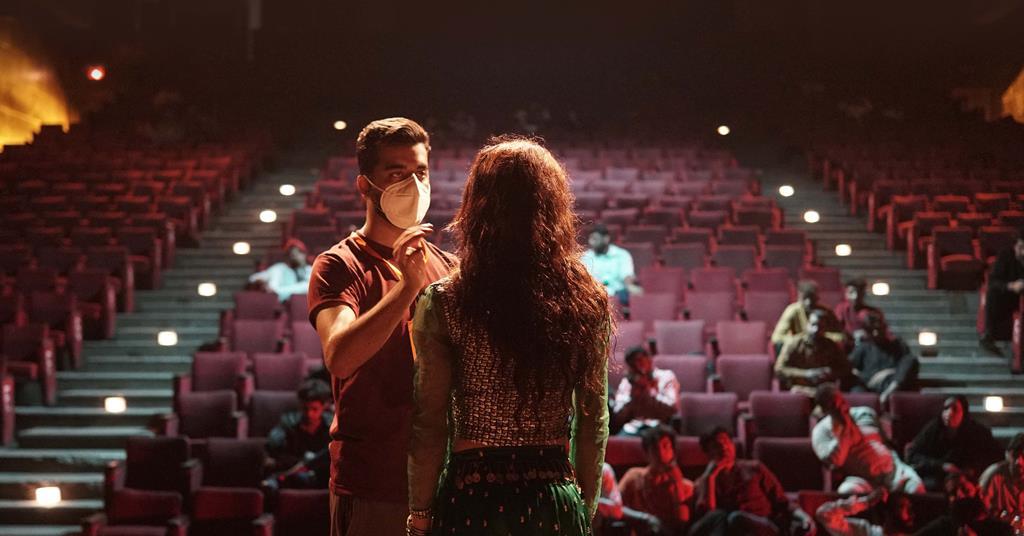
Joyland flips the script a bit by killing Mumtaz, not a member of the queer couple, but it is after a nasty breakup, and death is such an assumed part of the film it opens on a shot of Haider playing hide-and-seek covered in a sheet like a ghost. I also question whether this is much of an inversion, because Mumtaz has her own queerness, if not same-sex attraction then certainly behavior that is against conservative gender norms. At the beginning of the film, she is shown financially supporting her husband, and she despairs when Amanullah tells her to quit her job once Haider finds one. At the end of the film, she kills herself while seven months pregnant, which is construed as a spiteful attempt to deny Amanullah his grandson by a family that ignored her own sadness while she was alive because they already cared so much more about the baby than her. She is also shown masturbating onscreen while watching a man who is not her husband, and between the sexual agency this displays and their stilted dynamic, as they are rarely shown touching onscreen at all, I wonder if the baby was even Haider’s.
But as tired as I am of going to the Angelika and seeing this exact movie every few months, Joyland is the flashpoint in how fresh and necessary this genre of film is on an international scale. As it turned the world’s attention to Pakistani film, the first ever Pakistani film to premiere at Cannes, the first ever Pakistani film to be shortlisted for an Academy Award, it was abruptly banned by the Pakistani government seven days before its scheduled release date on Nov. 18, 2022. Sadiq, Khan and Malala Yousafzai, the Pakistani women’s education activist who became the youngest-ever Nobel Peace Prize winner in 2014 after the Pakistani Taliban tried to assassinate her and who is credited as an executive producer on Joyland, spoke out forcefully. Yousafzai wrote–
“Joyland” is not activism posing as art; it doesn’t argue for a particular point of view or issue a call to action. The film treats each character with compassion, from the aging grandfather imposing his will on his family to the young wife who wants more than the men around her are willing to give. It’s a film about the ways in which patriarchy hurts everyone — men, women and children.
But treating each character with compassion is activism. Showing how the patriarchy hurts everyone is activism. Joyland is a truth about Pakistan, or maybe just about a little trans corner of Lahore 10 minutes from where writer/director/editor Saim Sadiq grew up, burning and twisting and struggling to be told. The Pakistani government may object to this story, but the truth that undergirds it is obvious to everyone in Pakistan who is excited to see the film – this mirrors what’s going on in China, whose government censors queer characters and whose film market is growing so rapidly that its censorship is affecting American cinema, but counter-intuitively, demand for queer films in China continues to grow in lockstep with the growth of its out queer communities in the face of governmental crackdown.
The Pakistani and Chinese governments are finding out through films like Joyland and its enthusiastic audience that, in a shocking twist, the gays have been here the entire time.
Joyland’s ban in Pakistan was lifted on Nov. 16 with some scenes cut, and it released as scheduled in most of the country, but in Punjab province, where Lahore is capital and largest city, the film remains banned.
Leopold Knopp is a UNT graduate. If you liked this post, you can donate to Reel Entropy here. Like Reel Entropy on Facebook and reach out to me at reelentropy@gmail.com.
 Reel Entropy