

One of my favorite things about the Texas Theatre is watching it fill up with people. It’s a very narrow lobby that doesn’t have nearly enough room for a full house to be in it at once, which is a design problem that all old single-screen movie palaces have to some extent. Because of the geography, I usually spend all day there if I head down at all, and the audience always seems to grow steadily over the course of the day no matter what’s playing – though maybe me being more excited for the matinees is a function of my own tastes. In any case, the lobby almost always turns into an unyielding crush of humanity as any given day goes on.
Closing night at the 2023 Oak Cliff Film Festival is a different story, opening at 1 p.m. with Aliens Abducted my Parents and Now I Feel Kinda Left Out, a human, heartwarming coming-of-age story about loneliness, personal narrative and learning to appreciate what’s in front of you that had taken off as one of the buzzier titles, presumably because of its title. It’d also screened at Sundance, so maybe I just didn’t do my homework. It’s listed as sold out, though the house is about half-full by curtain – 1 p.m. on Sunday can be really, really early for some people. It sets up a steady crowd that stays at mostly the same density until midnight.
Just before Deadland writer/director/producer Lance Larson drops in to introduce his film, Huggins sneaks up behind me and gets probably the best image of me ever taken. I’m front and center where I like to be, face illuminated by the screen, but he’s at my five o’clock and I’m looking away. It’s a master class in the use of negative space – the second row behind me is fully in the frame, also illuminated by the screen, and the light leading down from the top right and the dome effect created by the curving second row both suck your eyes like a coin funnel into the back of my head. I’m centered in the frame, but between the amount of empty space and way the leading lines crash into me, I almost shrink to a quarter of the size as I’m looking at it. I’m exactly where I want to be, paying attention to what interests me, surrounded by this vortex of empty seats.
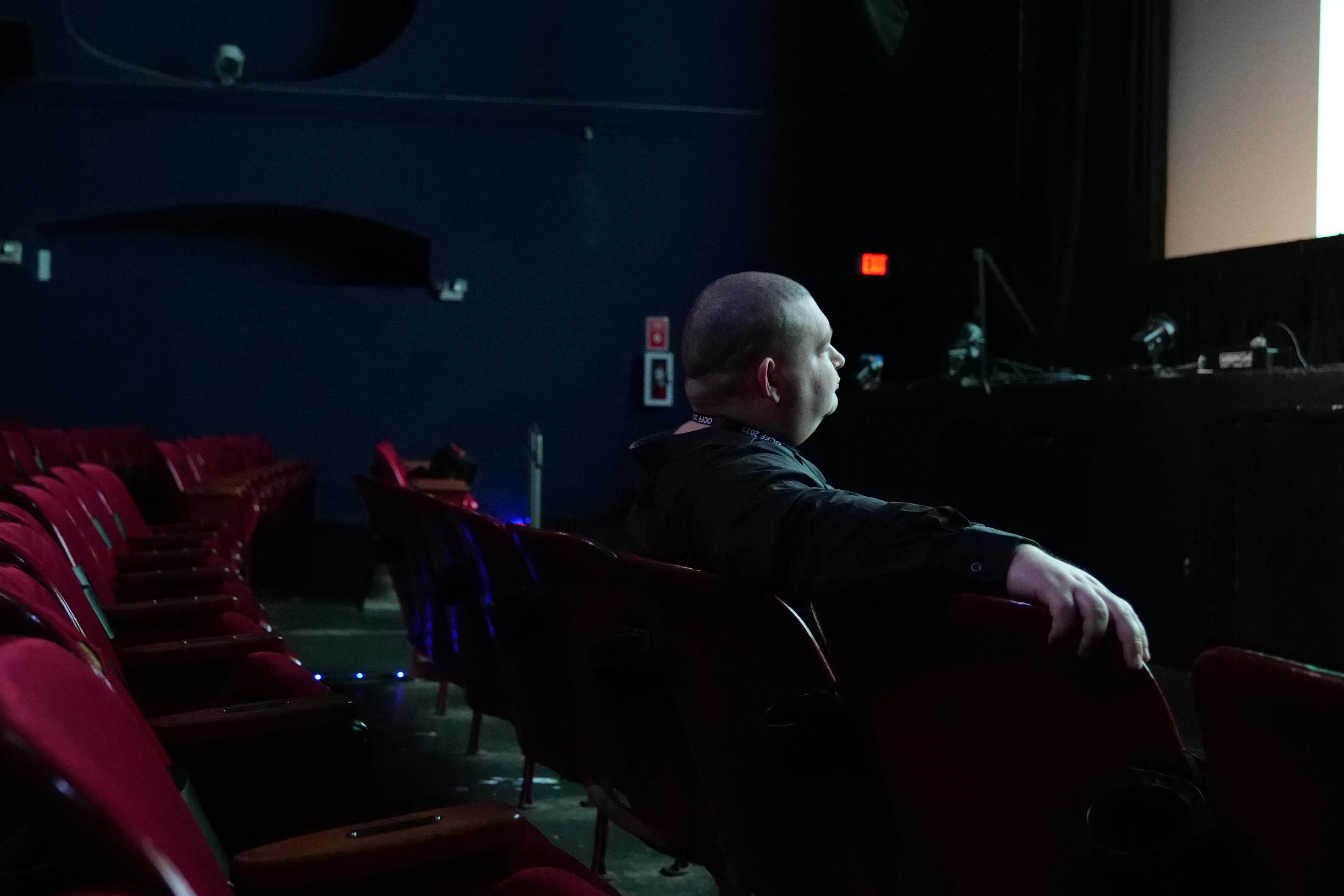
There’s a noticeably smaller crowd for Deadland and everyone else sat in the back half of the theater under the balcony, for some reason, so it really did look like that. Larson, six feet away from me and 50 feet from anyone else, must have been spooked.
Deadland, a ghost-Western about a Mexican-American border patrol agent who must confront the ghost of his Mexican father trying to cross, is easily the best new film I see at the festival, one of the finest films I’ve ever seen and the urgent story of this moment in history, all at once a story of the immediate inhumanity at the border and a timeless meditation on heritage and memory playing out live.
A month after being one of a small handful of people to make it out for Robert Rodriguez’ Hypnotic and writing about his historic importance, here’s another microbudget Texas filmmaker with a Rodriguez connection – his ex-wife Elizabeth Avellán, who still co-owns Double R Productions with him, is a producer on Deadland, and Larson credits her with pushing him to produce a smaller film with less than $2 million before a larger ambition, which he says he has backing for now.
In direct contrast to Rodriguez’ legacy of using digital photography to get his own career off the ground by avoiding the cost of handling film stock, Deadland is shot in beautiful, harsh 16mm film, and the gritty reality is apparent in every frame.
I think I offend Larson by asking him about the geography of the film. We come upon a sign several times, left for El Paso and right to Laredo, which is hilarious because those border towns are 600 miles away from each other, and since El Paso is to the east, you’d have to be approaching the sign from the south, which is to say, from within Mexico. Characters also go to the Presidio, the closest city big enough to have a lawyer, another town right on the border.

It was actually going through Hitchcock’s filmography at the start of the COVID-19 crisis that I started paying strict attention to films’ geography – Larson names a border patrol agent after Hitchcock and frames his nametag prominently, so he’s clearly a fan. As his career reached its peak, Hitchcock was always very specific to the history and geography of his settings, best observed in Vertigo and Psycho.
On the other side of the spectrum, there’s a film like Carmen, a stunning musical/interpretive dance film by Benjamin Millepied that I couldn’t make time to write about. The film follows a Mexican and an American on a two-day ride to Los Angeles, but exists very deliberately outside of space – we see them progress from a solitary dirt road in the desert to a rural highway and finally to the Interstate, crossing under the interchange into the Los Angeles metro area as the final threshold.
Obviously, there’s nowhere on the map that’s this rural two full days from Los Angeles. Given two days, you can get from Los Angeles to New York City and everywhere in between, and Mexico City is even closer. This visual journey we see in Carmen can only exist as a metaphor, and in the same way, that’s part of what makes Deadland so powerful. Deadland is about what people are doing to each other. It isn’t about the border and the politics it brings with it, the reality of the location is deliberately stripped away. It isn’t about the minutia of how cops get away with murder, the film denies the specifics of such crimes by putting them offscreen. All of the nonsense, all of the politicking, is completely sidestepped. Its lead characters are killing people and putting people in chains for trying to cross a river, and they have to confront the emotions of that bare reality.
I hope Larson didn’t take the question as an insult. I see him in the lobby, but only have a moment to tell him I loved his movie before rushing into the Tampopo restoration, which I don’t want to miss. I’ve only seen Juzo Itami’s 1985 “Ramen Western” once before, but it’s a film that sticks with you, to put it mildly.
Tampopo takes the form of a series of vignettes loosely connected by a burning passion for food, taking incredible pride in its preparation and decadent pleasure in its consumption, but most of the narrative is spent restoring the ramen shop of Tampopo, who took it over after her husband’s death, but is hopelessly outmatched.
The film takes on several pornographic qualities – lots of close-ups of food entering mouths, lots of long shots of fluid left scattered on the outside of lips, not the kinds of things you can show in movies today. It also features a live softshell tortoise being killed on camera, that got a not-so-delighted rise out of the crowd.
Here on the final day, a festival theme begins to solidify – the gist for this festival is eclecticism, that film festivals are a soup of various textures and flavors. It makes a lot of sense ahead of the Tampopo restoration.
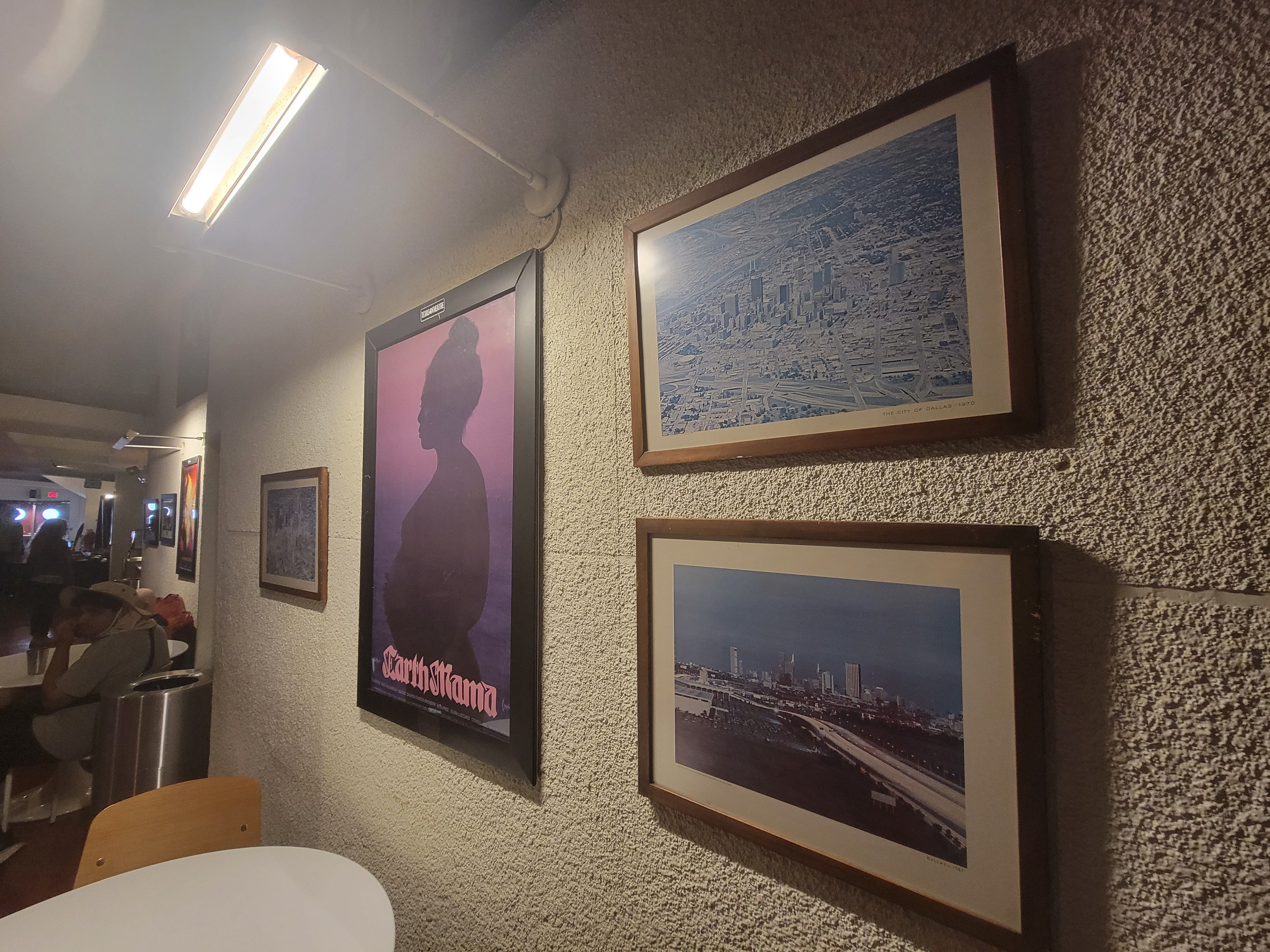
But between Going Varsity in Mariachi, a documentary about Mexican-American culture set in a high school 45 minutes from the border; Problemista, a New York City immigration story about an ambitious Salvadoran-American that visualizes navigating the American immigration system as an M.C. Escher-like maze with no solution; Walker, a biopic about industrialists trying to colonize Nicaragua in the 1800s; Deadland, a lot of Westerns in here now that I’m listing them; and Earth Mama, a drama about a single mother unable to take on the foster care system, a much stronger theme of underrepresented communities lining up against the system. That may not even be an intentional theme, that may be a reflection of the world we live in and the types of stories that are being told today, particularly by lower-budget filmmakers.
Earth Mama bums me out, and it is my fourth movie of the day, so I walk out on it for more free VIP room booze pretty early. Tony was planning on giving it a formal review, but he would walk out on it later as well. They bring in some free pizza for the afterparty as well, it’s a good night.
We all drink and dance the rest of the night away, and I boast to everyone who’ll listen that my energy levels are still at maximum, that I feel ready for another full day of festival tomorrow. It’s exciting to me that I’m not exhausted, that I know for a fact now I can maintain this writing pace. Then I slept till 4 p.m. the next day, so maybe that was a little overambitious.
Aliens Abducted my Parents and Now I Feel Kinda Left Out premiered at Sundance and was acquired to release sometime this summer, but I’m not seeing a release date for it yet. Deadland does not yet have a distributor. Carmen is expected to come to Netflix in late September. Tampopo is streaming on Max and the Criterion Channel. Earth Mama will release July 7.
 Reel Entropy