

I remember precisely the first image I saw of Star Wars. It’s the shot of Darth Vader, lightsaber ignited, standing in a Death Star hallway waiting for Obi-Wan Kenobi to arrive. This would have been 1995 or ‘96, after the prequel trilogy had already been announced and it popped up on the television. I’ve got no context for the samurai I’m looking at or the World War II homage I’m about to see in the climax, I have absolutely no understanding of what anyone’s saying, I just know it looks and sounds so cool.
***
I recently revisited Dreamwork’s 1998 cartoon The Prince of Egypt for the first time since I stopped pretending to be a Christian, so this would be at least 20 years or so. I now know this is the height of the Disney Renaissance, when, armed with cutting-edge animation techniques, Disney finally got back to writing out original musical scripts to apply to ancient fairy tales, which was the studio’s bread-and-butter when it established itself in the ‘30s.
This was also the very start of Dreamworks Animation, formed by scorned Disney chairman Jeffrey Katzenberg, who left the company in 1994 after being passed over for a promotion despite the success of the early Renaissance films. The Prince of Egypt is actually Dreamworks’ second feature, releasing just two months after Antz. It seems obvious now that the tactic to one-up Disney’s fairy tale musicals is to make a biblical musical, and I’m able to re-approach Exodus like any other fairy tale – an approach it deserves. This story of salvation of the weak and punishment of the wicked is very important to our culture even outside of its religious contexts.
I remember how beautiful the animation and the music are, but I’d forgotten it was such a ruinous tragedy, and Rameses has so much more for me now as an adult. I also certainly didn’t remember this Murderer’s Row voice cast – Val Kilmer as Moses, Michelle Pfeiffer as his wife, Jeff Goldblum and Sandra Bullock as his siblings and Patrick Stewart, Helen Mirren and Ralph Fiennes as the Egyptian royal family.

What breaks my heart about it and solidifies so much of this adaptation is Rameses’ line during the 10 plagues song, “How could you have come to hate me so?”
Of course. That’s how they square it. He thinks this whole thing is just a grudge.
One of the really confusing things about being indoctrinated into a religion from infancy is you don’t understand why other people are different – or at least that was my confusion, and a lot of Christian apologetics are built around overpowering these same questions. I was told by people I trusted, and it was reinforced socially once a week, that we know to a certainty God reached his hand down and personally wrote the entire Bible and we have to perform all these beliefs or we’ll go to hell – something that isn’t anywhere in the Bible, of course. Christianity wasn’t one religion among many, it was simply the truth, plain as the nose on my face. Then I go back to a public school full of Indian, Arabic and Asian classmates raised in different traditions, and these same jerks who just told me that all my friends were going to hell tell me I’m being very rude when I invite them to church and won’t explain the contradiction to me at all.
All of which is to say, when I was this age, Rameses not believing Moses when he says that Elohim demands he let the Hebrews go is a central question of this story. If Elohim’s presence is so tangible, why doesn’t Rameses – well, why don’t I see him? – why doesn’t Rameses see him?
The Prince of Egypt gets around this by making Rameses into a tragic figure. What’s so powerful here from a narrative structure perspective is the film has two full main characters – Moses, who goes on a journey of discovery and changes, and Rameses, who does not. What’s going on in these scenes is Moses is trying to tell him about the ways he’s changed, essentially saying they can’t be friends anymore while Rameses still uses slave labor. For Rameses, this is not character development, it is simply an insult, because the growth is away from him.
It’s important to note this interpretation is completely contrary to the biblical narrative – in Exodus, the plagues come one by one, and end either when Rameses’ magicians replicate the effects or when he promises to let the Hebrews go, only to renege when the plague is lifted. Where Rameses in the film barely seems to be aware of what Moses is asking him to do, the Bible paints him as engaging directly with the issue.

One of the reasons I left the church is I refuse to worship a god who kills children, and where the other plagues are somewhat arbitrary siege tactics, The Prince of Egypt goes out of its way to make the Plague of Death Rameses’ fault. In fact, it directly inverts the biblical narrative, and shows Rameses threaten to exterminate the Hebrews instead of free them. His line to Moses in the scene, “and there shall be a great cry in all of Egypt such as never has been or ever will be again,” is taken directly from Exodus 11:6 – but in Exodus, it is Moses saying this to Rameses after laying out the terms of the final plague. Fifteen or so years before the world is swept up in a wave of Christian fascism to which apologetics have been critical, this cartoon is deliberately reversing the role of perhaps the God of Abraham’s greatest crime.
Not just any other fairy tale after all, I guess.
***
The Wizard of Oz was my movie when I was an infant. I was too young to pay attention though its full 101 minutes. No matter how many times I watched it, I would fall asleep or lose interest somewhere between the scene in Munchkinland and the first audience with the wizard, so it’s burned into my memory, but as a dream. It isn’t a solid, specific sequence of shots and lines, it’s this magical thing that can still shift within my mind, and I’ve got no idea how it ends. Dorothy Gale and her companions approach the Emerald City with the idea that anything could happen when they reach it, and no matter how many more times I watch it, anything still might.
I got to see it on the big screen for the first time at the Texas Theatre’s David Lynch retrospective in late May. Lynch’s 1990 road romance Wild at Heart with Nicolas Cage and Laura Dern, my favorite film of his, makes several references to the 1939 classic, so they ran The Wizard of Oz at 4 p.m. ahead of a 6 p.m. 35mm Wild at Heart screening, which was followed by a make-up 35mm screening of Eraserhead, Lynch’s first and best film, at 9:15 – that was a good day.
Seeing the wizard thunder, “I am Oz, the great and powerful!” on the big screen is something I’m going to remember for a very, very long time.
The Wizard of Oz is so iconic that it’s difficult to approach analytically. It isn’t just a movie, it’s truth, plain as the nose on my face. Countless other media incorporate homages, ranging from entire movies like Wild at Heart to several TV shows having Wizard of Oz themed episodes, and lines that originate in the film are contemporary phrases as common as those in Shakespeare. It’s so ingrained in our culture that I almost forget how good it is as a movie.
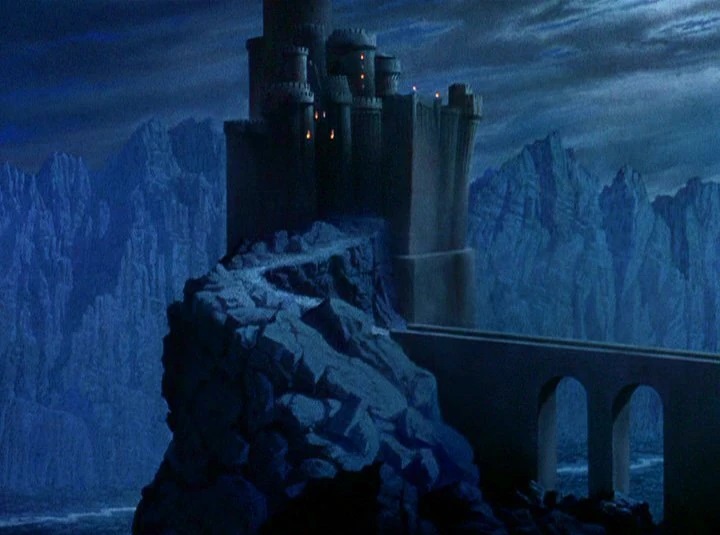
Oz demanding the group bring him the witch’s broomstick, forcing them to not just face the evil they have been running from but stalk and kill it, is one of the most clever plot points in cinematic history. It’s perfect for the surface-level narrative, the meta-narrative, the reality that the wizard has no power and the background politics of the story, but none of that matters because you feel it. You feel the terror of Margaret Hamilton’s iconic performance and of the wizard himself, the joy of reaching the Emerald City and that joy being snatched away when they are told to charge head-first into the danger they thought they’d escaped.
What I really notice this screening is, just as The Prince of Egypt magnifies Moses’ character arc by casting Rameses as not just an antagonist but a twin on his same character arc, The Wizard of Oz incorporates four full main characters. Each of Dorothy’s companions is an aspect of her own growth, not just symbolically but literally as characters in the dream she’s having – obviously, that’s no great observation, but what I see now is how much bolstering that single thread into four strengthens the film. It’s a big part of what makes the movie so resonant and timeless.
A big strength is they’re all kept asymmetrical. A film with this concept could very easily be one long repetition of the same plot point with Dorothy, then scarecrow, then tin man, then the lion, but they’re all on their own paths, and the witch’s attempts to stop them break them up at all different points. After being ambushed in the haunted forest, the scarecrow is the only one who is disabled. Just before their first audience with the wizard, the cowardly lion gets a second musical number, and there’s even more asymmetry within the blocking – as they adorn him with a royal cape, Dorothy and the scarecrow hold up the middle and one corner while the tin man lets the other drag as he fashions a crown. They all feel independent and free-thinking, and Toto’s always all over the frame as well, more like buddies palling around than narrative tools being presented to an audience, and so their bond feels much more genuine than it might.
The final resolution, that they all had what they were missing inside them all along, also feels much more earned seeing it as an adult, because they all clearly do. Just after singing a number about his lack of a brain, the scarecrow is sharp-witted with the apple tree. It’s his idea to steal the witch’s guards’ uniforms, and when they’re cornered in her castle, he’s the one who notices the chandelier can be chopped down to save them. Just after singing his number about his lack of a heart, the tin man, still covered in oil, leaps immediately on a fire to save the scarecrow. Despite his self-image, the cowardly lion’s first instinct is always to attack.
As the witch points out early, “Somebody always helps that girl.”
 Reel Entropy