
8/10 Swedish ecology professor Andreas Malm published “How to Blow Up a Pipeline” in 2021 as an examination of the history and philosophy of political violence and a criticism of both pacifism and climate fatalism within modern liberal politics. How to Blow Up a Pipeline isn’t so much an adaptation as it is an abstraction, translating those themes into an onscreen narrative. It’s a serviceable heist movie made great by how well it captures the strange mood here at the cusp of the end of the world and what the people willing to change that actually look like.
West Texas- For various reasons mainly relating back to legalized land theft, pollution and enforcement of poverty, a group of eight disaffected youths independently conclude that the fossil fuel industry and all of its customers are destroying the world because it’s the cheapest thing to do and that sabotaging the entire supply chain to the point that it becomes too expensive to maintain is the only option. They come together to blow up a pipeline.
The film uses the structure of a flashback-heavy heist movie to detail every character’s backstory, which is woven into a subplot about whether or not there’s a mole in the team, but it’s still an abstract film that relies primarily on imagery with seemingly very little plot. It feels like a cold open that just keeps dragging onward.
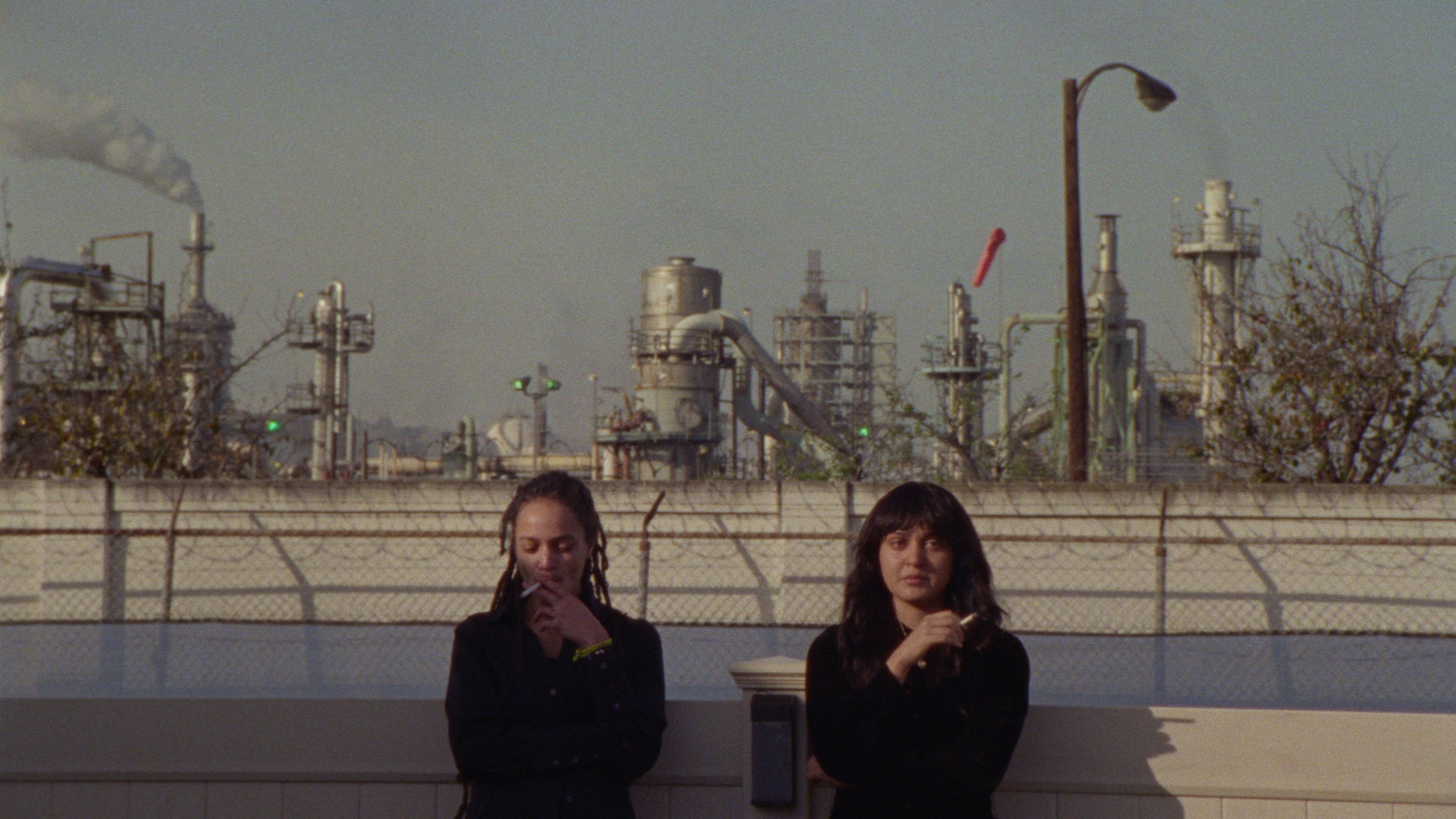
The film traces the path of Malm’s themes outward and the momentum of the group’s origins toward action. Malm writes that the ruling class will never divest from fossil fuels, and the film shows Dwayne (Jake Weary) being forced from his family’s land by the government with eminent domain, a government tool to seize private land for public use, only to hand it over to a private gas company. Malm writes about the real-time danger posed by fossil fuel use, and the film shows Theo (Sasha Lane), a Long Beach, California native forced by poverty to live next to a refinery, diagnosed with leukemia in her 20s.
It shows characters reacting to the violence of the fossil fuel industry and the state that it has infested, and this whole subject represents a reexamination of common definitions of what “violence” is and when it’s appropriate.
The film’s tone is its most interesting element, because it’s walking a couple different tightropes at once. Engaging in a bombing like this, not as an expression of the madness of religious fundamentalism or the cowardice of a take-others-with-me suicide but as a political message that’s meant to be heard and taken seriously, requires an intensity of both hope and despair that have a tough time coexisting. Screenwriter/director/producer Daniel Goldhaber does a terrific job of holding every character in this space, both from a narrative standpoint and in their moods. It helps that they’re all kind of sketchy people anyway, but that’s class talking, and that’s also accurate – the poor will be the most hurt by climate change.
The film as a whole holds in a similar tension between the excitement of a heist movie and the fear of getting caught at any moment, which folds directly into the larger tension of feeling like both superheroes saving the world and that the same world is already doomed. Even as they escalate a simple act of sabotage that could be done quietly into a ridiculous, high-risk publicity stunt requiring an eight-man team, there’s a sense of excitement and naughtiness. This isn’t a crack team, it’s a group of people who don’t really know what they’re doing but have put way too much thought into it and believe they’re in the right, and that’s what it feels like.
It’s important to note that the characters’ theory is very suspect. These aren’t good communists reading from Marx or even from Malm, they’re angry, disenfranchised kids, and that disenfranchisement has a heavy slope toward land ownership and poverty. This still represents fighting capitalism without trying to exit the system of capitalism, just some of its laws.
Blowing up a pipeline is definitely easier than what these yahoos are trying to do. They’ve identified a pipeline that would skyrocket gas prices in the entire southwest if it were broken and two sections of it that are above-ground, and that could be all they need to do, but there’s so much more. They scout maintenance shifts to be absolutely sure no oil worker will be hurt by this. They decide to break into a control station, dramatically increasing the timing and risk of being caught, so they can shut the pipeline off and not cause any spillage. They decide to make horrible 800 pound bombs that they need the entire team present to roll around and do all this in the daylight so it’ll send more of a message. They decide to have a few beers the night beforehand, which quickly turns into a full-scale party and start work the next day more than an hour behind schedule – another testament to how much easier this could have been than they’re making it.
The film, like its characters, is trying to send a message. The message is that this is a correct but not easy conclusion to come to, and so the task it depicts must be both morally bulletproof and incredibly difficult. Otherwise, it’s a movie about how the Unabomber did nothing wrong.
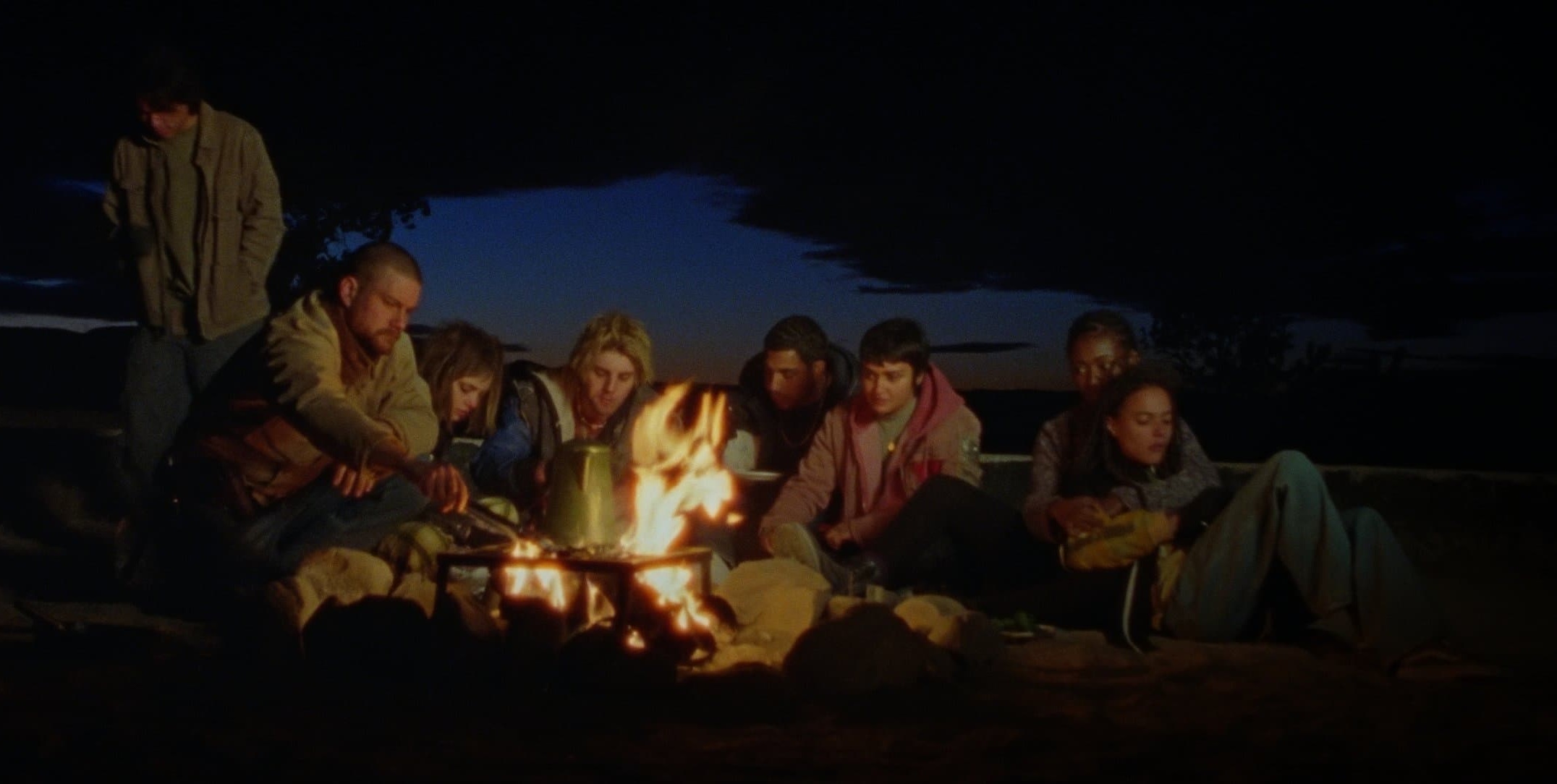
The real point, though, is that party they have beforehand – because, as anyone who remembers the Occupy and Tea Party movements in the early ‘10s knows, revolutionary movements are, at their core, parties. They’re liminal spaces where social norms are different, asserting through public visibility that these are the social norms that ought to be. Political advocacy folds outward from that, not the other way around.
In short, storming the capital is almost meaningless to the individual rioter if they aren’t dressed up like a movie commando while doing it, because they’re both parts of playing out the same identity. This is also part of why sexuality and gender expression is so tied to political identity – the revolution you participate in is largely dictated by where the people you want to lay are.
This sexuality, the identity that stems from it and the action that stems from that is what How to Blow Up a Pipeline really understands and speaks to. The queer black relationship at the arguable center of the film is just as much a revolution as blowing up the pipeline, and the characters are participating in both activities for ultimately the same reason – it’s who they are.
Leopold Knopp is a UNT graduate. If you liked this post, you can donate to Reel Entropy here. Like Reel Entropy on Facebook and reach out to me at reelentropy@gmail.com.
 Reel Entropy